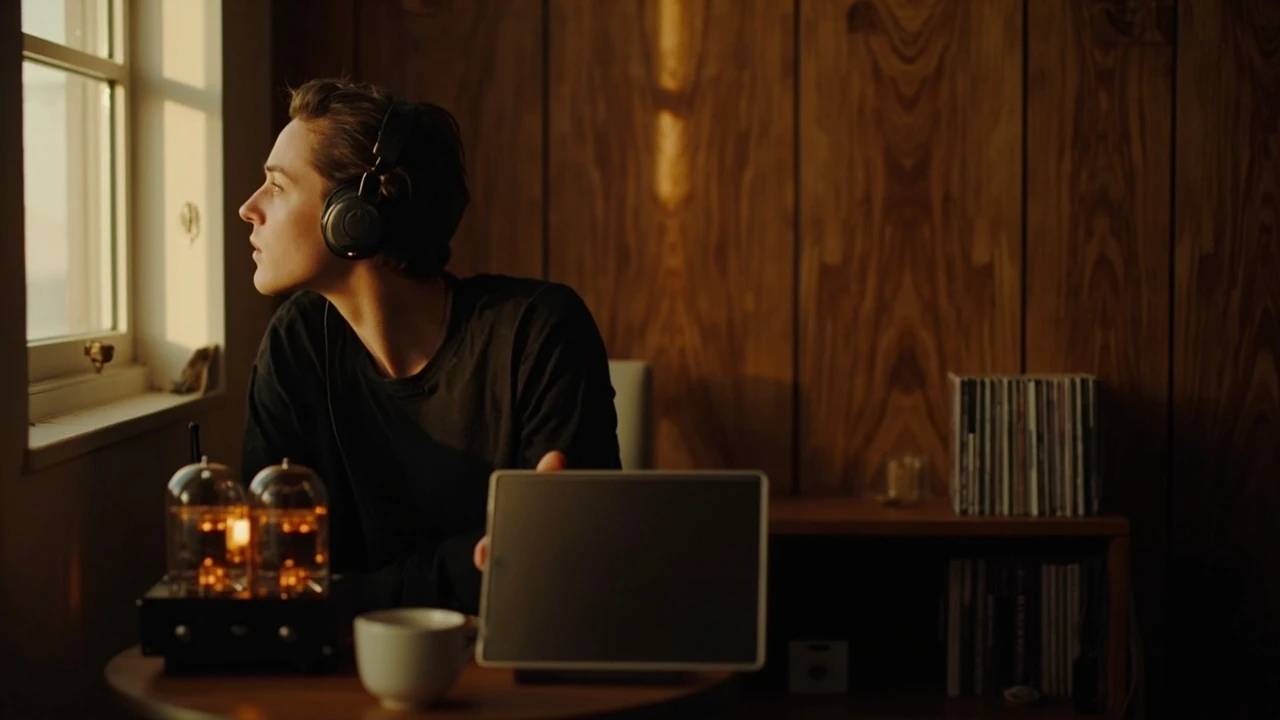
Pipe organ recordings sit in an awkward corner of most streaming catalogs. A single chorale partita can run longer than a pop album, the dynamic range spans near-silence to full plenum, and the recording tradition largely predates the streaming era. Anyone who has tried to assemble a serious listening library of organ repertoire on a modern platform has run into the same handful of questions: will the recording still be there in six months, will it stream at a quality that respects a five-second cathedral reverb, and can the platform find a specific Buxtehude prelude on a specific Cavaillé-Coll without an hour of scrolling.
YouTube Music is one of the answers, and for an organ-focused listener it is more useful, and more frustrating, than the surface suggests. The catalog is enormous, the recommendation engine is good at surfacing related repertoire, and the price is hard to argue with. The trade-offs show up in audio quality tiers, in metadata that frequently mislabels instruments, and in the awkward fit between an audio-only product and the wider YouTube video experience.
This guide is written for listeners who already care about pipe organ sound and want to know what YouTube Music does well, where it falls short, and how to set it up so it serves an organ library rather than fights one. It is not a general music streaming review, and it does not assume the reader needs to be sold on listening to organs. The focus is on the platform itself: the practical mechanics, the listening settings, what to check before trusting a recording, and how YouTube Music fits alongside the few other services that treat organ repertoire seriously.
YouTube Music for organ listeners: what the service actually is
YouTube Music is Google’s audio-focused streaming product, built on top of the YouTube video catalog rather than a separately licensed music library in the old record-label sense. The two halves matter, because organ recordings exist in both. Official label releases sit in the licensed music catalog, alongside the audio from music videos, live concert uploads, church channel archives, and the long tail of organ builder demo videos. For an organ listener that combination is unusually valuable. Many rare organ recordings, especially of historic instruments, first appeared on YouTube as concert recordings or builder documentation years before they were ever pressed to CD.
The structure that matters for an organ listener looks like this:
- It runs as a standalone app and a web player, separate from the YouTube video app, even though the underlying catalog overlaps heavily.
- An audio-only mode strips the video and switches to a lock-screen friendly player with background playback on mobile.
- A Premium subscription removes ads, enables background play, and unlocks downloads for offline listening.
- Two main subscription tiers exist for most regions: an individual plan and a family plan, with pricing that varies by country.
- Catalog coverage is broad for mainstream classical labels, patchy for some specialist organ labels, and deep for self-released recital and church recordings on the wider YouTube side.
For most organ listeners the practical reality is that YouTube Music is the only major subscription service with a real chance of containing a recording of, say, a 1970s Schnitger organ played by a now-retired German organist, simply because that recording has been uploaded by a church, a foundation, or a student. Whether the platform makes that recording easy to find is a separate question.
How YouTube Music handles organ recordings differently from pop and rock
The recommendation engine behind YouTube Music was trained on a catalog dominated by three-minute pop songs, short attention spans, and dense metadata about featured artists and producers. Organ repertoire breaks almost every assumption that engine was built on. Works are long, dynamic range is wide, recording dates matter, the instrument matters as much as the performer, and there is a deep secondary layer of credits for builders, voicers, and recording engineers.
Several practical consequences follow:
- Search by organ builder name works better than search by composer when looking for a specific instrument, because builder names are short and unambiguous. “Metzler organ” returns cleaner results than “Bach on Metzler.”
- Search by church, city, or recording location often surfaces private uploads that the label never released, including some historic recordings of real value.
- “Radio” starting points drift into adjacent repertoire that the engine treats as similar, which for organ often means a heavy drift toward choral and orchestral works. This is not always what an organ listener wants from a radio station.
- Album-level organization is weaker than on classical-specialist services. Many organ recordings are uploaded as a single long track rather than a properly indexed album of individual works.
None of this makes YouTube Music a bad choice for organ listeners. It just means the platform rewards a more deliberate approach to searching, saving, and organizing than the casual pop listener ever needs to use.
Audio quality on YouTube Music: what an organ listener actually gets
Audio quality is where organ listeners tend to be most particular, and where the answer on YouTube Music is honestly mixed. The platform offers several quality settings, and the actual bitrate you receive depends on the device, the subscription tier, and the source material the uploader provided.
On the audio-only Premium tier, the documented streaming tiers fall in the range of 48 kbps to 256 kbps, with the higher setting available on supported devices and the lower setting used to save data on mobile. The wider YouTube video player offers higher audio bitrates for some content, especially music videos, but the audio-only app is the more consistent path for an organ listener who wants background playback.
For organ repertoire specifically, two points are worth holding in mind:
- Opus codec support on YouTube Music is limited or inconsistent depending on the device and the region. The platform has experimented with higher-fidelity audio, but for most listeners the practical ceiling is still lossy compression at a moderate bitrate.
- The dynamic range of organ music is wide enough that aggressive compression on lower bitrate settings can flatten the contrast between a full plenum and a single flute stop. The difference between a quiet solo Cornet and a 32-foot Posaune is exactly the contrast lossy codecs struggle with.
Whether this matters depends on the rest of the chain. On phone speakers or in a car, the difference between 128 kbps and 256 kbps AAC is rarely audible. On good headphones in a quiet room, the higher tier is preferable for the moments when an organist steps back from a passage and lets the building speak. The honest summary is that YouTube Music is good enough for everyday organ listening, good enough for first acquaintance with a new recording, and not the choice of a serious listener who wants the closest possible reproduction of a particular instrument. For broader context, the Music overview provides a concise reference for this section.
Building a usable organ library inside YouTube Music
The single most useful thing an organ listener can do on YouTube Music is build playlists with intent. The platform supports personal playlists, collaborative playlists, and a “Liked Music” library, and each of these can be used as a different kind of organizational tool.
A practical approach that works well for an organ-focused listener looks like this:
- Create one master playlist for each composer you actively follow, and use the composer name as the playlist title so search surfaces it cleanly.
- Create separate playlists for specific instruments, organized by builder, period, or geographic region. A “North German Baroque organs” playlist is more useful long term than a generic “Baroque organs” bucket.
- Create a “to verify” playlist for recordings that look interesting but have not yet been confirmed as the performer and instrument the metadata claims.
- Save concert recordings separately from studio recordings, because the microphone technique and the building acoustics are usually different enough to be worth distinguishing.
- Use the “Add to queue” function during listening sessions rather than building a queue from scratch, so that follow-on repertoire is related to what is currently playing.
This kind of structure is a little more work than a simple “favorites” playlist, but it pays off when the catalog grows past a few dozen recordings. It also makes the platform’s recommendation engine more useful, because the engine reads the playlists you build and tunes future suggestions to fit.
How to find good organ recordings on YouTube Music without wasting an evening
The search behavior that works on YouTube Music is different from the search behavior that works on a classical-specialist service. Search needs to be specific, but not too specific. Long descriptive queries tend to fail; short named queries tend to succeed. The platform’s indexing handles composer and performer names well, and it handles instrument builder names well. It handles partial titles, alternate spellings, and opus numbers inconsistently.
A short set of search strategies that consistently work for an organ listener:
- Search by composer surname first, then narrow by performer surname as a separate search, then by builder name, then by church or city.
- Search for “organ recital” plus a city or a church name to surface the kind of live recordings that get uploaded by congregations and concert series.
- Search for the instrument name plus the builder name plus the word “demonstration” or “disposition” to find builder uploads that include musical excerpts.
- Search for the recording label name plus a year range to surface specific releases, especially from specialist organ labels like Priory, Loft, MDG, or Organum.
For the listener who treats organ repertoire as a serious subject rather than background music, the discipline of a few specific search patterns is more valuable than any of the platform’s automated discovery features.
YouTube Music versus the specialist alternatives for organ listeners
The honest comparison is that YouTube Music is the broadest option and not the most curated. Several other services treat organ repertoire more carefully, and the right choice depends on what the listener actually wants from a subscription.
| Service | Organ catalog depth | Audio quality ceiling | Metadata quality | Off-platform uploads | Best fit |
|---|---|---|---|---|---|
| YouTube Music | Very wide, including rare and amateur uploads | Moderate; lossy at most tiers | Variable; often self-tagged | Strong; this is the platform’s defining feature | Listeners who want access to hard-to-find recordings and live concerts |
| Specialist classical services | Narrower but carefully curated | Higher, with lossless options on some | Strong; editorial metadata | None | Listeners who want clean work-level indexing and accurate composer and performer credits |
| General streaming services | Decade to decade variable | Comparable to YouTube Music | Mixed; classical tags can be poor | None | Casual listeners who also use the service for non-classical music |
| YouTube (video) | Comparable to YouTube Music | Higher on some videos, with caveats | Same as YouTube Music | Strong | Listeners who want to watch organists at the console and read liner-style notes in video descriptions |
For an organ listener, the practical answer is often to subscribe to one general service, one specialist classical service, and to use YouTube Music as a third layer for the recordings that exist nowhere else. None of these services is a complete library by itself, and the willingness to mix them is what produces a useful working collection.
Common problems on YouTube Music for organ recordings, and how to handle them
Most of the frustrations an organ listener runs into on YouTube Music are not about the platform itself but about the way organ recordings have been uploaded and tagged. A short list of recurring issues is worth knowing about in advance, because each has a workaround. Another relevant reference is the premium announced as youtube red replacements, which adds context without changing the practical guidance here.
- Wrong performer credit. A recording of Helmut Walcha is sometimes uploaded under a different organist’s name because the uploader copied the wrong track. The fix is to cross-check with discography resources before saving.
- Wrong instrument credit. A recording of a Silbermann organ in Freiberg might be tagged as the Strasbourg Silbermann, or the instrument name might be replaced by a generic “church organ.” Cross-checking with the builder’s documentation helps.
- Split tracks treated as one file. A recital of 22 short chorale preludes is often uploaded as a single 75-minute track. The fix is to look for the same recital uploaded by a label with proper track markers.
- Missing composer credit on a vocal work. A Bach cantata that includes a significant organ part is sometimes uploaded as “Bach” with no work listing, and the organ contribution is invisible to search. The workaround is to search by the cantata number (BWV) instead of the title.
- Low-quality re-upload of a historic recording. A 1950s recording copied from vinyl, compressed, and re-uploaded can sound worse than a 1990s CD-quality recording of the same work. The fix is to look for the original label or archive upload.
None of these issues is unique to YouTube Music, but they are more common on YouTube Music than on services with editorial teams, simply because the barrier to uploading is lower.
Using YouTube Music on different devices for serious organ listening
The device you listen on matters as much as the platform, and a few practical notes help avoid the most common frustrations. Mobile playback is straightforward but depends on a stable connection for the higher bitrate tiers. Tablet and desktop playback tend to default to higher quality because the data cost is less of a concern, and the larger screen makes the metadata and queue easier to manage. Web playback in a browser is useful for long listening sessions at a desk, and it allows the listener to keep a second window open for liner notes or score.
For an organ listener specifically, the following small adjustments tend to improve the experience:
- Lock the audio quality to the highest available tier in the app’s settings, so that the player does not silently drop to a lower bitrate on a weak network.
- Download important playlists over Wi-Fi before traveling, because cathedral and organ recital recordings are often listened to in places where signal is poor.
- Use wired headphones or a wired connection to a hi-fi system for serious listening sessions, because the wide dynamic range of organ repertoire is more demanding than most music genres.
- Disable any “normalize volume” or “stable volume” feature, because those features work against the kind of dynamic contrast an organist is deliberately producing.
These are not platform-specific features. They are simply the kind of settings that align a streaming service with the way organ music is actually recorded and performed.
When YouTube Music is genuinely the right choice for an organ listener
There are several specific cases where YouTube Music is the best service available, or the only service that has a particular recording. A short summary of those cases helps put the platform in perspective.
- When a recording exists only as a live concert upload, YouTube Music is the only subscription service that will surface it in a usable audio form.
- When a listener is researching a particular instrument and wants to hear multiple recordings of the same organ under one roof, YouTube Music is unmatched in breadth.
- When a listener wants to share a single recording with another person without a separate subscription, the share link on YouTube Music works the same way any YouTube link does.
- When a listener is building a playlist that mixes organ repertoire with other classical and non-classical music, YouTube Music’s recommendations are useful in a way specialist services are not.
The cases where it is the wrong choice are equally specific. A listener who cares primarily about lossless audio, who wants reliable work-level indexing, and who listens mainly to the standard recorded organ repertoire will be better served by a specialist classical service with editorial metadata. The two approaches are not in conflict, and many serious listeners use both.
Verifying the recording you found: a quick checklist
Before adding a new organ recording to a permanent playlist, a short verification routine prevents the slow accumulation of mislabeled tracks. The exact routine will depend on the listener, but a useful starting point looks like the table below.
| Check | What to look for | Why it matters |
|---|---|---|
| Performer credit | Organist name matches a known recitalist, or matches the discography of a specific label | Wrong performer credit is the single most common error on the platform |
| Instrument credit | Builder, year, and location match a known organ | Organ repertoire depends on the instrument as much as the performer |
| Recording date | Year matches the performer’s active recording period | Useful for distinguishing live from studio recordings of the same work |
| Work identification | Composer, opus or BWV number, and movement titles match a standard reference | Prevents saving the wrong work under a similar title |
| Audio quality | No clipping, no obvious compression artifacts, no persistent hum or rumble | Some older recordings are valuable but sound bad, and should be flagged rather than mixed in casually |
Taking ten seconds on each new recording prevents hours of correction later, and the discipline also makes the listening experience more confident. Knowing what you are about to hear, and on what instrument, changes the way the recording is heard.
Putting YouTube Music to work in a serious organ listening practice
The real value of YouTube Music for an organ listener is not any single feature but the way the platform can be folded into a regular listening practice. Used as a discovery tool, a hard-to-find-recordings library, and a way to share specific performances with other listeners, it earns its subscription. Used as a primary source for the standard repertoire, it has gaps. The right approach is to know which role the platform is playing at any given moment.
For listeners who are also interested in the wider craft of the instrument, a useful next step is to look at how the recorded organ is shaped at the builder’s bench. The articles on pipe voicing and on organ registration are good companions to the listening practice. The voicing article explains how a single pipe is brought to the sound the recording captures, and the registration article explains how the organist chooses which stops to combine in the first place.
Understanding the chain from voicing to registration to recording to streaming makes the experience of listening on YouTube Music more deliberate, and it makes the limitations of the platform easier to accept. The platform is one link in a longer chain that begins at the organ builder’s bench and ends at the listener’s headphones. Choosing it with that chain in mind is what makes it work.
Frequently asked questions
Is YouTube Music a good service for listening to organ music?
For an organ listener, YouTube Music is a useful service, but not a complete one. It is the strongest major platform for finding rare and amateur organ recordings, including live concert uploads that exist nowhere else. For the standard recorded organ repertoire it is decent but not as well curated as specialist classical services, and the audio quality ceiling is lower than lossless alternatives.
What audio quality does YouTube Music offer for organ recordings?
YouTube Music streams at a range of bitrates, with the highest tier available on supported devices for Premium subscribers. The practical ceiling for most listeners is lossy compression at a moderate bitrate, which is adequate for everyday listening and for first acquaintance with a recording but is not the choice for a serious critical listening session.
Can I download organ recordings on YouTube Music for offline listening?
Yes, with a Premium subscription, individual tracks and playlists can be downloaded to a mobile device for offline playback. The downloads stay inside the app and are tied to the subscription, so they are not the same as owning a file. This is a useful feature for travel and for listening in places with poor signal, including churches and recital halls.
How is YouTube Music different from regular YouTube for organ recordings?
YouTube Music is built around audio-only playback, with background play, lock-screen controls, and an interface designed for music rather than video. Regular YouTube is the better choice when the listener wants to watch the organist at the console, see the building, or read detailed video descriptions. The audio-only product is the better choice when the listener wants to focus on the sound.
Why do some organ recordings on YouTube Music have wrong metadata?
Most organ recordings on YouTube Music are uploaded by individuals, churches, concert series, or small labels rather than by major rights holders. Self-uploaded content is tagged by the uploader, and the quality of that tagging varies widely. Wrong performer credits, wrong instrument credits, and missing work titles are common. Cross-checking with a discography resource before saving a recording is a useful habit.
Does YouTube Music have a good selection of historic organ recordings?
Yes, partly because historic organ recordings often exist as YouTube uploads long before they are issued by a label. A surprising number of significant mid-twentieth-century recordings, including some that have never been commercially reissued, are available in the wider YouTube catalog. The trade-off is that audio quality on these uploads varies, and a small amount of verification is usually needed.
Should an organ listener subscribe to YouTube Music and a specialist classical service?
Many serious organ listeners do exactly that, because no single service covers the full range of what an organ listener wants. YouTube Music is the strongest platform for rare and amateur uploads, and a specialist classical service is the strongest platform for clean work-level indexing and accurate credits. The cost of the second subscription is offset by the quality of the listening experience.
How do I find a specific organ recording on YouTube Music?
The most reliable approach is to search in stages. Start with the composer surname, then narrow by performer surname, then by organ builder, then by church or city. Searching for “organ recital” plus a city or church name often surfaces the kind of live concert recordings that get uploaded by congregations and local concert series.
Is the YouTube Music family plan a good option for organ listeners?
For a household where more than one person uses the service, the family plan is the most cost-effective way to subscribe. The catalog and quality are the same as the individual plan. The decision is mostly about how many people in the household will use the service and whether they all want the same kind of music.
Can YouTube Music replace a physical organ recording collection?
It can replace most of the working library for a casual listener, and some of it for a serious listener, but it cannot fully replace a careful physical collection. A physical collection of well-chosen CDs or downloads still has lower compression, more permanent access, and more accurate metadata. The two are complementary rather than competitive, and the right approach is to use both.