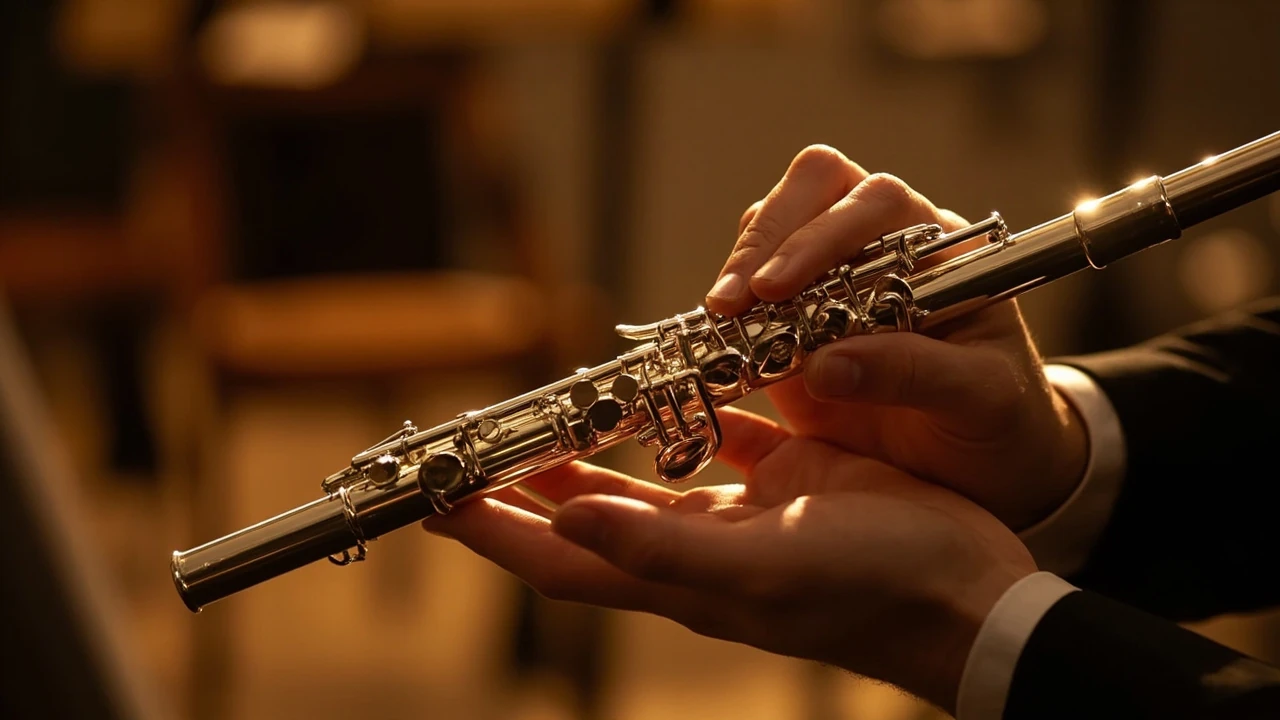
Piccolo instrument: a practical guide to the small flute
A piccolo is the smallest member of the Western flute family, pitched one octave above the concert flute and built to be heard across a full orchestra. It looks like a shrunken silver flute, yet the playing feel, breath pressure, and embouchure demands are quite different, and that is where most beginners struggle. This guide explains what a piccolo instrument actually is, how it produces its bright tone, where it is used, how it compares to a concert flute, and what to check before buying or starting lessons.
What a piccolo instrument actually is
The word piccolo comes from the Italian for “small,” and the instrument itself is essentially a half-size transverse flute. The most common modern piccolo is pitched in C and sounds one octave higher than written, which means a written C on the page produces the C an octave above middle C on the piano. A small number of older or specialty models are pitched in D-flat (the “terz” piccolo) or built from wood rather than metal.
Three things set the piccolo apart from the concert flute:
- Size. A typical piccolo is about 32 cm (12.6 in) long, less than half the length of a B-foot concert flute.
- Pitch. It plays in the high register, with the lowest written note around D4 sounding as D5 on the piano.
- Voice. The short tube and narrow bore make the tone brilliant, penetrating, and easy to project, but also less forgiving of small embouchure errors.
For an organ-focused site, the relevance is partly acoustical. The piccolo is a useful reminder that small acoustic instruments can carry remarkably well when their design and playing technique are matched to their size. The same idea appears in pipe organ work, where small-scale ranks such as a piccolo stop are used to add brilliance and definition in the upper manual or pedal.
How a piccolo produces its sound
A piccolo is an edge-blown aerophone. The player blows a thin stream of air across a tone hole cut into the headjoint. The airstream splits against the edge of the hole, oscillates, and sets the air column inside the tube into vibration. The tube acts as a resonator that selects and amplifies a particular pitch based on its length and the open or closed state of the keys.
Three mechanisms matter for a new player:
- The embouchure hole on the headjoint is smaller than a flute’s, so the airstream has to be more focused.
- The tube is short, which raises the fundamental frequency and pushes most playing into the upper register.
- There is no headjoint cork adjustment like on a flute; the headjoint slides in and out of a small amount of tenon, and the player or technician sets the position so the piccolo plays in tune with itself.
Piccolo against the concert flute: the real differences
Beginners often assume the piccolo is simply a high flute. It is, but the playing differences are large enough to surprise anyone who has only played the concert flute. The table below compares the two instruments across the attributes that matter most to a player.
| Attribute | Piccolo instrument | Concert flute (B-foot) |
|---|---|---|
| Length | About 32 cm (12.6 in) | About 67 cm (26.4 in) with B foot |
| Pitch | Sounds one octave above written | Sounds as written |
| Range written | D4 to C7 (roughly) | C4 to D7 (roughly) |
| Tone color | Brilliant, piercing, focused | Warm, blended, flexible |
| Air required | Faster, more focused airstream | Broader, slower airstream |
| Embouchure | Small, very precise | More forgiving |
| Role in ensemble | Soprano top voice, color, doubling | Core melodic and solo voice |
| Common body material | Silver-plated nickel silver, grenadilla wood, or resin | Silver, nickel silver, gold, or wood |
| Typical beginner price (US) | About 700 to 1,800 USD for a student model | About 600 to 1,800 USD for a student model |
| Best starting age | Usually after at least one to two years on flute | Around age 9 to 11 for most children |
Notice that the price ranges overlap. A student piccolo is not a cheap accessory; the precision required in the headjoint and keywork means that a poorly made piccolo is genuinely difficult to play in tune, which is why a responsible teacher will rarely recommend the cheapest no-name model.
Body materials and what they change
Most student piccolos are made from nickel silver with a silver plate, sometimes described as “silver-plated” or “nickel-silver.” Intermediate and professional models come in two main materials.
| Material | Tone effect | Feel under the hands | Typical tier |
|---|---|---|---|
| Resin or plastic headjoint and body | Brighter, slightly less complex | Light, cool to the touch | Student, entry level |
| Nickel silver, silver plated | Focused, slightly brighter than wood | Solid, neutral | Student to intermediate |
| Grenadilla wood (Dalbergia) | Warmer, more rounded, more complex overtones | Dense, warm to the touch, slightly heavier | Professional, orchestral |
| Silver or silver and gold | More ringing, more projection, slightly darker core | Heavier, more resistant to air | Professional, solo, principal |
Wood piccolos are more sensitive to temperature and humidity changes. A wooden piccolo can crack if stored in a cold car overnight and then played in a warm hall, so professionals usually warm the instrument slowly before playing. A metal piccolo is much more tolerant of routine handling, which is one reason most beginners start on metal even though most orchestral audition winners play wood or silver.
Where a piccolo instrument is used
The piccolo is not a solo instrument by default. Its role is to add brilliance, color, and a top melodic voice to a larger ensemble. The most common uses are:
- Symphony orchestra. Playing the top line in marches, the high countermelody in classical works, and the brilliant final chord in works such as Stravinsky’s “The Firebird” or Mahler symphonies.
- Wind band and concert band. Carrying the soprano line and unison flourishes that sit above the flutes.
- Marching band. The piccolo is iconic in American marching bands, where the high piercing sound projects over brass and drums in open air.
- Chamber music. Used in flute choir arrangements, flute quartets, and some wind ensembles.
- Solo repertoire. There is a small but real solo literature, including works by Vivaldi, Telemann, Liebermann, and modern composers writing for piccolo and piano or piccolo and ensemble.
- Pipe organ. The term “piccolo” also appears as a pipe organ stop name, where a high-pitched flute rank is voiced to add brilliance. The acoustic principle is similar even though the instrument is very different.
The role of the piccolo in a symphonic score
Composers write for piccolo when they want a sound that cuts through a full orchestra, or when they want a top voice that doubles the flutes an octave higher. In a Mahler or Shostakovich symphony, the piccolo often appears only in climactic passages. In a Sousa march, the piccolo is the lead voice in the trio section. In a tone poem such as Respighi’s “Pines of Rome,” the piccolo traces the high bird call above a full orchestral texture.
Players who understand the role of a small instrument in a large ensemble often make a useful connection to organ registration. A piccolo in an orchestra is a bit like a 2-foot flute stop on an organ: a small, bright voice that gives definition and edge to a larger sound. The same kind of pairing appears in organ registration, where small-scale ranks are layered with foundational stops to add presence.
Common difficulties when starting on piccolo
Most flute students expect the piccolo to feel familiar because the fingering is the same as the concert flute. The surprise is that every small mechanical problem becomes a large musical problem when the instrument is so short and so high. The most common early difficulties are:
- Pitch control. The short tube has less margin for error, so small changes in air speed or angle produce larger pitch movements. Beginners often play sharp in the upper register and flat in the lowest register until they learn to balance.
- Hand position. The piccolo’s keys are closer together and the tube is much thinner. Students who hold the piccolo too tightly lose flexibility and tire quickly.
- Embouchure. The aperture must be small and the airstream fast. A loose flute embouchure will not produce a clean piccolo tone.
- Intonation against the ensemble. Because the piccolo is so high, a small pitch error is much more audible. Playing in tune with a flute section requires constant listening.
- Endurance. The high register is tiring. Most beginners start with 10 to 15 minutes of piccolo practice per day, adding time as the embouchure strengthens.
A short daily routine for a new piccolo player
A useful first routine for a student who already plays the concert flute at an intermediate level looks like this:
- Long tones on the lowest written D, F, and A. Aim for a steady pitch, not a strong one, and listen for even tone across the breath.
- Five-note descending scale pattern, starting on written D5, going down two octaves and back up, all slurred, to settle the embouchure.
- Simple melodic studies, such as the easier pages from “Practical Method for the Piccolo” or selected etudes written for the instrument.
- Ensemble material. Even solo study should include playing along with band or orchestral parts so the player learns to match the section.
- Cool-down. Long tones and slow scales, mouthpiece off, relaxed jaw.
The total session for a new piccolo student should usually sit between 20 and 40 minutes. Adding piccolo practice on top of a heavy flute practice schedule can quickly fatigue the embouchure, so most teachers recommend keeping the two sessions in the same day short rather than splitting them across a long schedule.
Choosing a first piccolo instrument
Buying a piccolo for the first time is a different decision from buying a concert flute, because the headjoint quality drives almost everything the player will experience. A few practical checks make the choice easier.
| What to check | Why it matters | What to look for |
|---|---|---|
| Headjoint design | The headjoint is where the tone is formed and where most of the resistance comes from. | A wave or “step” design that feels comfortable against the lower lip and produces a clean low register. |
| Keywork layout | Piccolo keywork is denser than flute keywork. Sticky or noisy keys make fast passages harder. | Smooth action, properly padded cups, no grinding, all trill keys fitted without play. |
| Tuning slide | The tuning slide on the headjoint lets the player match concert pitch. | Slides smoothly, holds position, and has enough range to reach A=442 with reasonable embouchure adjustment. |
| Material | Material affects tone, weight, and durability. | Resin or plated metal for a first instrument. Wood and silver are reasonable as a step-up choice once the student is committed. |
| Brand support | Repairs and replacement parts are easier with established makers. | Brands such as Yamaha, Pearl, Gemeinhardt, and Burkart are widely serviced. Lesser-known brands may be cheaper but harder to repair. |
Most flute teachers recommend renting a piccolo for the first three to six months rather than buying outright, especially for younger students who may outgrow the instrument in size or seriousness. Rental also lets the family test a wooden or silver model before committing to a more expensive purchase.
Care and maintenance
A piccolo needs the same general care as a concert flute, with a few extra steps because the instrument is smaller and the keys are more delicate. A simple routine covers the main risks.
- Swab the inside after every playing session using a piccolo swab sized for the smaller tube.
- Wipe the outside with a soft polishing cloth to remove fingerprints and moisture.
- Empty the condensation by blowing gently into the instrument away from the face, never by slapping the keys.
- Store the piccolo in its case when not in use, with the headjoint in its own slot if the case allows.
- For wooden piccolos, avoid sudden temperature changes, and use a humidifier in dry climates to reduce cracking risk.
- Schedule a “clean, oil, adjust” service once a year, or more often for a heavily used student instrument.
Many of the same principles apply to any fine acoustic instrument, including the pipe organ. A piccolo, a flute, and a small-scale organ rank all reward regular gentle maintenance over occasional heavy service.
Piccolo and the organ stop that shares the name
One reason a piccolo instrument appears on a pipe organ site is that organ builders borrowed many of the same names from the orchestra. A “piccolo” stop on an organ is a high-pitched flute rank, usually at 2-foot pitch or 1-foot pitch on the manual, designed to add brilliance and edge to a chorus. The same acoustic logic applies: a small, bright voice can give definition to a much larger sound, just as a piccolo player can give definition to a wind band or an orchestral climax.
For an organist, the practical link to the orchestral instrument is more about balance than about pitch. Both instruments sit on top of a much larger ensemble, both can become tiring when overused, and both reward a player who listens carefully to the room and adjusts accordingly. Understanding that parallel is part of why so many organ teachers are comfortable recommending piccolo study to young flutists who want a stronger sense of high-register voicing.
Should a beginner start on piccolo or flute?
The short answer is flute first, piccolo later. The longer answer is that piccolo technique depends on having a stable flute embouchure, a working low register, and reliable intonation. Most flute teachers want to see at least one to two years of solid flute playing, including comfortable playing in the upper register of the flute, before introducing the piccolo. A few useful signals that a student is ready:
- Consistently plays in tune across the flute’s middle and upper registers.
- Can hold a focused tone for at least 8 to 10 seconds without wavering.
- Has working low register down to C4 on the flute.
- Can play a two-octave major scale in tune without assistance.
If those markers are in place, the student can usually move into piccolo study without frustration, and the piccolo will add to the flute playing rather than undermine it.
Frequently asked questions
What is a piccolo instrument?
A piccolo instrument is a small transverse flute, usually pitched in C, that sounds one octave higher than written. It is the highest-pitched member of the standard Western flute family and is built with a narrow tube, small embouchure hole, and dense keywork to allow precise control in the upper register.
Is a piccolo harder to play than a flute?
For most players, yes, in the sense that the margin for error is smaller. The piccolo’s short tube, small embouchure, and high pitch make small mistakes in air speed, angle, and finger position much more audible. The fingering is the same as the flute, but the embouchure and air requirements are stricter.
How is a piccolo different from a concert flute?
A piccolo is roughly half the length of a concert flute, sounds one octave higher than written, and has a brighter, more penetrating tone. The piccolo’s keywork is denser, the embouchure hole is smaller, and the airstream must be faster. The concert flute is the more versatile, blended instrument; the piccolo is the specialist high voice.
What is a piccolo used for in an orchestra?
In an orchestra, the piccolo is used to add brilliance and projection to the top of the ensemble. It often doubles the flute line an octave higher, plays countermelodies in high passages, and appears at climactic moments where its sound can cut through a full string and brass texture.
Can a beginner start on piccolo without playing flute first?
Most teachers do not recommend it. Without a stable flute embouchure, the piccolo is very hard to control, and students often develop habits that hurt their eventual flute playing. One to two years of solid flute study is the usual preparation before starting piccolo.
How much does a beginner piccolo cost?
A new student piccolo in plated metal typically costs between 700 and 1,800 USD, depending on the brand and keywork options. Wooden intermediate piccolos are usually between 1,800 and 4,000 USD, and professional wooden or silver piccolos range from about 4,000 to 12,000 USD. Used instruments and rentals are available at lower prices.
Why is the piccolo so loud?
The piccolo is loud because its short tube and small embouchure produce a tone with strong high-frequency overtones. Higher frequencies are less absorbed by air and by the human ear, so the sound carries much further than a flute’s. This is also why a piccolo can be heard over a full orchestra.
What is the highest note a piccolo can play?
Standard piccolos are designed to play up to written C7 (three octaves above middle C), and many players extend higher into the extreme altissimo register. For practical orchestral and band writing, however, most parts stay within the two-and-a-half octaves above written D5.
How do you tune a piccolo?
Most piccolos are tuned by sliding the headjoint in or out of the body. Pulling the headjoint out slightly lowers the pitch; pushing it in raises the pitch. A player or technician sets the position so the instrument is in tune with itself at A=440 or A=442, and the player then makes small adjustments with the embouchure.
What does a piccolo sound like compared to a fife?
A piccolo and a fife are both small transverse flutes, but a fife is simpler, usually built in D, and has a more direct, martial sound used in military fifing. A piccolo is a modern orchestral instrument with full keywork, more dynamic range, and a more focused, brilliant tone suited to concert use.