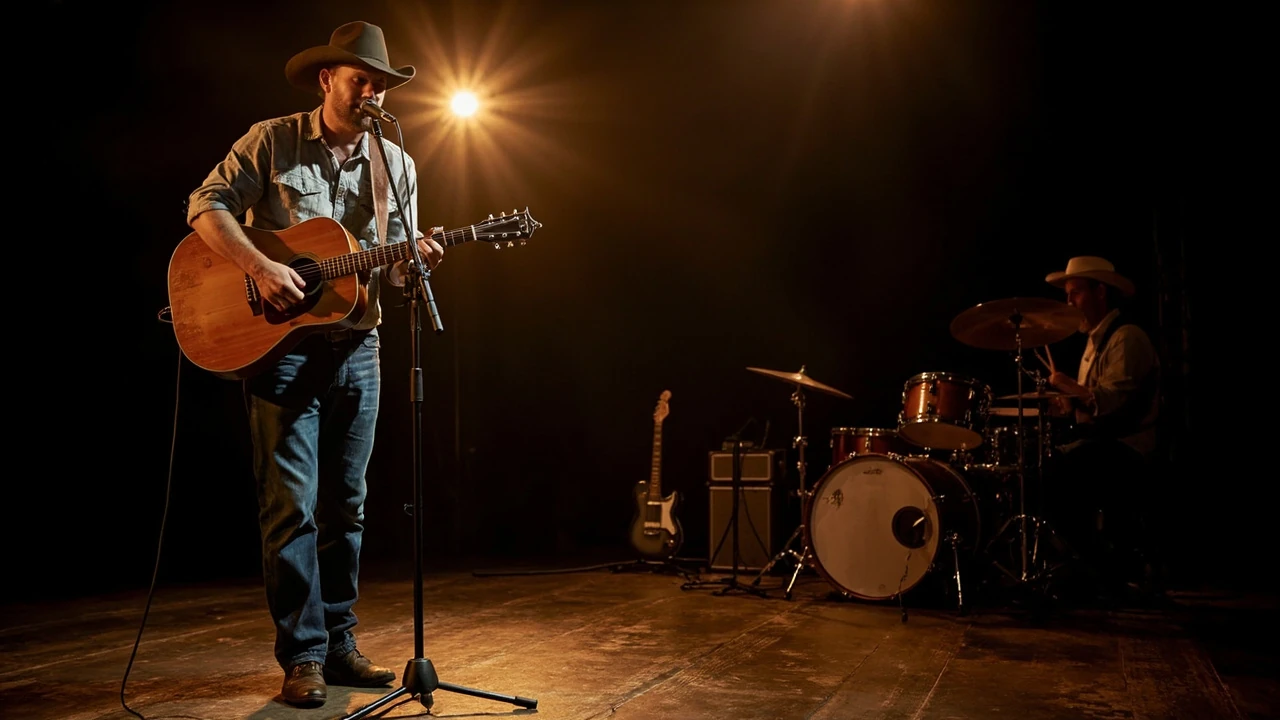
Walk into any working honky-tonk on a Saturday night and you hear it within seconds: a slightly nasal vocal, a steel guitar crying behind the beat, a snare that snaps like a handclap, and a lyric about a job, a heart, a truck, or a long road. That particular mixture of sound is the calling card of country music artists, and it is what separates the genre from rock, pop, and folk that happen to be sung in a rural accent. The point of this guide is to unpack, in practical terms, what country music artists actually do, which sub-genres they work in, which instruments carry the sound, and how a working band or solo artist is typically built in a studio or on a stage. Whether you are a new listener trying to understand what you are hearing, a writer covering the field, or a musician deciding which lane to record in, the same vocabulary applies.
Country music is sometimes described as a single thing, but in practice the term covers a family of related styles. Country music artists are expected to be fluent in at least one of those styles, and most successful ones move between several. The instruments change with the sub-genre, the production changes with the era, and the audience changes with the region. What stays constant is the emphasis on songwriting, on a recognisable voice, and on arrangements that put the lyric first. Everything else is a tool in service of those three priorities.
Country music artists and the styles they actually work in
The phrase country music artists covers performers as different as a traditional honky-tonk singer, a Nashville pop-country songwriter, and a bluegrass banjo player who has never owned a drum machine. Before any discussion of instruments or technique, it helps to know which lane an artist is working in, because the gear list, the band setup, and the audience expectations are different in each.
Traditional country and honky-tonk
Traditional country, often called honky-tonk when the tempo picks up and the barroom imagery arrives, is the older core of the genre. The classic instrumentation is acoustic guitar, upright bass, fiddle, pedal steel, and a small drum kit played with brushes or light sticks. The vocal is usually placed close to the microphone with very little reverb, so the lyrics and the singer’s phrasing feel intimate. Country music artists who work in this lane tend to write narrative songs about work, drinking, travelling, romance, and the small politics of small towns.
Country pop and the Nashville mainstream
Country pop, sometimes called contemporary country or the Nashville sound, is the style most often heard on commercial country radio. The acoustic instruments are still present, but they are usually blended with electric guitar, drum loops, layered backing vocals, and polished studio production. The vocal is bigger, the chorus is wider, and the songwriting tends to follow pop structures. Many country music artists who start in traditional settings record in this style at some point because it is where the largest audience lives.
Outlaw country
Outlaw country emerged in the 1970s as a reaction against the smoother Nashville production of the previous decade. It keeps the traditional instruments but often strips the arrangements down, adds rougher vocal textures, and pushes the lyrics toward more personal, sometimes darker, subject matter. Country music artists in this lane are known for plain speaking, for live-band energy, and for treating the studio record as a record of a performance rather than a constructed production.
Bluegrass
Bluegrass is the acoustic branch of the family. The standard instrumentation is five-string banjo, mandolin, fiddle, acoustic guitar, upright bass, and sometimes dobro or resonator guitar. The harmony singing is tight, the tempos are fast, and the instrumental breaks are a feature rather than a transition. Many country music artists cross freely between bluegrass and traditional country because the songwriting tradition is shared, even when the band setup is different.
Western swing, country rock, and Americana
Western swing adds jazz and big-band phrasing to country instruments. Country rock folds electric guitar and rock rhythms into country songwriting. Americana, used as a marketing and radio term since the 2000s, is a broad banner under which country music artists who do not fit neatly into the pop or traditional lanes can be grouped, often alongside folk, roots rock, and alt-country acts.
Core instruments and what each one contributes
Country music artists build their sound from a small, stable list of instruments. The same instrument can be played in very different ways depending on the sub-genre, which is why two country records can both be honest to the genre and still sound nothing like each other.
Acoustic guitar
The acoustic guitar is the workhorse. It carries the chord progression, holds the rhythm, and gives the singer a reference for tempo and key. In traditional and bluegrass settings, the acoustic guitar is often strummed with a flatpick. In songwriter and pop-country settings it is sometimes fingerpicked or doubled with an electric version of the same part. The tone most country music artists look for is warm, midrange-forward, and not overly bright; the guitar needs to sit in front of a vocal without competing with it.
Electric guitar
Electric guitar enters the picture in country pop, country rock, and outlaw-leaning records. The typical country electric tone is clean or lightly broken up, with the bridge pickup doing most of the work. Telescopes and similar single-coil guitars are common because they cut through a mix without becoming harsh. When distortion appears, it is usually subtle and used for emphasis rather than as a constant texture.
Pedal steel guitar
The pedal steel is the most recognisable country instrument after the acoustic guitar. It is a console-style instrument played with a steel bar in one hand and knee levers and foot pedals in the other, used to bend pitches and create glides between notes. The pedal steel carries sustained chords, countermelodies, and the sighing, sliding lines that people often describe as the sound of the genre. In many country music artists’ arrangements, the steel plays the role a string section would play in a pop record.
Fiddle
The fiddle handles melody lines, harmony lines, and rhythmic chopping. In traditional and bluegrass settings it often plays the lead break. In country pop it is more often used as a colour, doubling a vocal phrase or adding a hook in the chorus. A good country fiddle sound is dry, close-miked, and slightly rough, in contrast to the smoother classical violin tone.
Banjo
The banjo is most associated with bluegrass but appears in traditional country as well, especially on records that lean toward Appalachian or old-time sources. It provides a percussive, bright rhythmic chop and can also take melodic leads. Country music artists who do not play banjo often hire a specialist for recording sessions because the tuning and the right-hand technique are distinct from guitar.
Upright bass
Upright bass, also called double bass or stand-up bass, anchors traditional country, bluegrass, and western swing. It is played pizzicato, with the fingers, and occasionally with a bow on slower pieces. The instrument provides the root motion of the chord progression and locks in with the snare drum to create the two-beat or four-on-the-floor feel that defines much of the genre.
Drum kit
The drum kit in country is smaller and quieter than in rock. The standard setup is a bass drum, a snare, a floor tom, a hi-hat, and a ride or a couple of crashes. Brushes are common on traditional records, and even on harder-driving songs the snare is tuned to be fat and woody rather than cracking. Country pop records often replace or augment the live kit with programmed elements, but the live snare sound is usually kept because it is part of the genre’s identity.
Vocals and harmony
Vocals are an instrument in the same sense as the others. Country music artists are expected to have a recognisable tone, a clear diction, and a phrasing style that places the lyric ahead of the melody. Harmony vocals, usually in thirds, fifths, or high tenor above the lead, are a long-standing feature of the genre and remain standard on most records.
How a country song is typically put together
Although there is no single recipe, the workflow used by most country music artists follows a familiar shape. Understanding the shape is useful both for listeners who want to know why a song feels the way it does and for new artists who want to record something that sits comfortably in the tradition.
- Write the song first. Country still puts the lyric and the melody ahead of the production. The default structure is verse, chorus, verse, chorus, bridge, final chorus, with the option of a pre-chorus, a tag, or a longer story-song structure when the material calls for it.
- Pick the sub-genre. The same song can be arranged in honky-tonk, country pop, or bluegrass style. The decision is usually made with the artist, the producer, and the target audience in mind before any instruments are recorded.
- Build a rhythm section. Acoustic guitar, upright or electric bass, and drums or a click track are laid down first to set tempo, key, and feel.
- Add the signature colour. Depending on the sub-genre, this is where the pedal steel, the fiddle, the banjo, or the electric guitar enters. These instruments are often overdubbed after the basic track is in place.
- Cut the lead vocal and harmonies. The lead is usually recorded with the artist hearing a rough mix of the band. Harmony vocals are added in additional passes, often with several singers trading lines.
- Sweeten and mix. Background textures, small keyboard parts, room noise, and effects are added last. The goal is to keep the lyric intelligible and the band sounding like a band, not a collection of separately recorded parts.
Production choices that shape the modern country sound
Production is where most of the difference between a 1970s country record and a current one lives. The instruments are largely the same, but the way they are recorded, processed, and balanced has changed.
Vocal production
Modern country vocals are usually recorded with a large-diaphragm condenser microphone, then treated with a moderate amount of compression, gentle equalisation that lifts the presence range, and a short plate or room reverb. The aim is a vocal that sounds polished and present on radio but still carries the singer’s natural character. Country music artists who prefer a rawer sound often skip the polish and keep the vocal close and dry, the way early honky-tonk records were made.
Drum production
Drum production in country has moved toward a punchy, midrange-forward snare, a tight bass drum, and very controlled room sound. Samples are sometimes blended with the live kit, especially in country pop, to keep the drum sound consistent between songs and to keep the snare audible on small speakers.
Guitar production
Acoustic guitar is usually tracked with two microphones, one near the twelfth fret and one near the soundhole, then summed to a single rich but not boomy tone. Electric guitar is often double-tracked, with one part panned left and the other right, and run through a small amp or a clean amp model. Pedal steel is usually recorded in stereo because the instrument already produces a wide frequency range and benefits from being spread across the speakers.
Use of programming and loops
Programming is common in country pop and uncommon in traditional and bluegrass. The most frequent uses are drum loops, sub-bass layers, and small string or synth pads that fill out a chorus. Country music artists who use programming tend to keep it understated, on the principle that a loop should not call attention to itself.
How country music artists are typically organised
Most country acts work in one of three formats, and the format affects everything from rehearsal time to the size of the live show.
| Format | Typical size | Common settings | Strengths | Limitations |
|---|---|---|---|---|
| Solo artist with backing band | One named artist, four to six sidemen | Country pop, outlaw, singer-songwriter | Clear star identity, easy to tour, flexible set list | Cost of carrying a full band, reliance on sidemen’s availability |
| Duo or small group | Two to four named members | Bluegrass, traditional, country rock | Shared songwriting, tight harmonies, distinctive blend | Less range of arrangement, harder to fill a large stage |
| Larger band or revue | Five to ten members on stage | Western swing, country pop tours, festival headlining | Wide arrangements, full horn or string sections, big stage presence | Higher cost, more complex logistics, more rehearsal required |
The format a country music artist chooses usually reflects the kind of show they want to play. A solo artist with a backing band is the most common structure on the country pop circuit because it puts one face at the front of the marketing while still allowing a full live sound. A bluegrass band tends to be a small, named group because the format depends on the players knowing each other’s breaks. A western swing or large country act is built for festival stages, theatres, and broadcast appearances where the size of the band is part of the appeal.
Working with the voice
Because the vocal carries so much of the weight, country music artists spend a disproportionate amount of rehearsal time on phrasing, breathing, and diction. Three habits show up again and again.
- Sing the consonant. Country diction tends to over-articulate the ends of words, especially on the last line of a phrase, so the lyric lands clearly on radio and in noisy rooms.
- Hold the vowel. Sustained vowels let the singer push dynamics and let the harmony singers lock in. Short, clipped vowels are more typical of pop and rock.
- Lean into the second beat. In traditional and honky-tonk settings, the vocal line often pushes slightly ahead of or behind the snare in a way that gives the phrasing a conversational, almost spoken feel.
Harmony singing is treated as a separate skill. Most country music artists either sing high tenor above the lead, which gives the standard bright country sound, or a lower third below, which is more common in bluegrass and traditional settings. Doubles, in which the harmony singer sings the same notes as the lead an octave or a sixth above, are also used for emphasis on choruses.
Regional centres and what they sound like
Country is a national and international format, but the United States still has identifiable regional centres whose studios, venues, and local audiences have shaped how country music artists record and perform.
| Centre | Sub-genre association | Typical studio approach | What the local audience expects |
|---|---|---|---|
| Nashville, Tennessee | Country pop, traditional, contemporary | Polished, vocal-forward, often session musicians | Strong songwriting, big choruses, recognisable lead vocal |
| Austin, Texas | Outlaw, country rock, Americana | Live-band feel, less polish, more grit | Independent spirit, plain speaking, energetic live shows |
| Bakersfield, California | Bakersfield sound, honky-tonk | Tight rhythm section, prominent electric guitar | Working-class themes, driving tempos, rougher textures |
| Asheville and eastern Appalachia | Bluegrass, old-time, traditional | Acoustic, single-room or live-to-tape | Instrumental skill, tight harmonies, traditional repertoire |
| Tulsa and Oklahoma | Red dirt country, traditional, country rock | Independent production, strong songwriting | Independent venues, regional touring, blend of country and rock |
Country music artists often record in more than one of these centres over a career, and the move is usually audible. A record cut in Nashville tends to be vocal-forward and arranged, while a record cut in Austin tends to lean on the live band and accept more performance noise. Neither approach is better in the abstract; they serve different songs and different audiences.
Live performance practice
Country has a strong live tradition, and the way a country music artist approaches a stage tells you a lot about their lane. Three patterns cover most situations.
The bar and dancehall show
Traditional and honky-tonk artists usually play clubs and dancehalls, often for several hours at a time, with two or three sets. The band is built to be loud enough to be heard over a crowd but quiet enough to allow conversation. The set list is a mix of original songs and familiar covers, and the artist is expected to talk to the room between songs.
The theatre and auditorium show
Country pop and outlaw artists tend to play seated venues and theatres on multi-act bills. The show runs for sixty to ninety minutes, the production is more elaborate, and the set list is mostly original material. The artist is expected to move between acoustic and full-band arrangements within the same show.
The festival and fair
Festivals and state fairs are a third major setting. Slots can be as short as twenty-five minutes or as long as ninety minutes, and the band has to be flexible. Festival sets lean on the most familiar songs, the tempos are usually higher, and the artist will sometimes share the stage with multiple other country music artists across a single day.
Songwriting craft in country
Country music artists are expected to write, or at least co-write, their own material. The craft has its own conventions, and a working knowledge of them helps in understanding what you are hearing.
- Concrete detail. Country lyrics tend to use specific objects, places, and actions rather than abstract language. A truck, a porch, a particular bar, a small town, a job, and a person’s name are common building blocks.
- First-person or close third-person. The default point of view is first person, with a clear narrator whose situation the listener can identify with.
- Rhyme with intention. Country lyrics usually rhyme, but the rhyme is treated as a tool for emphasis rather than a constraint. Slant rhyme, near rhyme, and unrhymed lines at the ends of verses are all acceptable when the story needs them.
- Verse that earns the chorus. The verse is expected to set up a specific situation, and the chorus is expected to state the emotional or thematic point. A chorus that simply repeats the verse without adding meaning is usually rewritten.
Common misconceptions about country music artists
Several long-standing ideas about the genre are worth correcting, because they shape how new listeners and new artists approach the music.
- Country is not only about rural life. Many country music artists live and work in major cities, and a growing share of the audience lives in suburbs and metropolitan areas. Rural imagery remains common in the songs, but it is used as a setting and a vocabulary rather than a literal description of the artist’s life.
- Country is not the same as folk. Folk and country share roots and some instruments, but country has its own production tradition, its own vocal style, and its own set of genre conventions. Many country music artists also work in folk or Americana, but the two are not interchangeable.
- Country is not only about heartache. Happy love songs, family songs, work songs, comic songs, and topical songs are all part of the genre. Heartache is one of the strongest themes, not the only one.
- Country is not only an American genre. Country music artists work in Canada, the United Kingdom, Ireland, Australia, Germany, the Netherlands, and elsewhere, sometimes in their own language and sometimes in English. The instrumentation and the structures travel well across borders.
A practical checklist for listeners and new artists
For listeners trying to find their way into the genre, and for new artists deciding how to position themselves, the same short checklist is useful.
- Identify the sub-genre first. Decide whether the artist or the record leans traditional, country pop, outlaw, bluegrass, or another branch, and listen from there.
- Listen for the rhythm section. The interaction between upright bass or electric bass and the snare drum is a strong clue to the lane. Snare on two and four with brushes usually means traditional; a programmed loop usually means country pop.
- Notice the colour instruments. Pedal steel, fiddle, banjo, and dobro are the most common colour instruments. Which one is present, and how prominently, often tells you more about a country music artist than the genre label on the album.
- Pay attention to the lyric. Country lyrics reward close listening. Read the printed lyrics alongside the record at least once, because small lines of detail often carry the song’s meaning.
- For new artists, choose one lane first. It is easier to record a coherent project by working in a single sub-genre and then expanding later than by trying to cover every branch on a debut record.
Frequently asked questions
What defines a country music artist?
A country music artist is a performer who works in one or more of the sub-genres of country, including traditional, honky-tonk, country pop, outlaw, bluegrass, western swing, and Americana, and who is identified with the genre’s conventions of songwriting, vocal style, and instrumentation.
Which instruments are most associated with country music artists?
The core instruments are acoustic guitar, electric guitar, upright bass, drum kit, fiddle, pedal steel guitar, and banjo, with vocals and harmony singing treated as instruments in their own right. The exact combination depends on the sub-genre.
What is the difference between country and country pop?
Traditional country uses acoustic instrumentation, small band sizes, and a close-miked vocal. Country pop keeps the acoustic and electric instruments but adds larger studio production, programmed elements, and a wider, more polished vocal. Many country music artists work in both styles across a career.
Do country music artists write their own songs?
Writing is strongly expected in the genre. Most country music artists write or co-write the majority of the songs on their records, and external songwriters are usually credited as collaborators rather than as the sole writer. Some artists also perform songs written by other writers, especially early in a career.
What is the role of the pedal steel guitar in country music?
The pedal steel guitar provides sustained chords, sliding countermelodies, and the smooth, sighing lines that are often described as the signature sound of the genre. It is most associated with traditional, honky-tonk, and country pop settings and is one of the colour instruments that distinguishes country music artists from pop, rock, and folk performers.
How are country bands usually structured?
Country bands are usually built around a solo artist with a backing band, a named duo or small group, or a larger revue for festival and theatre work. The format a country music artist chooses affects rehearsal time, the size of the live show, and the cost of touring.
What is the difference between country and bluegrass?
Bluegrass is the acoustic branch of the country family. It uses five-string banjo, mandolin, fiddle, acoustic guitar, and upright bass, with tight harmony singing and fast tempos. Many country music artists move between bluegrass and other country styles because the songwriting tradition is shared.
Where are most country records produced?
Nashville, Tennessee is the largest centre for country recording, followed by Austin, Texas; Bakersfield, California; the Appalachian region; and Tulsa, Oklahoma. Each centre has a recognisable production style, and country music artists often choose a location based on the sub-genre they are working in.
Can a country music artist work outside the United States?
Yes. Country music artists work in many countries, including Canada, the United Kingdom, Ireland, Australia, and parts of continental Europe. The instrumentation and song structures travel well across borders, and the genre has its own charts, festivals, and media in several of those countries.
What should a new listener focus on first when exploring country music artists?
The most useful starting point is the lyric and the rhythm section. Country lyrics reward close reading, and the interaction between the bass and the snare carries most of the genre’s sense of feel. Once those are in place, the colour instruments become much easier to identify and to follow across different sub-genres.