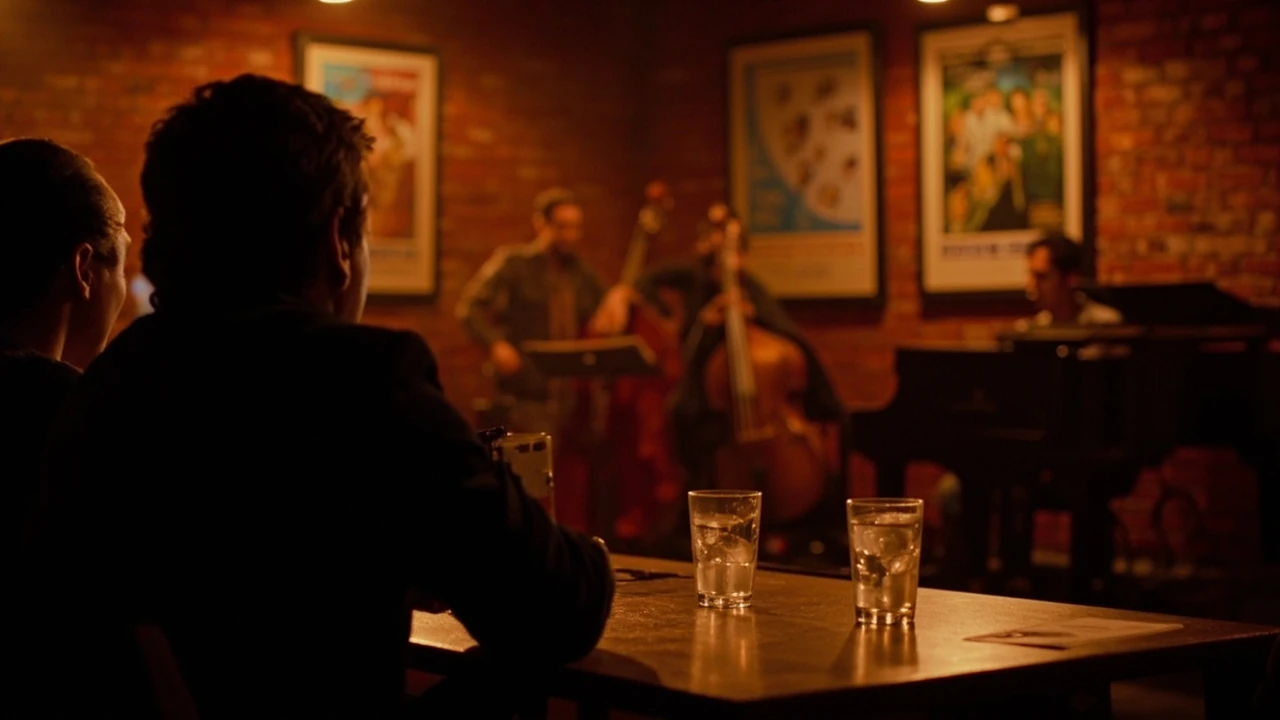
Concerts near me: how to find live music that fits your week
It is 7:14 p.m. on a Thursday and you would rather hear a real instrument than scroll another feed. Typing “concerts near me” into a search bar is the first move, but the results that come back are usually a long list of venues, ticketing sites, and half-finished event calendars. The job here is to turn that list into a plan: a place to go, a show that suits your taste, a price you are happy to pay, and a route home that does not eat the whole evening.
This guide is for people who want a practical method, not a generic “top 10 venues” listicle. It walks through how to read local listings, how to filter by what actually matters to you, and how to avoid the common traps that turn a promising night out into a wasted ticket. The advice works whether you live in a capital city with a dozen venues on your doorstep or in a smaller town where the only regular stage is fifty minutes away.
Why “concerts near me” results are often disappointing
Search engines try to answer the query by mixing three different things: large ticketing platforms with national reach, venue websites, and local event calendars. None of them are complete on their own, and the result page rarely explains which source is which. A listing from a major ticketer can sit next to a community-hall recital from the same town, with no signal of which is bigger, louder, or better suited to your week.
A second problem is that “near me” is interpreted loosely. A platform may default to a search radius of 30 miles, then double it when results are thin, and quietly show you a festival two hours away as if it were a casual option. The listings also tend to lead with whatever event has the strongest marketing budget, not the one that best matches the listener.
Finally, the word “concert” gets stretched. In strict use it means a ticketed live music performance, but the same search often returns open-mic nights, DJ sets at bars, brass-band rehearsals in the park, and organ recitals at the local church. Some of those will be exactly what you want; others will not. A small amount of filtering up front saves a lot of scrolling later.
Step 1: define what kind of live music you actually want
Before you open another tab, decide on a few honest answers. You can keep them in your head, but writing them down makes the search much faster.
- Genre or family: chamber music, jazz, rock, folk, world, electronic, or classical.
- Setting: seated concert hall, standing club, church, outdoor stage, or pub.
- Budget: free, under twenty, under fifty, or no real cap.
- Energy: a focused listening room, a casual background, or a dancefloor.
- Group size: solo night, date, friends, or family with children.
These five answers cut most of the noise. A search for “concerts near me this Friday” returns the same wall of results regardless of whether you want a quiet string quartet recital or a heavy metal club night. Once you know the genre, setting, and budget, the same listings split cleanly into “yes”, “maybe”, and “no” within a few seconds.
If you are not sure what you want, that is also useful information. In that case the practical move is to look at the regular weekly listings for two or three nearby venues rather than chasing individual events. You will start to notice patterns, and a genre or scene you have never tried will quietly come into focus.
Step 2: build your own short list of sources
No single source covers every event in a town. A workable short list usually includes three or four of the following:
- The websites of the closest purpose-built venues: concert halls, theatres, jazz clubs, and larger churches.
- Local ticketing platforms or community box offices that aggregate smaller events.
- City or council cultural calendars, which often list free and low-cost events.
- One or two trusted local press outlets or independent music blogs.
- Social media pages of venues and promoters, useful for last-minute additions.
Once you have this short list, you stop trusting the general “concerts near me” results page and start trusting a small set of feeds that you check on a rhythm that suits you. Some people look once a week, others scan on Sunday evening to plan the next five nights. The right cadence is the one you will actually keep.
Step 3: read a listing like a short report
Most event listings follow a similar pattern, and learning to scan them saves a lot of time. Five fields carry most of the information you need.
| Field | What to look for | Why it matters |
|---|---|---|
| Date and doors time | Doors, support act, and headline times are usually separate. | Shows often run 30-60 minutes later than the printed start. |
| Venue and room | Which room in a larger building, seated or standing capacity. | The same artist can feel very different in a 200-seat hall or a 1,200-seat arena. |
| Tickets and fees | Face price plus booking and card fees. | Booking fees can add 10-20 percent on top of the headline price. |
| Age and access notes | Minimum age, late-licence end time, step-free access. | Relevant for families, accessibility needs, and travel home. |
| Refund and rescheduling policy | What happens if the artist is ill or the event moves. | Important for any non-refundable travel or hotel you might book. |
Two events that look similar at a glance can be very different once these fields are read carefully. A 50-pound ticket in a 400-seat seated hall is a different experience from a 50-pound ticket in a standing club with a 1 a.m. licence. Listings do not always spell that out, so it helps to know the venues themselves.
Step 4: filter by practical constraints
Taste is only one filter. The other is logistics. Five constraints decide whether a concert is actually a realistic option for any given week. For broader context, the List of Hilary Duff concert tours provides a concise reference for this section.
- Travel time: door to door, including parking or last-mile transit.
- End time: when the headline act finishes, plus travel back.
- Cost: ticket, fees, travel, food, and a sensible buffer.
- Energy: how much you want to engage versus passively listen.
- Commitment: whether you are booking alone or coordinating with others.
A common mistake is to optimise only on the first two. A show can be close and finish at a reasonable hour and still be a poor choice if the support acts do not interest you, the standing is rough on your back, or the ticket puts the total evening over your weekly entertainment budget. Treat all five as equal filters, not as a ranked list.
Step 5: spot the difference between a concert and a tribute, a session, or a background event
The word “concert” is used loosely in listings. It is worth pausing on what is actually being advertised.
| Event type | What it usually means | When it suits you |
|---|---|---|
| Concert | A billed performance by named artists, usually ticketed. | You want a specific artist or programme and are happy to plan around it. |
| Tribute or covers show | Musicians performing the catalogue of a well-known act. | You want the songs rather than a specific performer, often at a lower price. |
| Open mic or jam | Rotating performers, sign-up on the night, loose running order. | You enjoy discovery and a relaxed room, and do not mind uneven sets. |
| Session or background music | Live music in a bar or restaurant with no ticketing and no stage. | You want atmosphere with conversation, not focused listening. |
| Recital | Often classical, a single performer or small ensemble, formal setting. | You want a quiet, focused hour of music in a seated room. |
None of these is better than another. They simply serve different needs. The mistake is to book an open-mic night expecting a headliner, or a tribute show expecting a band whose sound you already know. Reading the event description slowly usually removes the doubt.
Step 6: understand how ticketing actually works
Ticketing for live music has a few patterns that catch out first-time buyers.
Presales are windows for fan-club members, venue subscribers, or credit-card holders. They are useful if your week is flexible and you can plan a week or two ahead. General sale then opens a few days later, often with a larger inventory. Some events release a final batch of tickets on the day of the show, usually when production numbers are confirmed.
Resale platforms sit between primary ticketing and the venue. In some regions they are regulated and tied to the original face value, in others the market is open and prices move with demand. If you use resale, check the venue’s policy on entry: a small number of venues do not accept tickets that have changed hands.
Fees are where the real surprise lives. A 30-pound ticket can become 36 pounds once booking, card, and service fees are added. Some venues offer a small discount for cash on the door or for in-person purchase at the box office. For regular concert-goers, a venue membership that waives fees can pay for itself in a season.
How to find concerts near you in practice
Once the filtering is in place, the search itself becomes quick. A simple weekly routine works well for most people.
- Sunday evening: scan the websites of your three closest venues and one ticketing platform.
- Monday morning: check your city’s cultural calendar for free or low-cost events.
- Midweek: look at social media for last-minute additions and standing-room returns.
- On the day: check the venue’s page for door times, set changes, or cancellations.
This rhythm is light enough to keep and dense enough to catch most of what is on. It also reduces the temptation to over-book, which is the other common trap in a city with a lot of live music.
Special case: finding classical concerts, organ recitals, and chamber music
Classical and early-music events are often listed in a different place from rock, jazz, and club nights. A few sources are worth knowing about.
- Concert-hall and conservatoire websites, which usually have a clean calendar view.
- Church and cathedral websites, especially for organ recitals and choral evensong.
- Local chamber-music societies and amateur orchestral associations.
- Town-hall and library series, which often programme free lunchtime concerts.
For organ and pipe-organ events specifically, two earlier articles on this site are useful: an introduction to organ stops and how to read a stop list and a practical guide to organ registration. If you are new to organ music, reading those first will make any recital listing much easier to interpret. For a wider view of how organ sound is shaped at the builder’s bench, pipe voicing explains the craft behind the instrument you hear in the room. As a separate reference, the ticket sales hilary duff concert review adds source-specific context to this discussion.
These genres also tend to have a different price shape. A surprising amount of high-quality classical music is free, particularly in churches and at lunchtime series. Ticketed events often have a clear price ladder: concession, standard, and premium seating, with student and under-30 schemes in many cities.
Special case: jazz, folk, and world music
Jazz, folk, and world music often sit in a middle layer between formal concert halls and standing clubs. They are usually listed on a mix of venue sites, festival programmes, and small-label or artist newsletters.
For jazz in particular, the standing patterns are useful to learn. A venue with a weekly residency will programme the same artist on multiple nights, which gives you a choice of dates and a better chance of a table. Festivals often release day tickets for under 30 pounds, which is good value if you can plan around the schedule.
Folk clubs and sessions have their own etiquette. Many run a ticket system on the door rather than online, and some still prefer cash. Checking the venue’s social media on the day is usually more reliable than a long-out-of-date event listing.
Special case: rock, pop, electronic, and club nights
For louder and more staged events, a few extra checks help.
- Look for the support acts. Two strong supports can turn a 25-pound ticket into a five-band evening.
- Check the venue’s curfew and last-entry time, especially for weeknight shows.
- Read recent reviews or audience photos. Sound quality varies much more than the listing suggests.
- For club nights, look at the resident DJs and the room rather than the headline name.
Loud shows also benefit from a small amount of pre-planning on ear protection, water, and a meeting point if you are going with friends. None of this takes long and it makes a noticeable difference to how you feel the next morning.
Common mistakes when searching for concerts near me
Most wasted tickets come from a small number of recurring errors. Naming them helps to avoid them.
- Booking by headline only and ignoring the support acts and the room.
- Trusting the generic “near me” results page instead of two or three trusted sources.
- Forgetting to add booking fees, travel, and food to the true cost of a night out.
- Skipping the door time and assuming the printed start is when the music begins.
- Over-booking the week and turning concerts into an obligation rather than a pleasure.
None of these are dramatic. They are small misses that compound. A short, honest audit after a bad night out usually points to one of them.
A simple decision checklist before you book
Before clicking the buy button, run the event through this short list. It takes under a minute and prevents most of the regret.
- I can name at least one of the artists or groups performing.
- The venue is one I have been to, or one I have read about from a trusted source.
- Door to door, the trip fits inside the time I actually have that evening.
- The total cost, including fees and travel, fits my weekly entertainment budget.
- The format matches my energy: focused listening, casual, or dance.
If any of these answers is no, it does not mean the concert is bad. It means it is the wrong concert for this week. A future week may suit it much better.
How to keep up without burning out
People who see a lot of live music rarely rely on impulse bookings. They tend to have a few habits that protect both their wallet and their attention.
- One venue membership or subscription that gives priority booking and fee-free tickets.
- One email list from a trusted local promoter or magazine.
- One saved search on a ticketing platform, filtered by genre and price.
- A personal rule on how many concerts they will book in a month, written down.
With this scaffolding, “concerts near me” stops being a vague wish and becomes a small, well-tended list. You still get the joy of stumbling on something unexpected, but you are no longer depending on it.
Frequently asked questions
How do I find concerts near me on a tight budget?
Start with free sources: church and cathedral recital series, lunchtime concerts in libraries and town halls, and community centre events. Many ticketed venues also run concession schemes for students, under-30s, and local residents, and some offer a small number of free returned tickets on the night. A weekly scan of two or three local listings pages usually surfaces more free and low-cost events than a single search.
What is the best way to find small or local concerts?
Smaller events are often listed on venue social-media pages, in local independent press, and on community noticeboards rather than on the major ticketing platforms. Following a handful of local promoters, record shops, and small venues is usually more useful than any single search engine. If your town has a music mailing list or a printed listings magazine, that is worth subscribing to as well.
Are “concerts near me” search results accurate about distance?
Often not, or at least not precisely. Listings platforms default to a search radius that can be 30 miles or more, and they expand it when results are thin. Always check the venue address and your own travel time rather than trusting a “within X miles” tag. For a realistic plan, measure door-to-door travel at the time of day you will actually make the trip.
Should I book early or wait for last-minute tickets?
Booking early is usually cheaper and gives better seats for seated shows. Waiting can work for general admission events where the promoter is confident of selling out, because a small number of tickets sometimes appear on the day. For small venues and niche genres, last-minute deals are common. For arena-level artists, waiting usually means paying resale prices.
How do I know if a concert listing is legitimate?
Buy from the venue’s own box office or from a known ticketing partner linked from the venue’s official website. Be cautious of social-media ads for artists that do not match their current tour dates, and of resale prices that look like a large markup on a small face value. If a listing cannot be cross-checked on the artist’s official site or the venue’s page, it is safer to skip it.
What is the difference between a concert, a gig, and a show?
The three words are largely interchangeable in everyday use, especially in British and Irish English. Some people use “gig” for smaller club shows, “concert” for seated or formal events, and “show” for anything from a one-person performance to a festival stage. The venue, the format, and the running order matter more than the label.
How early should I arrive for a concert?
For seated events, 15-20 minutes before the printed start is usually enough to find your seat and settle. For general admission standing shows, 30-45 minutes is a sensible buffer if you want a reasonable position, more if you have a specific spot in mind. For very small venues, arriving at doors is fine and sometimes the best atmosphere.
What should I do if a concert is cancelled or rescheduled?
Check the venue’s refund policy first. Most primary ticketers offer a full refund on cancellation and a choice of refund or transfer on rescheduling. For travel and hotels booked independently, look at flexible-rate options and keep confirmation emails. Acting quickly usually gives more choice, especially for popular dates that other events will be competing for.
Can I take children to concerts?
Many family-friendly matinees, lunchtime series, and folk or community events welcome children, and some venues run specific under-18 or family ticket schemes. Loud late-night standing shows are usually 14-plus or 18-plus for a reason. Check the listing for age guidance, and contact the venue directly if you are unsure about a specific show.
Is it worth going to a concert alone?
Often yes, particularly for seated events and small venues. Solo concert-going is a normal part of live music culture and many regulars do it for a large share of the shows they attend. The practical points are the same as for any night out: plan your travel, eat beforehand, and give yourself a moment after the show to sit with what you heard rather than rushing straight home.