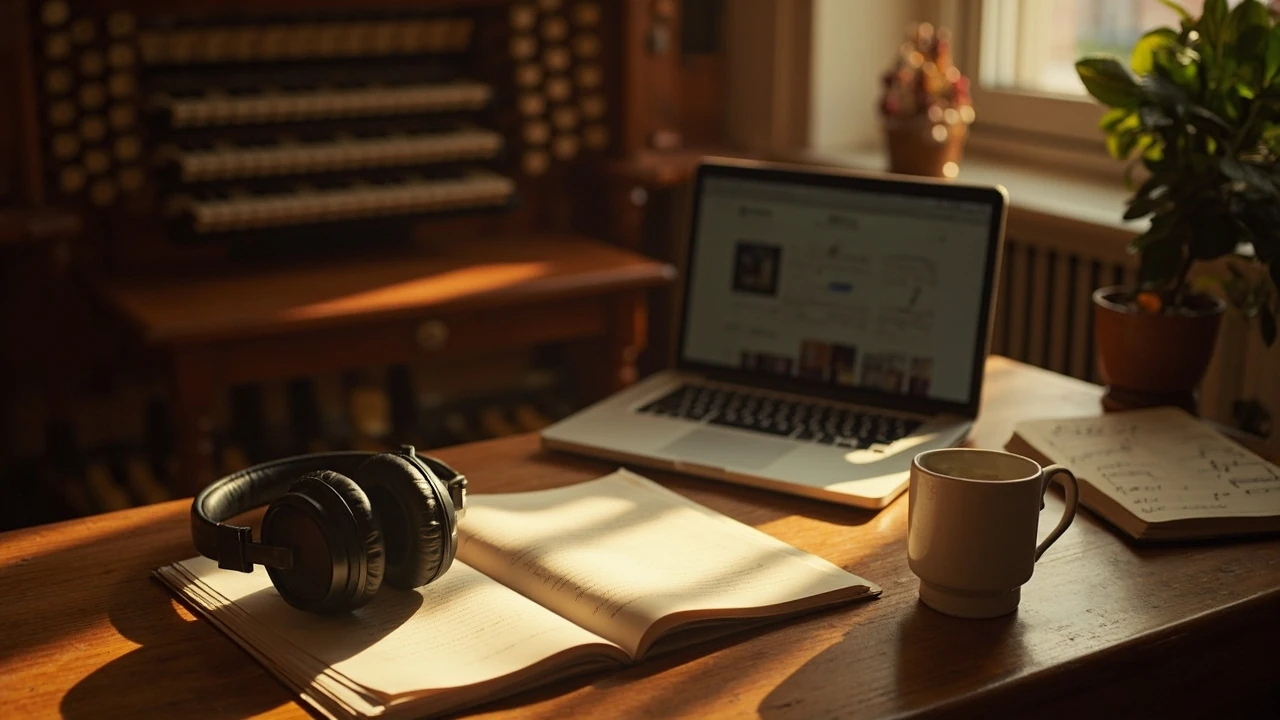
Music playlists for organ practice and focused listening
An organist staring at a fresh week of practice usually does not need more music. The problem is the opposite: there is too much repertoire, too many recordings, and not enough structure around how to actually listen. A well-built set of music playlists turns scattered listening into a working routine, the same way a stop list turns raw pipes into an organ voice. The goal is not to collect tracks, it is to make every minute of listening serve a specific musical purpose.
This guide treats music playlists as a working tool for organists, students, and curious listeners. It covers the listening situations that matter most, the structure of each kind of playlist, the trade-offs between streaming services and personal libraries, and the practical habits that make a playlist actually get used. The advice is written for a real keyboard, not a generic music fan, so the examples lean on repertoire, acoustics, and registration rather than pop charts.
Why organists need playlists at all
An organist’s week is already full: lessons, services, rehearsal, technical work, and sight-reading. Listening is supposed to feed all of that, but it usually competes with it. A dedicated playlist solves a simple problem: it removes the decision of what to play next, so attention can stay on the music itself.
There are three listening situations where a fixed playlist clearly outperforms random playback. Practice preparation needs short, repeated references to the piece being learned. Repertoire study needs contrast across eras and schools, so style does not collapse into a single sound. Background listening needs calm, predictable material that does not distract from score reading or registration work. Each situation calls for a different kind of music playlist.
Used well, music playlists also document a player’s growth. A playlist from two years ago is a recording of what the ear found interesting at the time. The same list rebuilt today will sound different, because the listener hears more inside the sound. That makes a personal library of playlists quietly valuable over decades.
The four core music playlists every organist should build
Before worrying about streaming services, file formats, or smart speakers, it helps to think in terms of listening jobs. The following four music playlists cover almost every realistic week for a working organist. Each one has a clear purpose, a clear length, and a clear failure mode if it is built carelessly.
| Playlist type | Primary purpose | Typical length | Main risk if built poorly |
|---|---|---|---|
| Active practice reference | Repeated study of a single work in progress | 20-45 minutes | Becoming a stale loop that hides mistakes |
| Repertoire survey | Wide exposure across eras, schools, and builders | 2-4 hours | Skipping eras or repeating the same handful of names |
| Registration and acoustics study | Listening to how stops, rooms, and builders differ | 1-2 hours | Confusing the player’s taste for what the room actually does |
| Calm background for score work | Non-distracting sound while reading or planning | 1-3 hours | Pulling attention away from the page |
These four music playlists overlap in small ways, but they should not be merged. A practice reference playlist is not a survey, and a registration study playlist is not background music. The moment two jobs share a queue, both jobs lose focus. Keeping them separate is the simplest way to make each one useful.
Building a practice reference playlist
A practice reference playlist is the most personal of the four. It exists to support the piece currently being learned, and it should be rebuilt for almost every new work. The job is to give the ear a clear model of the finished sound, and to give the fingers a clear model of how the piece breathes.
Start with two or three full recordings of the piece in different interpretations. Listening to one great performance can quietly lock the player into one tempo and one registration, which is rarely useful early in learning. Two contrasting performances expose the structure more clearly than any single take. A third performance on a clearly different instrument helps the player hear the piece beyond one particular building.
Next, add a small number of short clips that isolate specific problems. A difficult fugue entry, a tricky pedal line, a registration change at a particular bar, a transition between manual changes. These are not full movements. They are twenty-second to two-minute anchors that can be looped while the hands work out the passage. A practice reference playlist is one of the few music playlists where repetition is a feature, not a flaw.
Finally, end the playlist with one or two recordings of music the player loves but is not currently learning. This is a small reward track. It keeps the listening session emotionally positive and reminds the player why the work in progress is worth the effort. Without that ending, the playlist becomes a treadmill.
- Two to three full performances of the work in progress, ideally on different organs.
- Short loops of specific problem passages, clearly named in the playlist.
- One or two reference recordings of related works by the same composer.
- One or two reward tracks to end the listening session on a positive note.
Building a repertoire survey playlist
A repertoire survey playlist exists to keep the ear honest. Most organists, even experienced ones, listen to a surprisingly narrow slice of the literature. The recording industry, the local concert calendar, and personal taste all push in the same direction. A well-built survey playlist pushes back, gently, by putting unfamiliar music next to familiar music on the same queue.
The cleanest way to structure a survey playlist is by era, then by geography. Renaissance and early Baroque on the same organ school, then French Classical, then German Baroque, then Romantic, then twentieth and twenty-first century. Within each era, alternate between well-known names and at least one or two less-recorded composers. The unfamiliar piece does not need to become a favorite. It only needs to register, so the ear has a wider reference for what organ music can sound like.
Length matters here. A one-hour survey playlist will tend to drift toward the most familiar material, because that is what the builder knows how to choose. A two to four hour survey playlist forces a real mix, and it survives a whole afternoon of reading, driving, or grading papers without looping. Music playlists of this kind work best when they are long enough that the listener cannot remember the order.
It is worth revisiting the survey playlist every six to twelve months. Some pieces will not survive the second listen, and that is useful information. Other pieces will start to feel familiar in a way that suggests they belong on a future program. A survey playlist is a working draft, not a finished collection.
Building a registration and acoustics study playlist
Registration is one of the hardest things to learn from recordings, because the recording captures one particular organ in one particular room. Even so, a thoughtful playlist can train the ear to notice what different builders and different acoustic environments actually do. This is the playlist that benefits most from careful ordering.
Group tracks by building, not by composer. Five minutes of Buxtehude on the Schnitger organ in a certain Dutch church tells the ear more about that room than an hour of Buxtehude on five different organs. The player can then compare two buildings playing similar material. Over time, the playlist becomes a private reference library of how sound behaves in real spaces, which is exactly the knowledge registration work depends on.
Within a single building, vary the registration. A principal chorus solo, a flute solo, a reed solo, a pleno with mixtures. The playlist should make it easy to hear how the same room changes when different ranks are added or removed. A useful test is to listen to the playlist with eyes closed and try to predict the registration before it becomes obvious. If the prediction is usually wrong, the playlist is doing its job.
| Study focus | What to include | What to listen for | Listening position in the room |
|---|---|---|---|
| Builder identity | Same composer, multiple historic organs | How voicing choices change the attack and color | Compare recordings, not physical rooms |
| Acoustic behavior | One organ, several different works | Reverb time, clarity of counterpoint, bass definition | Note whether the recording is close or distant |
| Registration families | Flute, principal, reed, mixture examples | Blend, definition, how the chorus builds | Listen for how the room supports the sound |
| Repertoire range | One era across several recordings | Stylistic norms versus individual interpretation | Watch for tempo and articulation choices |
A small but important habit is to note the recording conditions. A close-miked studio recording will exaggerate chiff and attack, while a distant church recording will smooth those details. Both are valid, but they tell the ear different things. A registration study playlist is most useful when the listener knows what kind of recording they are hearing.
Building a calm background playlist
The calm background playlist is the easiest to underestimate and the easiest to misuse. Its job is to support score reading, registration planning, and quiet thinking without pulling attention away. That means the music must be present enough to feel like sound, but not so active that the mind follows it.
For organists, the best material for this role is often not organ music at all. Slow movements on soft strings, solo flute or oboe sonatas, Renaissance polyphony sung by a small ensemble, and quiet contemporary piano can all work. Organ music tends to be too architecturally interesting for true background use, especially pieces with strong counterpoint. The mind wants to follow the lines, which is exactly the opposite of what this playlist is for.
Length should match the task. A ninety-minute playlist covers most practice and reading sessions. A three-hour playlist is useful for a long admin day, a grading session, or a long drive. The order should be deliberately flat. Similar dynamics, similar texture, similar tempo range. Surprise has no place here, because surprise is what makes a background playlist stop being background.
- Solo strings, flute, oboe, or harpsichord works in slow to moderate tempos.
- Renaissance vocal polyphony in small, clear performances.
- Quiet contemporary piano or chamber music without strong rhythmic drive.
- Avoid full organ repertoire, large choral works, and dramatic tempo changes.
How to choose what goes on each playlist
The hardest part of building music playlists is usually not finding recordings. It is deciding what to leave out. A practical filter helps. The following questions are worth asking before adding a track to any of the four core playlists.
First, does this track support the playlist’s job? A registration study playlist does not need the player’s favorite performance of a well-known prelude. It needs recordings that expose how the organ and room behave. A background playlist does not need the most beautiful slow movement ever recorded. It needs music that stays out of the way.
Second, is this track actually distinct from the others? A playlist with five slightly different interpretations of the same piece teaches the ear less than a playlist with three clearly different ones. Distinctness matters more than total count.
Third, will this track still earn its place in a month? A common mistake is to add a recording because of one striking detail, only to find that the rest of the track is hard to sit through. A short test listen of the whole track, not just the famous passage, is a useful gate before committing it to the playlist.
Streaming services versus personal music files
For most organists, the choice between a streaming service and a personal music library is not really a choice. The serious listening work happens on a personal library, and the convenience work happens on a streaming service. Music playlists can live in both places, but they are not the same tool.
Streaming services are excellent for discovery, for quick access to a wide range of recordings, and for sharing playlists between devices. They are weak for the practice reference playlist, because their terms of use and licensing can change without warning, and because tracks occasionally disappear or are replaced with remastered versions. For a playlist that supports daily work on a specific piece, that instability is a real problem.
A personal music library, organized into local playlists, is the right home for the practice reference playlist and the registration study playlist. Files are stable, metadata can be edited freely, and the player controls the exact version of every recording. The cost is storage and the time spent managing files. For organists who already keep a personal library of scores, adding a managed music library is a small extension of the same habit.
| Playlist type | Best home | Why | Risk if misplaced |
|---|---|---|---|
| Practice reference | Personal library | Stable files, editable metadata, version control | Tracks disappearing mid-project |
| Repertoire survey | Streaming service | Wide catalog, easy discovery, low storage cost | Drifting into algorithmic recommendations |
| Registration study | Personal library | Long-term reference, exact recording control | Losing track of which building each track came from |
| Calm background | Either, with intent | Personal library for repeat use, streaming for variety | Becoming an unthinking default instead of a tool |
Metadata and naming habits that save hours
Music playlists are only as useful as the information attached to them. A track labeled simply by composer and title is hard to find later, especially when the same work appears in many versions. A small amount of consistent metadata turns a folder of files into a working reference library.
At minimum, each track should carry the composer, the work, the performer, the instrument or organ, and the recording year. The building and city are worth including for organ repertoire, because the room is part of the sound. Album title and track number are useful when the playlist draws from a specific recording, but they should not be the only identifier.
Playlist names should be functional, not clever. A name like “Bach WTC Book 1 – reference” is more useful in two years than “Morning listening.” Dates in playlist names help, especially for repertoire surveys that get rebuilt. A short description at the top of the playlist, even just two or three lines, captures the intent that the name alone cannot carry.
Scheduling listening into a real week
Theory is one thing, the calendar is another. Most organists under-protect listening time, and the practice reference playlist ends up being the only one that actually gets used. A simple weekly structure helps, and it does not need to be rigid.
A useful pattern is to anchor one longer listening session, around ninety minutes, on a fixed weekday. That session is the home of the registration study playlist, because it needs the most attention. Shorter sessions of fifteen to thirty minutes feed the practice reference playlist, usually right before or after a practice block. The repertoire survey playlist lives in the gaps, during driving, walking, or low-energy admin work. The calm background playlist is the default when the others are not running.
What matters is that the music playlists have a home in the week. A playlist without a time slot will be skipped whenever the day gets busy, which is most days. Even a loose schedule turns listening from a good intention into a working habit.
Common mistakes when working with music playlists
A few patterns show up often enough to be worth naming. None of them are fatal, but each one quietly reduces the value of the time spent listening.
- Letting one playlist do all four jobs, which makes it good at none of them.
- Adding tracks without removing old ones, so the playlist grows past the point of focus.
- Listening on a phone in a noisy environment, which flattens the detail that organ repertoire depends on.
- Skipping the registration study playlist because it feels less enjoyable than the others.
- Building playlists that look impressive on paper but never get played.
The fix for most of these is the same: a short, regular review. Once a month, listen through each playlist once, remove anything that no longer earns its place, and note what is missing. A twenty-minute review every month does more for the health of a music playlist than an hour of building it once.
Adapting playlists for students and teachers
For students, music playlists are a way to build an ear that is wider than their own playing. A teacher can assign a small survey playlist around a piece being studied, so the student arrives at the next lesson with a richer sense of how the work has been interpreted. The same playlist can be shared between students, then adjusted as each student finds what they need.
For teachers, a well-documented practice reference playlist is a teaching tool. Sending a student a playlist that includes both a model recording and a short loop of the specific passage they are struggling with saves lesson time and keeps the work moving between sessions. The same approach works in reverse, when a student shares a recording of their own playing and the teacher can attach reference tracks that address specific issues.
The wider the student’s listening habit becomes, the more the teacher can focus lesson time on interpretation, registration, and physical technique instead of orientation. Over time, the student’s own music playlists become a quiet record of their musical education.
Listening environment and playback quality
Listening quality matters more for organ repertoire than for almost any other music. The instrument is large, the rooms are large, and the frequency range is wide. A small speaker in a noisy kitchen will flatten most of what the ear needs to hear, especially in the pedal and in the acoustic bloom of the room.
Headphones are a useful tool for detailed work, especially for the registration study playlist. They reveal chiff, attack, and voicing details that a distant speaker may soften. They are less useful for a survey playlist, where the sense of the room is part of what the ear is learning. Switching between headphones and speakers during the same listening session is a good way to train the ear to separate the instrument from the room.
Speaker placement, room treatment, and listening position all matter, but a perfect setup is not required. A reasonable pair of closed-back headphones and a quiet room will support serious listening. The goal is not audiophile perfection, it is a setup good enough that the ear can hear what the recording actually contains.
When to rebuild a playlist from scratch
Some playlists should be rebuilt regularly. The repertoire survey playlist is the clearest example, because the player’s taste and the available recordings both change over time. A useful rule is to rebuild the survey once a year, keeping the tracks that still earn their place and replacing the rest with new material.
The practice reference playlist is rebuilt whenever the piece in progress changes. There is no point in keeping last month’s loops once the work has moved on. A small archive of past practice reference playlists is useful for review, but the working playlist should be lean.
The registration study playlist and the calm background playlist are slower to change. They should be reviewed, but not rebuilt, unless the player’s interests or equipment shift significantly. Forcing constant change on a calm background playlist is one of the quickest ways to make it stop being calm.
Connecting listening to playing
Music playlists are only useful if they change how the player sounds at the keyboard. The connection is not automatic, and it helps to be explicit about it. A simple loop is to pick one track from the practice reference playlist, listen once with the score, then play the passage immediately. The ear will already have a model, and the hands will follow it more cleanly.
For registration, a track from the registration study playlist can be used as a reference while planning stops for a new piece. The player listens, then opens the stop list and tries to reproduce something close to the recorded sound. This kind of cross-training builds a vocabulary of colors that a written description cannot.
For repertoire, a survey playlist is most useful when the player picks one unfamiliar track a week and learns the opening few bars. The goal is not to learn the piece, only to put a single phrase under the fingers. Over a year, that small habit builds a wide personal repertoire of material that the hands already know how to start.
Related reading from this site
Frequently asked questions
How long should a music playlist for organ practice be?
A practice reference playlist should usually be between twenty and forty-five minutes, long enough to cover a focused work session without becoming a background loop. Longer playlists are better suited to repertoire surveys, registration study, or calm background use.
Is it better to build music playlists on a streaming service or a personal library?
Practice reference and registration study playlists are usually best on a personal library, where the recordings are stable and the metadata is fully under the listener’s control. Repertoire survey playlists are often easier to build on a streaming service, because the catalog is wider and discovery is faster. The two systems can work together.
How many tracks belong in a repertoire survey playlist?
A useful survey playlist is long enough that the listener cannot remember the order, usually two to four hours. The point is to mix familiar and unfamiliar material across eras and schools, so the ear keeps encountering new sound without losing the thread.
Should music playlists include full albums or only single tracks?
Single tracks are usually better for focused work, because the playlist can be ordered for a specific purpose. Full albums are useful for the calm background playlist, where the artist’s intended flow is part of what makes the listening work. Mixing the two is fine, as long as the order of the playlist still makes sense.
How often should music playlists be reviewed or rebuilt?
Practice reference playlists should change whenever the work in progress changes. Repertoire survey playlists benefit from a yearly review. Registration study and calm background playlists change more slowly, but a short monthly check keeps them honest.
Can music playlists help with registration choices on unfamiliar organs?
Yes, especially when the registration study playlist groups recordings by building. Listening to how experienced players handle a particular organ gives a working model of which stops combine well and how the room shapes the sound. The same approach works for an unfamiliar console, as long as a similar instrument is in the listening history.
What kind of music is best for a calm background playlist while reading scores?
Solo strings, flute, harpsichord, and quiet vocal polyphony in slow to moderate tempos usually work well. Organ repertoire tends to be too structurally interesting for true background use, and large orchestral writing can pull attention away from the page.
How can a teacher use music playlists in lessons?
A teacher can share short, focused playlists around each piece being studied, including model recordings and brief loops of specific passages. The same approach works in reverse, when a student sends a recording and the teacher attaches reference tracks that address particular issues. Over time, the shared playlists become a record of the student’s growth.
Do music playlists need careful metadata, or is a track name enough?
For serious listening work, metadata makes the difference between a usable library and a folder of files. Composer, work, performer, organ or instrument, and recording year are the minimum. The building and city are worth adding for organ repertoire, because the room is part of the sound.
What is the most common mistake when building music playlists?
Trying to make one playlist do every job. A single mixed list rarely supports focused practice, broad survey, and quiet background work at the same time. Splitting the work into a small number of clearly named playlists, each with a single purpose, almost always produces better results.