A pipe organ for sale comes with two questions: is this a worthwhile instrument, and can it work in the building where you want to put it? The asking price answers neither. Before making an offer, obtain the stop list, dimensions, condition records, and a proposal for removal and installation. A playable instrument in its present home can still require substantial work after a move.
This buying guide concerns used pipe organs, including church, school, recital, and residence instruments. It is not a stock list or an offer to sell a particular organ. The aim is to help you compare an actual listing with a practical project: a known instrument, a suitable room, defined work, and people able to complete and maintain it.
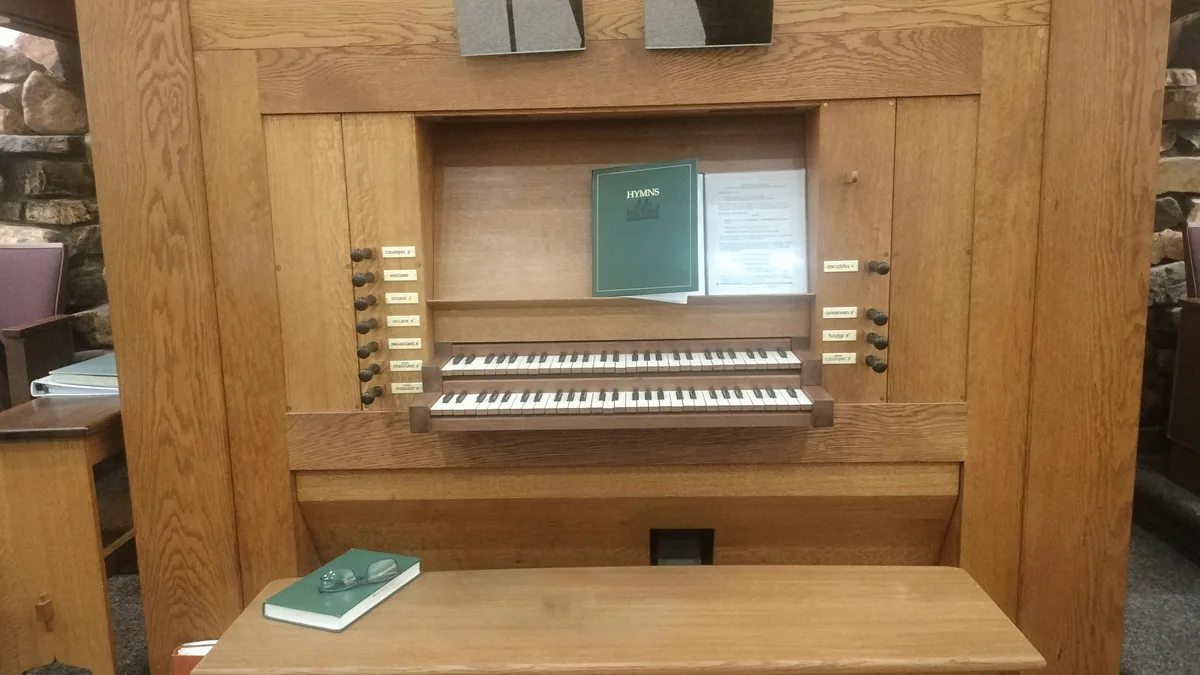
Find a real listing and establish what is being offered
The Organ Clearing House inventory is one place to look for existing instruments in the United States. The Institute of British Organ Building’s relocation list covers instruments available through its UK service. Specialist organ builders may also know of instruments becoming available locally. Treat each source as a route to an inquiry: availability must be confirmed with the person handling that organ.
Save the listing and its reference number when you first contact the seller. Ask whether the instrument is still installed, whether it can be demonstrated, and when removal is required. An old advertisement can remain useful as a record while no longer representing an available purchase. A photograph alone cannot resolve that difference.
Check what the word “organ” means in the advertisement. A digital console, a reed organ, a collection of pipes, and a complete pipe organ are different acquisitions. A pipe instrument needs its sounding pipework and supporting systems; an attractive detached console is not evidence that those parts are included.
The IBO explains that details on its list are provided for guidance and should be confirmed by prospective purchasers. Follow that principle with private advertisements too. If a listing says “complete,” request an inventory. If it says “working,” ask when it was last played and which systems were tested.
A free instrument can still involve a major installation project. Conversely, a priced instrument with reliable documentation and suitable dimensions may be easier to assess. Keep the purchase price in one column and the work required in another until the whole scope is known.
Ask for an instrument file before arranging a visit
Request the builder’s name, date or opus number if known, present location, and a current specification. The specification should identify manuals, pedal compass, stops, couplers, and action type. Ask for photographs of the case, console, pipework, windchests, reservoirs, blower, and any known damage, where safe access allows.
Service invoices and records of alterations help distinguish the original design from the instrument now offered. A builder’s nameplate may belong to an organ that has since been rebuilt. That need not disqualify it, but a buyer should know which description the sale relies on.
The IBO’s guidance on redundant pipe organs lists basic information for advertising and recommends a professional report before dismantling. Its use of “redundant” means an instrument with no future use in its present location; it does not automatically mean defective or worthless.
Use a short question sheet to fill gaps in the file:
- Which parts are included, and are any pipes or divisions absent?
- What work was completed recently, and what remains unresolved?
- Has the organ been altered, relocated, or stored?
- Can the buyer’s organ builder inspect it while it is assembled?
- Who controls access and has authority to arrange the sale?
- Is there a firm date by which the building must be cleared?
Keep unknowns visible. If the seller cannot identify an earlier repair, write “repair date unknown” in the comparison sheet. Replacing that with “probably restored recently” would make the proposal look more certain without adding any evidence.
For an institution, choose one person to maintain the file and circulate revisions. Otherwise, the musician may be working from an updated stop list while the building team quotes dimensions from an earlier installation. A dated shared record makes those mismatches easier to catch before they reach the budget.
Choose for the music your players actually need
Write down the intended uses before ranking candidates. Accompanying a choir, leading congregational singing, teaching pedal technique, and presenting a broad recital program can place different demands on an instrument. Invite the regular players into that discussion early enough to influence the shortlist.
The APOBA purchasing guide recommends establishing a project’s objectives and the committee’s authority. For a used instrument, that translates into a useful buying discipline: agree on the musical needs and decision process before an appealing advertisement sets the direction.
Ask the organist to identify essential features and preferences separately. A particular pedal compass may be essential to the teaching program. A larger range of solo colors may be desirable but negotiable. That distinction helps a builder judge whether a proposed alteration is necessary or merely attractive.
Read stop counts carefully. A stop and a rank are not always equivalent; mixtures can contain several ranks, and borrowing or extension can make a specification look larger without adding an independent rank for every stop. Our introduction to pipe-organ stops, wind, and keyboards explains the terminology used in a specification.
A demonstration should include music close to the intended use. A loud full-organ passage reveals little about a quiet accompaniment that must support singers. Let the player try ordinary transitions, reach the controls, use the pedals, and judge sight lines from the bench. Record specific difficulties while the instrument is available to test.
For comparison visits, use some of the same music and questions at each organ. The purpose is to compare responses under a recognizable task. It is easier to discuss a difficult page turn or an unavailable registration than a general impression that one instrument felt more impressive.
Have the proposed room assessed before committing
An organ that fits on a floor plan may still be unsuitable for the space. Ceiling height, room volume, sound distribution, console position, access, and the instrument’s physical arrangement all matter. Ask the builder to assess the receiving room as well as the organ being offered.
APOBA’s space-planning guidance separates pipes and windchests, console, and blower as major planning elements. Their relationship affects the layout. Moving a detached electric-action console is a different task from rearranging the direct connections of a mechanical-action instrument.
Provide measured drawings where available. Include the intended position, access doors, stairs, galleries, and possible routes for large components. Ask how technicians will reach the instrument after installation. A layout that leaves no maintenance access creates a continuing problem even if the installation crew can assemble it once.
Structural capacity and electrical work need project-specific advice from the appropriate professionals. Do not apply a general internet weight-per-stop figure to approve a gallery. The distribution of loads and the receiving structure matter, and a seller’s description cannot certify either.
Acoustics also deserve an explicit discussion. Pipes heard in a resonant church will interact differently with a small, absorbent room. Our editorial recommendation is to ask what tonal work is included in the installation proposal and how the builder will judge the result on site. The sale demonstration is evidence of the current sound, not a guarantee of the relocated result.
Ask for a drawing of the proposed arrangement before approving substantial changes. It should show the relationship of the pipes, console, choir or performers, and working access. That gives the musicians and building team something concrete to review together.
Commission an inspection that records what was tested
Arrange for a qualified organ builder or consultant to assess the instrument. A musician can judge musical usefulness, but concealed action components, wind systems, and the scope of repairs require another kind of examination. Agree who the report is for, which areas are accessible, and what will remain untested.
The Boston AGO Organ Advisory Committee describes a consultation process involving a site visit and written recommendations. That is an example of how a documented assessment can support an institutional decision. Confirm the services available in your own area rather than assuming every adviser offers the same scope.
| Area | Ask the specialist to establish | Useful record |
|---|---|---|
| Playing systems | Response of notes, stops, couplers, and controls | Named faults and the conditions under which they occur |
| Wind and action | Condition of relevant components and work needed | Photographs, accessible areas, and limits of testing |
| Pipework | Completeness, damage, and suitability for the project | Missing or altered pipes identified by rank |
| Relocation | What can be retained and what needs adaptation | Proposed scope with exclusions and unresolved questions |
A report should distinguish tested functions from assumptions. “The organ was demonstrated” may mean a short selection of stops was heard. “Each note of each accessible rank was tested” describes a much more specific examination. Ask for enough detail to understand what the report actually supports.
Do not turn a buyer’s viewing into improvised maintenance. Soft metal pipes and delicate mechanisms can be damaged by handling. Leave pipe removal, electrical inspection, and action adjustment to the specialist. During the demonstration, the buyer can take notes and ask for a fault to be reproduced safely.
If the instrument is already dismantled, record that limitation prominently. An inventory and photographs can establish the presence of parts, but they cannot reproduce a playing test. Ask the specialist how that uncertainty affects the proposed work and the decision to proceed.
Compare the full installed cost, with exclusions visible
The Organ Clearing House fee page states that its advertised instrument prices are on an as-is, where-is basis and that dismantling, renovation, and relocation add costs. Other sellers may structure offers differently. Ask each one to state the basis of its price.
Do not carry a generic relocation percentage from one article into the project budget. The organ’s condition, access, distance, layout changes, and receiving building determine the work. Request written quotations for the actual instrument and destination. If a quotation is preliminary, keep it marked preliminary.
| Heading | Clarify in writing |
|---|---|
| Acquisition | Instrument price, included parts, and any broker or advisory charges |
| Removal | Dismantling, labeling, packing, access equipment, and responsibilities at the old site |
| Transport and storage | Shipping scope, any storage arrangements, and handling between stages |
| Repairs and adaptation | Defined work, retained components, optional changes, and exclusions |
| Receiving building | Site preparation and the work assigned to other trades |
| Completion | Installation, regulation, tonal finishing, tuning, demonstration, and follow-up |
Give competing bidders the same information. If one proposal includes a new control system and another retains the existing one, the difference needs an explanation before the totals can be compared. Ask for alternatives to be priced separately where practical.
Include ongoing service in the discussion. Who will maintain the organ locally? Which parts or systems require specialist support? What does the service provider recommend for this instrument and its environment? The answer should be specific enough to inform the owner’s operating budget.
A contingency should reflect the unresolved parts of the project. Ask the builder which uncertainties are still open and what further inspection could resolve them. A round allowance cannot substitute for identifying an inaccessible windchest or an undecided receiving-room layout.
Define removal, installation, and handover as one project
Choose a lead person who can coordinate the seller, organ builder, musicians, and building team. The Organ Clearing House service description shows how acquisition, restoration, transport, installation, and site work may form connected parts of a project. Confirm which of those responsibilities your contractors actually accept.
Before purchase, ask the responsible professionals to resolve ownership, permissions, access, payment stages, and responsibility for each phase. Those details depend on the institution and jurisdiction. A general buying guide cannot supply the correct agreement for every church, school, or private owner.
Keep the included-parts inventory attached to the project documents. Agree how components will be identified during dismantling and who retains the records. If storage is unavoidable, settle its location, duration, protection, and cost before removal starts. Unplanned storage can separate the purchase from an installation plan that was never completed.
Agree on completion criteria before the organ arrives. The buyer should know what demonstration, fault list, documentation, and follow-up are included. Testing should cover the promised specification and controls, together with any agreed work outstanding. “Installed” and “accepted by the owner” need clear meanings in the project.
Retain the final specification, drawings, service information, and records of changes with the instrument. The next caretaker should be able to identify what was moved and what was rebuilt. That record begins with the seller’s file and becomes more useful when each stage adds accurate information.
Questions buyers ask about used pipe organs
Where can I find a pipe organ for sale?
Start with specialist listings such as the Organ Clearing House in the US or the IBO relocation list in the UK, then contact the person handling the specific instrument. Organ builders may also know of local opportunities. Confirm current availability, condition, included parts, and removal requirements before arranging a purchase.
Is a free pipe organ a bargain?
It may be worthwhile, but a zero purchase price leaves removal, transport, repair, adaptation, installation, and site work unresolved. Compare the complete project with your musical needs and building. A written assessment and quotations are more useful than treating “free” as the final cost.
Can a church organ go into a house?
Some instruments are suitable for residential use, while others need more space or a different acoustic setting. Have a builder assess the particular organ and proposed room. Include the blower, console, pipework, maintenance access, and any changes needed; the visible case dimensions alone are insufficient.
Should I buy before finding a receiving building?
A suitable destination should be part of the decision. Without one, the buyer may commit to storage and later discover that substantial adaptation is needed. If the project must proceed in stages, ask the builder to assess those stages and document the unresolved requirements before money is committed.
Can I judge condition from a recording?
A recording can introduce the sound and show a demonstration, but it cannot establish the condition of concealed parts or every note and stop. Ask what was tested, then arrange a suitable inspection. A good musical performance and a comprehensive condition report answer different questions.
Does more pipework mean better value?
Pipe count measures one aspect of an instrument. Musical suitability, condition, independence of ranks, installation requirements, and service support also matter. A larger specification can bring work that your project does not need. Compare instruments against the agreed brief and the full installed cost.
Does an organ need tuning after relocation?
Include tuning and appropriate finishing work in the installation proposal. The builder should define the sequence, receiving-room conditions, and any follow-up visit. Reassembly is not the end of the musical work, and the instrument should be assessed in the place where it will actually be played.
What should the handover include?
Agree on a demonstration of the promised specification, a record of outstanding items, operating information, final documentation, and arrangements for service. Assign responsibility for those deliverables in advance. The owner then has a clear basis for accepting the work and maintaining the instrument afterward.