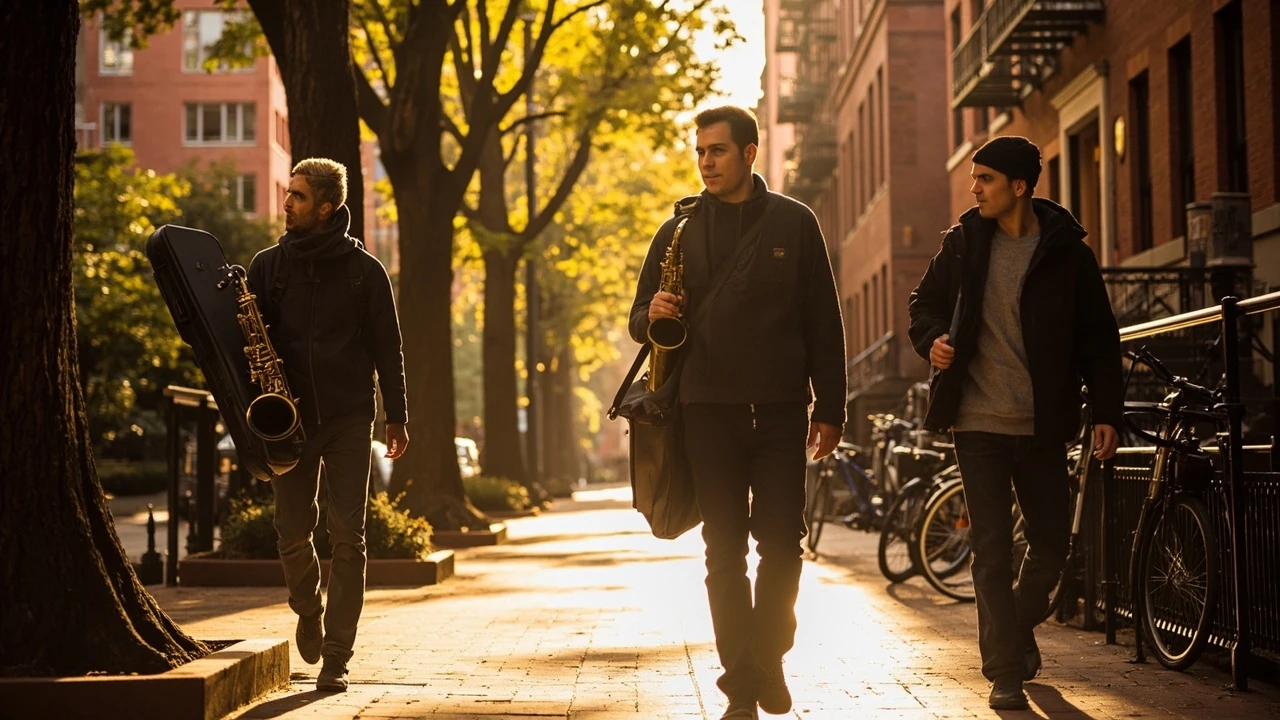
A student receives a Berklee acceptance letter, then realizes the school name is on a printed envelope, not a saxophone case. The next question is rarely about jazz history. It is practical: what does Berklee College of Music actually teach, how hard is the audition, what does a semester cost, and is the degree worth what it costs. This guide is written for that reader, and it stays inside the limits of what a public searcher can verify.
Berklee College of Music is a private music school in Boston, Massachusetts, founded in 1945 by Lawrence Berk and focused from the start on contemporary and popular music rather than the classical conservatory model. Over the decades it has expanded into songwriting, film scoring, music production, music business, and music therapy, and it now enrolls several thousand undergraduate and graduate students. The institution is frequently listed alongside Juilliard, the New England Conservatory, and the Manhattan School of Music in rankings of the most recognized American music schools, though its approach and student population are quite different from the older conservatories.
Berklee College of Music at a glance
Berklee College of Music is one of the largest independent music colleges in the world. It awards Bachelor of Music, Bachelor of Arts, Professional Diploma, Master of Music, and Master of Arts degrees across roughly a dozen departments. The campus occupies several buildings along Massachusetts Avenue and Boylston Street in Boston’s Back Bay, with additional performance and recording facilities nearby.
| Feature | Detail |
|---|---|
| Founded | 1945, by Lawrence Berk |
| Location | Boston, Massachusetts, Back Bay |
| Type | Private, independent music college |
| Undergraduate degrees | Bachelor of Music, Bachelor of Arts |
| Graduate degrees | Master of Music, Master of Arts, Professional Diploma, Artist Diploma |
| Core emphasis | Contemporary music, jazz, production, songwriting, film scoring |
| Accreditation | New England Commission of Higher Education (NECHE) |
For a prospective student, the key fact is that Berklee College of Music is not a general university with a music department. It is a specialist school, and almost every credit a student takes is connected to music, performance, or music industry training. That has implications for the kind of community a new student joins and the daily schedule they should expect.
What Berklee actually teaches
The Berklee curriculum is built around applied music study combined with academic coursework in theory, ear training, and music technology. Every undergraduate takes private instruction on their principal instrument or voice, performs in ensembles, and completes a sequence of core music classes before specializing in a major.
The college’s list of majors reflects the school’s identity. As of recent published information, majors include performance, jazz composition, contemporary writing and production, film scoring, songwriting, music production and engineering, music business, music education, music therapy, electronic production and design, and professional music. Each major has its own course sequence, and ensembles are required every semester for most performance-oriented programs.
| Major | Primary focus | Typical career path |
|---|---|---|
| Performance | Instrumental or vocal skill building | Session musician, touring artist, soloist |
| Songwriting | Melody, lyric, and arrangement craft | Staff writer, recording artist, sync licensing |
| Music production and engineering | Studio recording and mixing | Recording engineer, producer, mixing engineer |
| Film scoring | Music for visual media | Composer, orchestrator, media music |
| Music business | Industry operations and entrepreneurship | Manager, A&R, label operations, founder |
| Music therapy | Clinical use of music in healthcare | Board-certified music therapist |
| Music education | Teaching in K-12 or private settings | School music teacher, private instructor |
Readers familiar with traditional conservatories sometimes expect classical orchestral training to be the spine of a music degree. At Berklee College of Music the model is different. Classical performance study is available, but the school is best known for jazz, contemporary idioms, and popular music. That choice shapes everything from the listening lists in theory classes to the faculty a student will study with.
The audition and application process
For additional context, Applying to Berklee College of Music is a two-part process. There is the standard academic application and there is the audition or portfolio review. Most undergraduate applicants submit both, and the audition usually carries as much weight as grades.
For performance applicants, the audition is live, either on campus in Boston or at one of the audition locations the school runs in other cities and regions. For students who cannot travel, Berklee accepts recorded auditions that meet a defined set of technical and repertoire requirements. Producers, songwriters, engineers, and film scoring applicants typically submit a portfolio of recorded work instead of a live performance, and the portfolio guidelines vary by major.
- Submit the Common Application or the Berklee application, with transcripts, recommendation letters, and a personal statement.
- Prepare a live or recorded audition on a principal instrument or voice, following the repertoire list for the chosen major.
- Complete music theory and ear training placement material, which the school uses for advisement rather than admission in most cases.
- Submit a portfolio if applying to a production, songwriting, or scoring major, with tracks and written descriptions.
- Schedule an interview, either in person or online, as part of the final decision stage.
The repertoire lists for live auditions are published and specific. A guitar audition, for example, asks for prepared pieces across several tempos and styles, plus scales, sight reading, and improvisation. Voice auditions require two contrasting songs and a prepared piece with optional original material. Drummers, bassists, and pianists face similar structured requirements. The lists are updated regularly, so the most accurate information is the version posted on the official Berklee admissions page at the time of application.
Cost, financial aid, and the real price of a Berklee degree
Berklee College of Music is one of the more expensive four-year options in the United States. Tuition is set per academic year, and the school also charges fees for instrument use, studio access, and certain technology resources. Housing in Boston adds a separate cost that varies by residence hall and meal plan.
Prospective students should not rely on headline tuition alone. A more useful calculation includes room, board, books, instrument upkeep, and the cost of a laptop capable of running modern DAW software. The school publishes a net price calculator on its financial aid page, and the calculator is the most reliable way to estimate out-of-pocket cost for a specific family.
| Cost component | What it covers | What to verify |
|---|---|---|
| Tuition | Instruction and most academic services | Per-credit or per-year rate, plus any program-specific fees |
| Housing and meals | On-campus residence and dining plan | Residence hall selection, length of contract, meal plan tier |
| Instrument and equipment | Personal instrument, supplies, software | Whether the major requires purchase of specific gear |
| Fees | Student activity, technology, health | Mandatory and optional line items on the bill |
| Financial aid | Grants, scholarships, federal loans, work-study | Net price calculator, scholarship deadlines, renewal terms |
Berklee offers a scholarship program that covers a portion of tuition for many admitted students, including performance-based awards. The school’s music achievement scholarships are competitive and audition-linked, while a smaller set of need-based grants support students who qualify. Federal financial aid is available to Berklee students in the same way it is at other accredited American colleges, and the Free Application for Federal Student Aid (FAFSA) is required for most aid packages.
For readers comparing music schools, the practical question is not whether Berklee is expensive; it clearly is. The real question is whether the school’s network, faculty, and facilities produce enough post-graduation income to justify the price. That calculation depends on the major, the student’s ability to network in Boston, and the wider state of the music industry, which is why the section on outcomes matters.
Life on the Berklee campus in Boston
Campus life at Berklee College of Music is shaped by the fact that almost every student is a musician. Practice rooms are heavily used, ensembles rehearse in the late afternoon and evening, and the school runs a steady schedule of student performances. The Boston location places students within walking distance of the Berklee Performance Center, the Hynes Convention Center area, and public transit to the rest of the city.
- Ensembles: every semester most students join a small group, big band, or choir, and ensemble placement is competitive.
- Practice rooms: students reserve practice time through a system that gives priority to specific class assignments.
- Recording studios: students in production majors can book time in the school’s studio facilities, which include several professional rooms.
- Student performances: the college hosts weekly showcases and quarterly concerts that are open to the public.
- Housing: residence halls house a large share of undergraduates, though upperclass students often move to nearby apartments.
Outside class, students often organize jam sessions, run independent record labels through the music business program, and collaborate across majors on recording projects. The social scene is centered on the work itself, which is one reason applicants who want a traditional residential college experience sometimes find the school more focused and less varied than a large university.
Berklee vs. other music schools
The most common comparison in American music education is between Berklee College of Music and the older conservatories. The schools share a high level of selectivity, but they differ in focus, training model, and professional placement.
| School | Strength | Primary training model | Classical depth |
|---|---|---|---|
| Berklee College of Music | Contemporary, jazz, production, business | Ensemble-heavy, performance-based | Limited |
| New England Conservatory | Classical and jazz | Conservatory model with both tracks | Strong |
| Juilliard School | Classical performance and drama | Conservatory model, classical-focused | Very strong |
| Manhattan School of Music | Classical and jazz | Conservatory model | Strong |
| University of Miami Frost School | Studio music, jazz, classical | University music school | Moderate |
The Berklee Online platform, which delivers asynchronous courses to remote learners, extends the school’s reach beyond its residential programs. For readers outside Boston, the online catalog is a way to study Berklee-developed material without relocating, though the on-campus experience is the source of most of the school’s network and feedback.
Career outcomes and the Berklee network
Berklee’s strongest claim is its alumni network. The school’s list of notable graduates includes producers, recording artists, film composers, and music executives across the contemporary music industry. That network is real, and it is the reason many applicants choose Berklee over conservatories that may offer more rigorous classical training.
At the same time, the school publishes career outcome data that should be read carefully. Music is a competitive industry, and the share of graduates working as full-time musicians is lower than the share working in adjacent fields like education, production, business, and software. Readers considering a Berklee degree should plan for the possibility that the first job after graduation will be in a related field, not necessarily on stage.
- Performance: a small share of graduates sustain a full-time performing career; most combine performance with teaching, session work, or another job.
- Production and engineering: graduates commonly work as assistants in studios before moving into independent production roles.
- Songwriting and composing: the field requires a steady output of material, and most working songwriters also produce or perform.
- Music business: the major feeds into label operations, artist management, publishing, and roles at streaming platforms.
- Music therapy: a more structured path, with certification requirements that vary by state.
How to evaluate whether Berklee is right for you
The decision to apply, audition, and enroll is a fit question, not a ranking question. A prospective student can use the checklist below to focus the conversation with family, teachers, and admissions counselors before committing to an audition fee and a year of preparation.
- Instrument or vocal level: am I competitive at the audition level for my major, or do I need another year of preparation?
- Style fit: is my playing oriented toward contemporary music, jazz, and popular forms, which is where the school’s resources are strongest?
- Financial plan: has the family run the net price calculator and discussed a realistic repayment strategy for any loans?
- Backup plan: do I have a usable Plan B within music, such as teaching, production, or business, in case the first career path does not work out?
- Location and community: am I prepared to live in Boston for four years and to spend most of my time around other musicians?
If the answer to most of these is yes, Berklee College of Music is worth a serious application. If the answer is no, or if a more classical training environment is the goal, one of the traditional conservatories is a better fit.
Frequently asked questions
Is Berklee College of Music a conservatory?
Berklee is a private music college rather than a classical conservatory. Its training is centered on contemporary and popular music, with strong programs in jazz, production, songwriting, and film scoring alongside classical and music education tracks.
How hard is it to get into Berklee College of Music?
Acceptance rates vary by major and year, but the audition is the main filter for performance-oriented programs. A well-prepared audition, supported by solid grades, is the most reliable way to be admitted.
What is the tuition at Berklee College of Music?
Tuition is set per academic year and changes annually. The most accurate figure for a specific intake is on the official Berklee tuition and fees page, and the school’s net price calculator gives a family-specific estimate that includes room and board.
Does Berklee offer scholarships?
Yes. Berklee offers performance-based music achievement scholarships, departmental awards, and a smaller set of need-based grants. Most aid packages require a separate application and renewal each year.
Do Berklee graduates find jobs in music?
Many do, in performance, production, business, and education. The share of graduates working as full-time performing artists is smaller than the share working in the broader music industry, which is consistent with the field as a whole.
Is Berklee the same as the Boston Conservatory?
No. The Boston Conservatory at Berklee is a separate school that merged with Berklee in 2016 and focuses on classical performance, dance, and theater. Berklee College of Music is the larger contemporary music college.
Can I study at Berklee online?
Berklee Online offers asynchronous courses and certificate programs in music production, business, and songwriting. The residential undergraduate and graduate programs are the on-campus experience in Boston.
Do I need to know how to read music to apply to Berklee?
Reading ability is expected for most majors and is part of the placement process. Applicants with strong ears but limited reading skill can prepare before auditioning, and some majors accept applicants who develop reading fluency during the first year.
How long is a Berklee degree?
A standard Bachelor of Music or Bachelor of Arts takes eight semesters, or four years, for full-time students. Graduate programs vary in length by department, typically one to two years.
What is the best major at Berklee College of Music?
There is no single best major; each program is well regarded in its field. Performance, songwriting, music production and engineering, and film scoring are the most frequently cited by industry professionals.
For readers who want to compare Berklee to other American music schools, the official Berklee admissions site is the best starting point for audition requirements and current tuition, and a longer-form comparison with conservatories is published in the Wikipedia article on Berklee College of Music. For readers thinking about the wider world of music schools, the U.S. Department of Education maintains a College Navigator database that lists accreditation, enrollment, and financial aid data for every accredited institution in the country, including Berklee.