Jazz music: a practical guide to its sound, history, and forms
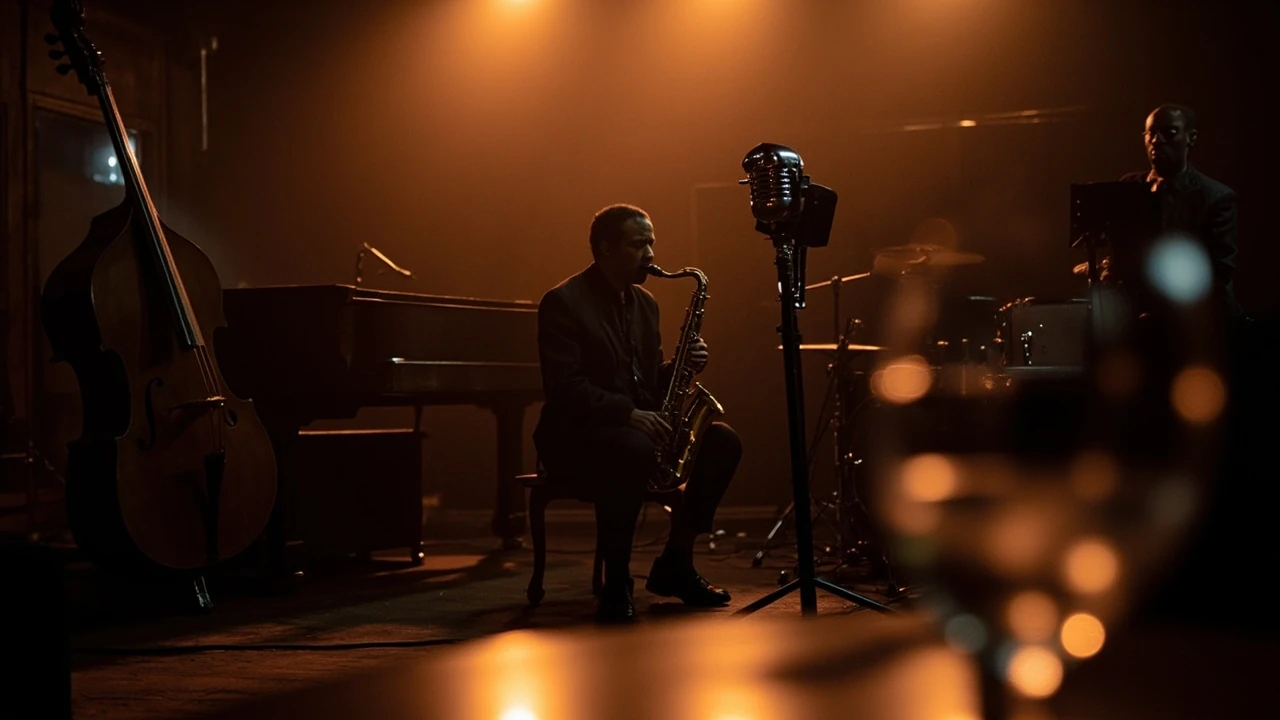
A listener walks into a small club on a Tuesday night and hears a group of four musicians working through a tune they clearly know well. The drummer brushes the snare, the bass walks a steady line, the piano traces gentle chords, and a saxophone player begins to improvise a melody that did not exist five seconds earlier. The audience is quiet, partly because the music is soft and partly because everyone in the room has noticed the same thing: the tune is shifting, and the next phrase is genuinely unknown. That experience of hearing a familiar song become something new in real time is the most direct way to understand what jazz music actually is.
For most listeners, jazz music sits in an awkward middle ground. It is one of the most influential musical traditions of the last century, and its vocabulary shows up in film scores, pop songs, advertising, and even video game soundtracks. At the same time, casual listeners often feel they should know more about it than they do, and they are not always sure where to start. This guide is meant to close that gap without pretending the listener already has a degree in music. It explains what jazz music is, how it developed, what its main styles sound like, and how to listen in a way that feels less like homework and more like a habit you actually want to keep.
What jazz music actually is
Jazz music is a family of music styles that grew out of African American communities in the United States, primarily in New Orleans, and that share a small set of working principles. The most quoted definition describes it as music that combines blues melodic feeling with swing rhythms and an emphasis on improvisation. That description is short, but each of its three parts carries a lot of weight.
First, the blues influence shapes the underlying sound. Jazz tunes often lean on a small set of chords built on a scale that includes so-called blue notes, which sit between the standard notes of the major scale. Those notes give the music a slightly bent, vocal quality. Second, the rhythmic feel of jazz, usually summarized as swing, is a particular way of playing eighth notes so that the first note of a pair is longer than the second. Swing is a groove, not just a tempo, and it is the reason a jazz band feels different from a rock band even when both are playing at the same speed. Third, improvisation means that at least part of each performance is being invented in the moment. The tune gives the musicians a frame; what they play inside that frame is shaped by the song, the room, the players, and the mood of the night.
It is also useful to say what jazz music is not. It is not a single style that sounds the same in every decade. It is not all quiet background music, and it is not all loud and fast. It is not the same as classical music, although the two share some instruments and a long history of mutual influence, and it is not the same as pop music, although jazz vocabulary has been absorbed into pop for nearly a century. The clearest way to think of jazz is as a working method that a community of musicians keeps applying to new settings, new instruments, and new audiences.
A short history of how jazz music developed
The story of jazz music is usually told in overlapping waves rather than clean decades. Each wave kept what worked, dropped what did not, and added something that the previous one had not yet tried.
Roots in New Orleans, roughly 1895 to 1917
Jazz grew out of a mix of African American musical practices, including blues, ragtime, brass band music, and work songs. New Orleans was an unusually rich environment for that blend because the city had marching bands, dance halls, churches, and a social culture that brought many kinds of music into the same neighborhoods. Early jazz, sometimes called Dixieland, used a small group of cornet, clarinet, trombone, piano, banjo or guitar, bass or tuba, and drums. The musicians took popular songs of the day and wove collective improvisation around the melody.
The swing era, roughly 1930 to 1945
As jazz moved north to Kansas City, Chicago, and New York, bands grew larger. Big bands led by Duke Ellington, Count Basie, Benny Goodman, and others arranged tunes for sections of brass and reeds, then set aside solo sections where one player could improvise. Dancers loved this music, radio carried it across the country, and it became a major part of American popular culture. The swing era is also when jazz musicians began to appear in films, both as themselves and as characters, which helped turn jazz into a global reference point.
Bebop and the modern small group, roughly 1945 to 1960
After the war, a younger generation of musicians, including Charlie Parker, Dizzy Gillespie, Thelonious Monk, and Bud Powell, pushed the music in a different direction. They played in small groups at fast tempos, used complex chord changes, and treated the tune as a starting point rather than the destination. This style is usually called bebop. It was harder for casual listeners and dancers, but it raised the technical ceiling of jazz music and became the foundation that most later styles were built on.
Cool, hard bop, modal, and free jazz, roughly 1950 to 1975
Several branches grew out of bebop at the same time. On the West Coast, musicians such as Chet Baker and Gerry Mulligan developed a softer, more relaxed sound that became known as cool jazz. In New York, hard bop groups added gospel, blues, and rhythm and blues influences back into the mix. In the late 1950s, Miles Davis and others began to record modal jazz, which used scales rather than dense chord changes, giving the improvisers more space. Toward the end of the 1960s, musicians such as Ornette Coleman, John Coltrane in his final period, and Cecil Taylor began to push the music past standard chord and meter structures, which became known as free jazz or the avant-garde.
Fusion, neo-traditional, and the global spread, roughly 1970 to today
In the late 1960s and 1970s, Miles Davis and others combined jazz improvisation with rock, funk, and electronic instruments, producing jazz fusion. The 1980s saw a return to acoustic small group styles, often called neo-traditionalism or the Young Lions movement, led by players such as Wynton Marsalis, and a parallel interest in smooth jazz, which used jazz vocabulary in a more produced, radio-friendly format. Since the 1990s, jazz music has continued to absorb new influences, from hip-hop and electronic music to Brazilian, West African, and European classical traditions, and its center of gravity has become more international.
| Period | Approximate years | Key features | Representative artists |
|---|---|---|---|
| Early New Orleans | 1895 to 1917 | Collective improvisation, brass band roots, blues and ragtime influences | Buddy Bolden, King Oliver, early Louis Armstrong |
| Swing | 1930 to 1945 | Large bands, arranged sections, danceable grooves | Duke Ellington, Count Basie, Benny Goodman |
| Bebop | 1945 to 1960 | Small groups, fast tempos, complex harmony, virtuosic solos | Charlie Parker, Dizzy Gillespie, Thelonious Monk |
| Cool | 1950 to 1960 | Softer tone, lighter touch, often West Coast settings | Chet Baker, Gerry Mulligan, Dave Brubeck |
| Hard bop | 1955 to 1970 | Gospel, blues, and rhythm and blues influences, soulful sound | Art Blakey, Horace Silver, Cannonball Adderley |
| Modal | 1958 to 1970 | Long improvisations over scales rather than dense chords | Miles Davis, John Coltrane, Bill Evans |
| Free jazz | 1960 to 1975 | Looser structures, extended techniques, collective exploration | Ornette Coleman, Cecil Taylor, late Coltrane |
| Fusion | 1970 to 1985 | Electric instruments, rock and funk rhythms, longer tracks | Miles Davis, Weather Report, Herbie Hancock |
| Neo-traditional | 1980 to 2000 | Return to acoustic small group swing and bebop language | Wynton Marsalis, Joshua Redman, Roy Hargrove |
| Contemporary and global | 2000 to present | Mix of acoustic and electronic, hip-hop and world music influences | Esperanza Spalding, Robert Glasper, Maria Schneider |
The core elements that define the sound
If you listen to a jazz performance, a few things will keep showing up, even when the style changes a great deal. These are the elements that most clearly mark a piece of music as belonging to the jazz family.
Improvisation
Improvisation is the most famous feature, and it is also the easiest to misunderstand. In jazz, improvisation is not random. Musicians practice a vocabulary of phrases, scales, and rhythmic patterns for years before they ever play in public. When they improvise, they are drawing on that vocabulary and reshaping it in response to the song, the other players, and the audience. A good jazz solo sounds spontaneous because the listener does not know in advance what the soloist will play, but the soloist is making a series of very fast, very informed choices.
Rhythm and swing
Rhythm in jazz involves several layers at once. The drums and bass form a rhythmic foundation, but they are also expected to interact, not just keep a beat. The ride cymbal, played in a steady pattern on the right side of the drum kit, is the signature sound of swing, and the way the bass walks between the chord tones gives the music its forward motion. Latin jazz styles replace the standard swing ride cymbal with patterns from Cuban and Brazilian music, and fusion and contemporary jazz sometimes replace swing altogether with a rock or hip-hop feel.
Harmony and chord progressions
Jazz harmony grew more complex over time. Early jazz used simple progressions, often borrowed from popular songs of the day. Bebop introduced chord changes that moved quickly and used extensions and alterations that gave the soloist more options. Later styles used modal vamps, free harmony, and sometimes no predetermined chords at all. The progression of a tune is one of the main things players look at when they decide what to improvise over.
Form and the role of the head
Many jazz tunes have a structure made up of repeating sections, often called AABA or ABAB. The tune begins with the melody, which is also called the head. The band then goes through the chord changes one or more times while different players take solos, and the tune ends by playing the head again. In live performance, the head and the final restatement act as bookends, and the length of the solo sections is decided on the spot.
Interaction and the conversation among players
Jazz is also shaped by listening. A common move during a solo is for another player in the band to answer a phrase with a short supportive figure, a technique known as comping. In a small group, the rhythm section can change the feel in real time, and a soloist can push the tempo or pull back, with the rest of the band following. This kind of real-time conversation is part of why the same song can sound very different from one night to the next.
The main styles and what they sound like
Within jazz music, there are many overlapping substyles. The list below describes the most common ones a new listener is likely to encounter on streaming services and in film music.
Dixieland and New Orleans jazz
This is the earliest form of jazz music, with strong collective improvisation, a frontline of cornet, clarinet, and trombone, and a rhythm section of piano, banjo or guitar, tuba or bass, and drums. The mood is usually energetic and playful, and the tunes are often familiar standards or folk melodies. It is the style most often associated with parades, riverboats, and tourist districts, but it is also a serious musical tradition with a long recorded history.
Swing
Swing is built for dancing and for larger bands. The music is arranged so that sections of brass and reeds play written parts, then individual players take solos. The rhythm section drives the music with a clear four-beat feel. Classic swing is the kind of jazz that appears in films set in the 1930s and 1940s, and it remains popular for social dancing scenes from lindy hop to lindy swing.
Bebop
Bebop is faster, more complex, and more focused on small group virtuosity. The tempos are often up, the chord changes are dense, and the solos are long. The most famous bebop tunes, such as Donna Lee or Anthropology, are essentially frameworks for improvisation. The audience is expected to listen rather than dance.
Cool jazz
Cool jazz is a response to the intensity of bebop. Tempos are usually slower, the tone is softer, and the arrangements give more room to the melody. Cool jazz often uses French horn, tuba, and flute alongside the standard small group, and it shares some of the textures of mid-century film scores.
Hard bop
Hard bop is roughly the same era as cool jazz, but it swings harder and draws on gospel, rhythm and blues, and the blues. The tunes are often shorter and more direct, and the solos have a strong sense of phrase and story. This is the style many listeners hear first when they sit down with classic Blue Note recordings.
Modal jazz
Modal jazz uses scales or modes as the basis for improvisation, rather than a sequence of changing chords. The classic example is Miles Davis’s Kind of Blue, where the musicians improvise over a small number of scales that change only slowly. The result is a more open sound that can be very calm or very intense, depending on the players and the tempo.
Free jazz and the avant-garde
Free jazz relaxes the rules about chord changes, meter, and sometimes the role of the rhythm section. The music can be quiet and meditative, loud and dense, or anything in between. The most useful way to think of it is as a search for new sounds and new structures, carried out in real time in front of an audience.
Fusion
Fusion brings jazz vocabulary together with rock, funk, and electronic instruments. Electric pianos, synthesizers, electric bass, and amplified instruments are common. The rhythm is often straight rather than swung, and the tunes can run for many minutes. The style is closely tied to albums such as Miles Davis’s Bitches Brew and Weather Report’s Heavy Weather.
Latin jazz
Latin jazz combines jazz improvisation with rhythms and instruments from Cuban, Brazilian, and other Latin American traditions. Common styles include Afro-Cuban jazz, which builds on the son montuno and the mambo, and Brazilian jazz, which draws on bossa nova and samba. The rhythm section often includes congas, bongos, timbales, and other hand percussion.
Smooth jazz and contemporary styles
Smooth jazz uses jazz vocabulary in a more produced, radio-friendly form, often with electric instruments, layered arrangements, and gentle grooves. Contemporary jazz includes a wide range of current approaches, from the hip-hop influenced sound of Robert Glasper to the through-composed writing of Maria Schneider. Streaming services often use a related label such as nu jazz or jazztronica to cover electronic and beat-driven work.
| Style | Typical size of group | Common feel | Typical listener experience |
|---|---|---|---|
| Dixieland | 5 to 7 | Brass-led, collective improvisation | Energetic, parade-like, accessible |
| Swing | 10 to 18 | Sectional, four-beat groove | Danceable, warm, familiar from films |
| Bebop | 4 to 6 | Fast, dense, virtuosic | Demanding, rewarding on repeated listening |
| Cool | 5 to 9 | Soft, spacious, arranged | Relaxed, often used in soundtracks |
| Hard bop | 5 to 7 | Gospel-influenced, bluesy | Soulful, direct, strong hooks |
| Modal | 4 to 6 | Open, scale-based, slow harmonic motion | Spacious, meditative, long arcs |
| Free | Varies | Unpredictable, sometimes quiet, sometimes loud | Exploratory, requires patience |
| Fusion | 4 to 8 | Electric, rock-influenced, often straight eighths | Energetic, layered, often long tracks |
| Latin | 5 to 10 | Hand percussion, clave-based | Rhythmic, danceable, cross-cultural |
| Smooth and contemporary | Varies | Produced, often electric, groove-based | Easy to enter, easy to leave on in the background |
The instruments you are most likely to hear
Jazz music uses a wide range of instruments, but a small set shows up over and over. Recognizing them by sound makes it much easier to follow what is happening in a performance.
- Trumpet and cornet. The lead voice of most classic jazz groups, with a bright, focused sound and a strong role in both melodies and solos.
- Clarinet. Smooth and agile, common in early jazz and in some later settings such as swing revival bands and small group New Orleans groups.
- Saxophone. The family includes soprano, alto, tenor, and baritone. Tenor and alto saxes are the most common lead instruments in small group jazz from bebop onward.
- Trombone. A slide instrument with a rounder, warmer sound than a trumpet, used both for melody lines and for harmonic support under a soloist.
- Piano. Provides chords, bass lines, and solos, and is often the harmonic center of a small group.
- Double bass. Plays both a rhythmic and a harmonic role, walking between chord tones during solos and keeping time with the drummer.
- Drums. The drum kit in jazz includes a ride cymbal, hi-hat, snare, and bass drum. The ride cymbal carries the swing feel, and the drummer interacts with the soloist in real time.
- Guitar. Often plays a chordal role similar to the piano, with a thinner, more percussive sound, especially in small group settings.
- Vibraphone. A struck metal bar instrument with a soft, sustained sound, used in small groups and in modern big bands.
- Electric instruments. Electric bass, electric piano, synthesizer, and electric guitar all became important in fusion and later styles.
How jazz harmony actually works
It is possible to enjoy jazz music without learning any theory, but understanding a few basic ideas makes a noticeable difference. The two ideas that help most are the way chords are built and the way a tune is structured.
Chords and extensions
A basic chord is built from three notes, such as C, E, and G. Jazz musicians add more notes on top of those three, including the seventh, the ninth, the eleventh, and the thirteenth. Those added notes are called extensions, and they give the chord its color. A plain C major chord is a solid, simple sound. A C major seventh chord is softer and more open. A C major ninth adds another layer. The way these chords are arranged over a tune gives each song its specific sound and its specific options for improvisation.
Form and turnarounds
Many jazz standards are built on a 32-bar form, which is to say 32 measures divided into sections, usually AABA. The most common AABA tunes share a chord progression in the first eight bars that reappears in the last eight, and a contrasting bridge in the middle. The progression used in the last two bars of a section to move back to the beginning is called a turnaround. Once a listener can hear a turnaround, it is easier to follow where a tune is going, and it is easier to understand why a soloist starts or ends a phrase at a particular moment.
Listening habits that make a real difference
Jazz rewards a slightly different kind of listening than most popular music. You do not have to be an expert, and you do not have to love every style, but a few habits will quickly deepen your experience.
Listen for the drummer, not just the soloist
It is natural to follow the soloist, but in jazz music the drummer and bassist are doing as much storytelling as anyone else. Try listening for the ride cymbal pattern, the way the drummer uses the snare and the bass drum, and how the bassist walks between chords. When you can hear those layers, a solo starts to feel like a conversation rather than a display.
Listen to the same tune in two versions
Pick a standard such as Autumn Leaves, Body and Soul, or All the Things You Are, and listen to two or three recordings by different artists. The melody is the same, but the tempo, the rhythm section, the choice of soloist, and the length of the solos all change. This is a reliable way to hear what style actually is, and to start building a personal taste within jazz music.
Notice the head, the solos, and the head out
In most small group performances, the band plays the tune, then a series of solos, then the tune again. Once you can hear that arc, the structure of any jazz record becomes easier to follow, and you can decide which solos you want to focus on and which you would rather sit out.
Use good headphones, at least sometimes
Recording quality in jazz is unusually high because the tradition of recording live in studios is long. A pair of decent headphones will reveal details in the drums, the bass, and the way the piano is recorded that are easy to miss on small speakers. This is a habit that costs very little and pays back quickly.
Common questions about getting started
Many new listeners approach jazz music with similar concerns. A few practical answers can shorten the learning curve.
Do I need to learn music theory to enjoy it
No. Theory helps, but it is not required. Many devoted listeners do not read a note of music and still get a great deal from jazz. The most useful habits are listening often, listening to a small set of recordings several times, and being willing to sit with a record you do not immediately like. Familiarity does most of the work that theory would otherwise do.
Where should I start if I am new
A reasonable path is to start with one album from each major style and let the music pull you in. For swing, a Count Basie or Duke Ellington album is a good entry. For bebop, a Charlie Parker or Dizzy Gillespie best-of set works well. For hard bop, a Blue Note reissue series is hard to beat. For modal, Kind of Blue by Miles Davis is the standard recommendation for a reason. For fusion, the albums mentioned above are a fair starting point. For something more current, a contemporary playlist on a major streaming service will surface recent work that draws on all of these traditions.
Is jazz music still being made today
Yes, and there is more of it available now than at any point in history. Streaming services host new jazz records every week, and jazz musicians are using hip-hop, electronic, Brazilian, West African, and European classical influences to build on the tradition. The audience for live jazz in major cities is also healthy, with clubs, festivals, and university programs supporting working musicians.
Jazz music and the wider musical world
Jazz did not stay inside its own scene. Its vocabulary has been absorbed into film scores, Broadway, pop, hip-hop, and electronic music. A few examples make the point clearly.
- Film scores. Composers from Henry Mancini and John Williams to modern figures have used jazz harmony, brass riffs, and improvised solos in their work, often blending them with orchestral writing.
- Pop and rock. Artists such as Steely Dan, the Beatles, and many later songwriters used jazz chords and arrangements in songs that were also pop hits.
- Hip-hop. Producers and artists have sampled jazz recordings since the 1980s, and a current generation of artists such as Robert Glasper has built a hybrid approach that combines live jazz playing with hip-hop rhythms and production.
- Classical music. Composers such as George Gershwin, Aaron Copland, and Gunther Schuller wrote at the boundary between jazz and classical music, and the exchange has continued through to the present day.
- Music education. Jazz is taught in conservatories and universities around the world, which has helped spread both the repertoire and the practice to many countries beyond the United States.
Why jazz music can be harder to find, and what to do about it
Compared with pop, rock, or hip-hop, jazz music can feel harder to find on streaming services. This is partly because jazz has a long history and a deep catalogue, and partly because many of the most respected recordings are on small independent labels. A few practical moves can make a real difference.
Use curated playlists as a starting point
Most major streaming services have editorial playlists that group jazz by style, era, and mood. These playlists are a low-cost way to explore and to learn the names of the artists and songs that come up repeatedly in criticism and conversation.
Follow the labels, not just the artists
Jazz labels such as Blue Note, Verve, ECM, Impulse, and Contemporary release coherent bodies of work. Following a label rather than a single artist is an efficient way to discover new music, because the label has already done part of the curating for you.
Go to a live show when you can
Jazz is a performing art, and the experience of hearing a small group play in a club or concert hall is different from hearing them on a recording. Even a short set at a local venue is enough to give a new listener a sense of the conversation among players and the role of the audience in shaping the music.
Mistakes new listeners often make
A few habits can get in the way of a good first experience with jazz music. They are easy to avoid once you know about them.
- Starting with the most complex recordings. Free jazz, late Coltrane, and dense fusion are rewarding, but they are not the easiest first step. A few months with swing, hard bop, and a modal album will prepare the ear for the harder work.
- Expecting every record to be a hit. Jazz rewards patience. Some records reveal themselves only after several listens, and that is part of the tradition, not a flaw in the listener.
- Confusing the vocabulary with the music. Terms such as changes, head, and comping are useful, but they are shortcuts, not the point. Listening matters more than talking about it.
- Avoiding vocals. Many jazz standards are songs with lyrics, sung by singers such as Ella Fitzgerald, Sarah Vaughan, Billie Holiday, and Chet Baker. Vocal jazz is a legitimate and often easier entry into the tradition.
- Treating the music as a single style. Jazz is a family. Within it, there is everything from danceable swing to quiet solo piano, and trying to like all of it at once can be discouraging.
A simple way to keep growing as a listener
The most reliable way to deepen a relationship with jazz music is to choose a small number of albums and live with them for a while. A working list might look like this:
- One swing era album, such as Count Basie’s The Atomic Mr. Basie or Duke Ellington’s Ellington at Newport.
- One bebop album, such as Charlie Parker and Dizzy Gillespie’s collaboration or Thelonious Monk’s Genius of Modern Music.
- One modal or cool album, such as Miles Davis’s Kind of Blue or Dave Brubeck’s Time Out.
- One hard bop album, such as Art Blakey and the Jazz Messengers’ Moanin’ or Horace Silver’s Song for My Father.
- One vocal album, such as Ella Fitzgerald’s Songbooks or Billie Holiday’s Lady in Satin.
- One fusion or contemporary album, such as Herbie Hancock’s Head Hunters or a recent release from a current label.
Listening to those six or seven records a few times each will give any new listener a working map of the tradition. From there, curiosity tends to do the rest. One album will lead to another, one musician to another, and the map will keep redrawing itself as long as the listener stays interested.
Frequently asked questions
What is the difference between jazz music and blues
Blues is a simpler, song-based tradition built on a 12-bar form with three basic chords and a vocal style that bends notes. Jazz music grew out of blues but added more complex harmony, longer forms, and an explicit role for improvisation. Many jazz tunes use the blues form, and many jazz musicians play the blues, but jazz covers a much wider range of styles and structures than the blues tradition on its own.
Why is jazz music often played in small groups
The small group, usually a quartet or quintet, became the standard format during the bebop era because it gives each musician more room to be heard. In a small group, the drummer, bassist, and harmonic instrument are clearly identifiable, and the soloist can develop an idea over a long time without the arrangement getting in the way. Larger groups are still common, especially in swing and in modern big band writing, but the small group is the format most jazz albums are built around.
Do jazz musicians always play the same version of a tune
No, and that is one of the most distinctive features of jazz music. The head, the main melody of a standard, stays recognizable, but the solos, the tempo, the key, the feel, and even the structure can change from one performance to the next. Two recordings of the same song by the same artist can sound very different, and the same song performed by two different artists can sound like two different songs.
How long is a typical jazz performance
It depends on the setting. A club set by a small group can run 45 minutes to an hour, often split into two sets with a break. A concert by a big band or a featured soloist can run 90 minutes to two hours, sometimes with an intermission. A single tune can range from under three minutes to more than twenty, and many albums are built around a small number of long tracks.
What does swing actually mean
Swing is a rhythmic feel rather than a tempo. In its most common form, a pair of eighth notes is played with the first note longer than the second, which gives the music a lilt. A drummer or bassist will tell you that swing is the way the music breathes, the way the rhythm section pushes the soloist or lays back to let a phrase settle. The word is also used more loosely to describe the whole era of large, danceable jazz bands from the 1930s and 1940s.
Is jazz music hard to dance to
Some of it is, and some of it is not. Swing, Latin jazz, much of fusion, and a lot of contemporary jazz are written to be danced to, and a healthy social dance scene exists around each of these styles. Bebop, free jazz, and many modern small group recordings are more often listened to than danced to. Most clubs and festivals include a mix, and the audience usually responds to the music the way the performers invite them to.
What is the role of the piano in a jazz group
The piano usually takes on three jobs at once. It provides chords under a soloist, a role called comping. It plays a bass line that supports both the soloist and the rhythm section. And it often takes its own solo, especially in small group settings. In a trio, the piano typically covers all three roles, which is why the jazz piano trio is such a common format.
What is the standard jazz repertoire
Standards is the short word. A standard is a tune that has been played so often by so many musicians that it has become common ground. The list includes songs such as Autumn Leaves, All the Things You Are, Body and Soul, Stella by Starlight, and hundreds of others, many of them drawn from the American songbook of the 1920s to 1950s. Playing standards is a traditional way for musicians to learn the vocabulary of jazz music, and the songs remain a key part of jam sessions and education programs.
Can jazz music be written down
Yes, but in a flexible way. Jazz musicians use lead sheets, which are simplified charts that show the melody and the chord symbols of a tune, rather than fully written-out parts. The lead sheet gives the musicians a clear framework, and leaves the details of the arrangement and the solos to the players. Fully written-out scores do exist, especially in big band music and in some contemporary work, but the lead sheet is the most common tool.
Is jazz music the same as classical music
No, although the two share some instruments and a long history of mutual influence. Classical music is usually fully written out by a composer and performed with attention to the printed score, while jazz music depends on improvisation and on a working knowledge of the standard repertoire. A useful oversimplification is that classical music emphasizes the composer, while jazz music emphasizes the performer, but the two have also cross-pollinated in many important ways, including the third stream movement of the 1960s.
Where to keep exploring from here
For readers who want to keep learning, the best next step is to follow a single thread of curiosity. Pick one album from a style that interested you, listen to it three or four times, then look for the names of the musicians and follow them into other records. A useful second step is to read a short biography of one of the central figures, such as Miles Davis, John Coltrane, or Ella Fitzgerald, because their stories are tied closely to the story of the music itself. For listeners who play an instrument, the next step is to learn a standard from a lead sheet, because playing the music even at a basic level is the fastest way to hear it from the inside.
For a different angle on how musicians think about the instruments in front of them, the article Organ stops explained: families, ranks, and how to read a stop list walks through the way organ builders organize tone color in a very different instrument. For a closer look at how players shape a sound in real time, the piece on organ registration covers a parallel idea on the organ bench, and the Wikipedia overview of jazz is a reliable starting point for the wider history.