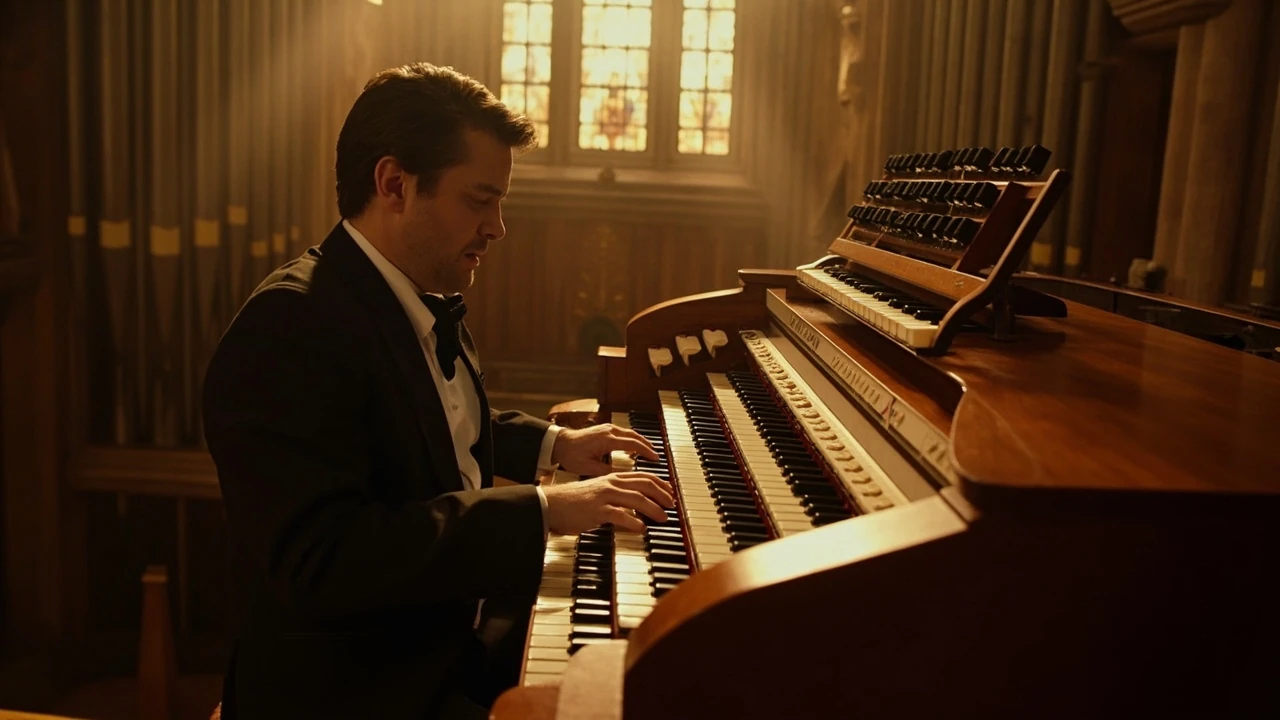
Live music
A quiet chapel, a single breath drawn into a long pipe, and a sound that fills the stonework before the organist has even moved a finger. That is the working definition of live music in a pipe organ setting: sound produced in real time by a human performer, in the same room as the listener, with no playback, overdub, or amplification chain disguising the moment of production. For a pipe organ, this distinction matters more than it does for almost any other instrument, because the room, the wind, the voicing, and the player are all part of what reaches the ear.
Many readers searching for the term “live music” arrive with a general question about concerts, gigs, or streaming. On a pipe organ site, the most useful answer is narrower: what makes organ performance a distinctive form of live acoustic music, how a listener can tell the difference, and what choices the performer is making in real time. This article focuses on that specific intent, then links to broader organ topics for readers who want to go deeper.
What “live music” actually means for a pipe organ
In ordinary speech, live music simply means music performed in front of an audience rather than played from a recording. For most modern instruments, that definition is enough. For the pipe organ, two further conditions are usually implied:
- Sound is generated acoustically inside the room, not through loudspeakers reproducing a signal.
- The performer is the immediate cause of every note, including the wind pressure, the choice of stops, and the way each pipe speaks.
The result is that the listener hears a chain of cause and effect that is unusually short and unusually exposed. Press a key, open a pallet, admit wind to the pipe, and the air column inside the pipe produces a pitched note. Nothing in that chain can be edited afterwards. This is part of why organists spend years training their hands, ears, and reflexes before they play in public.
It is also why a pipe organ recital is often described as one of the purest examples of live acoustic music available. A piano, a violin, or a singer can be amplified. A pipe organ in a resonant hall cannot be “fixed” after the fact; the room and the instrument are the recording.
How a pipe organ produces its sound in real time
To understand what to listen for in a live pipe organ performance, it helps to know roughly what the player is controlling. The organ is a collection of several sound sources grouped into divisions, each division routed through its own keyboard and driven by a shared wind supply.
| Component | Role in live sound | What the player adjusts |
|---|---|---|
| Bellows or blower | Stores or feeds air at a steady pressure | Nothing directly; pressure is set by the builder |
| Wind chests | Hold wind under each pipe and admit it when a key is pressed | Indirectly, through touch and choice of stops |
| Pipes | Convert moving air into pitched sound | Selected by stop knobs or pistons |
| Stops | Engage or silence ranks of pipes | Pulled before and sometimes during a piece |
| Manuals and pedalboard | Trigger individual pipes | Fingers, feet, and any combination pistons |
| Expression shades (swell box) | Allow enclosed divisions to swell or recede | Operated by a foot pedal or toe stud |
A useful analogy is to think of the organ as a small orchestra that one person is conducting and partly playing at the same time. The performer is not simply pressing keys. They are deciding, in the moment, which families of pipes are sounding, how loud the enclosed sections are, and how the music’s lines sit against the acoustic of the room.
What makes organ live music different from other instruments
Several features set pipe organ performance apart even from other acoustic live music. A reader new to the instrument will hear them within the first few minutes of a recital.
- Sustained, layered sound. Unlike a piano, the pipe organ does not need to be struck again to keep sounding. A held note will continue as long as the key is down, which allows the player to build slow, organ-like textures.
- Independent voices from one performer. One organist can control several melodic lines at once through multiple keyboards and the pedals, something a violinist or a singer cannot do.
- Built-in dynamics. The swell box lets the organist make a single line louder or softer in real time without changing stops, similar to a string player’s bow control but applied to a whole room of pipes.
- Room as instrument. The acoustic of the building shapes the result as much as the organ itself. The same organ will sound brighter in a stone church and warmer in a wood-paneled hall.
These traits are not unique to organs, but they are unusually concentrated. Listeners used to amplified live music sometimes expect a louder or more present signal; on a pipe organ, presence comes from the room and from the player’s timing rather than from a PA system.
Live music versus a recording of the same organ
It is worth being precise about the difference, because recordings of organs are common and high quality. A live pipe organ recital and a well-made recording of that same recital can feel very different, and the difference is not just a matter of volume.
| Feature | Live in the room | Recording heard elsewhere |
|---|---|---|
| Time alignment | Direct from pipe to ear | Captured by microphones, mixed, then replayed |
| Reverberation | The real room on the listener’s own ears | The real room plus any reverb added in post |
| Dynamic range | Limited by ear protection and listening comfort | Compressed or expanded by the engineer |
| Performer awareness | Player hears the same room as the audience | Player hears monitors or a closed loop |
| Room anomalies | Audible to everyone, part of the experience | Often equalized or masked |
| Engagement | Shared physical event | Reproduced event |
This is why organists and organ builders are cautious about judging an instrument from a recording alone. The most telling features of a pipe organ, including how cleanly a pipe speaks, how the room reinforces the bass, and how the enclosed divisions swell, are easiest to hear live.
Why organists and builders care so much about live performance
For an organist, a live performance is the moment the instrument is judged. Rehearsal rooms and recordings are useful for learning a piece, but they cannot fully prepare a player for the first seconds of sound in a real room. A few practical concerns come up in almost every recital:
- Temperature and humidity. Pipes are sensitive to air conditions. A cold chapel in winter will speak differently from a warm one in summer, even on the same organ.
- Wind stability. The wind supply must hold steady under load. A sudden chord played with full organ tests the blower more than a quiet practice session does.
- Acoustic surprises.
Long reverberation, dead spots, and resonances only show up when a player and a room are heard together.
- Mechanical feel. The tracker or electric action has its own resistance, and only a live performance makes that resistance obvious.
For organ builders, the live performance is also the last stage of voicing. After a new instrument is installed, the voicer returns to tune and refine pipes while the organ is being played in real conditions. The piece on the music stand matters less than the way the room loads the sound.
How to listen to live pipe organ music
Listeners who are new to the instrument often want to know what to pay attention to during a recital. The following checklist is a practical way in, and it works whether the program is Bach, Franck, or a modern commission.
- Notice the beginning. The first few notes reveal how quickly the room wakes up. A soft flute will appear gradually, while a full plenum will fill the space almost instantly.
- Watch the hands and feet. The performer is choosing stops and shaping dynamics in real time. Seeing the action makes the sound easier to follow.
- Listen for blends. Good registration is not about loud stops but about how well ranks of pipes merge into a single voice.
- Follow the bass line. The pedals carry much of the structural weight of the music. In live organ music, the bass line is often what you feel as much as hear.
- Pay attention to releases. How a sound ends is as characteristic as how it begins, and the room shapes releases more than recordings suggest.
A short list of questions to keep in mind during a recital can be useful for first-time listeners. Examples include: which division is speaking, whether the melody is on a principal or a reed, and how the swell box is being used. These small observations tend to deepen the experience without distracting from the music.
Live music in different organ traditions
The same instrument can produce very different kinds of live performance depending on the repertoire and the building. A few of the most common settings are worth knowing about, because they shape what the listener hears.
| Setting | Typical use | Acoustic effect |
|---|---|---|
| Large cathedral organ | Plenum, romantic and symphonic repertoire | Long reverberation, smooth blending |
| Parish church organ | Hymn accompaniment, voluntaries, small recitals | Moderate reverberation, clear speech |
| Concert hall organ | Solo recitals, often recorded | Controlled acoustic, designed for listening |
| Chamber or continuo organ | Continuo with singers and players | Short reverberation, intimate balance |
| Theatre or cinema organ | Accompaniment to silent film, popular music | Bright voicing, strong tremulants, percussive ranks |
The instrument’s design and the room’s character together decide which kinds of live music feel natural there. A piece written for a French Romantic organ in a stone basilica will not always transfer well to a small tracker in a wooden chapel, even if both are technically capable of playing it.
Choosing a recital to attend
For a reader who has decided to hear live pipe organ music, a few practical points are worth considering before choosing a concert.
- Instrument and building. Look for a program note that names the organ and the room. Recitals on historically significant instruments in well-tuned rooms are usually the most rewarding first experiences.
- Repertoire. Baroque, Romantic, French symphonic, and contemporary programs each show the instrument in a different light. A varied program over several visits is more useful than a single very long recital.
- Length and time of day. A 60-minute evening recital is standard. Late-morning recitals often suit a working organ better than late-afternoon ones in warm buildings.
- Seating position. In long, reverberant rooms, a seat near the front makes articulation clearer; further back, the room’s blend becomes more obvious. Either can be a good choice.
Most professional recital series list these details on their pages, and a short email to the organist or venue is often enough to confirm whether a particular program is suitable for a new listener.
Common misconceptions about live organ performance
Because the pipe organ is unfamiliar to many concertgoers, a few assumptions tend to repeat. It is worth correcting the ones that matter most for the listening experience.
- “It is just a big piano.” A pipe organ does not need re-striking for each note, does not decay the way a piano string does, and is voiced to behave differently in every room. The touch and timing are also different.
- “Loud equals powerful.” The most effective registration is usually a matter of balance, not sheer volume. A quiet mixture on a good flute can carry further than a poorly chosen tutti.
- “The organ is always playing with the building.” A few rooms are unusually dry, and a few are unusually live. The organ is voiced to the room, but the room still has the final say.
- “If it is on a recording, it sounds the same live.” Recordings flatten the most distinctive features of a real pipe organ. Live listening is a different experience.
A reader who enters a recital aware of these points is usually better prepared to enjoy the music and to follow what the performer is doing.
What to expect from a live organ recording session
For readers who may attend a recording session as well as a concert, it is useful to know how the two differ. A recording session is still live music in the strict sense, but several practical details change.
- Takes are usually complete movements. Organists rarely record in fragments, because splicing a live performance is musically obvious.
- Silence between takes is longer. The room needs to settle, and the recording team needs to discuss microphone placement and levels.
- Some organists ask for a small audience. A small, attentive audience can help a performer shape a phrase, even when no audience sound is captured on the recording.
- Engineers try to stay out of the way. Cables, microphone stands, and headphones are kept as unobtrusive as possible so that the performer can hear the room naturally.
For an organ builder, a recording session is also a chance to hear the instrument under controlled conditions, often with comments from the artist about voicing and regulation. For a listener, sitting in on a session can be one of the best ways to hear the detail of a pipe organ’s sound.
Limitations of hearing live organ music on a website
It is fair to acknowledge the limits of any guide that lives only online. A description of live music cannot reproduce the experience, and even the best audio or video recording is a partial substitute. For readers who want to make practical use of this article, the following limitations apply:
- The room effect can only be hinted at, not captured, in text or compressed audio.
- Registration choices are described in general terms. Every organ is different, and a stop list is the only reliable guide to a specific instrument.
- Acoustic photographs of pipe organs show the instrument but not the sound. A clear image is not the same as a clear recital.
Where useful, this article points to specific organ topics that go into more detail, such as organ stops explained and organ registration. Readers who want to understand the technical side of the choices described above will find those pages a useful next step.
Live music and the organ builder’s craft
There is one more reason the term live music is worth thinking about on a pipe organ site. Every organ is built for live performance, not for reproduction. Builders spend most of their time voicing pipes in a real room with a real player, and the final sign-off is almost always a live recital. When the instrument is then heard on a recording, the recording is judged against the memory of the live event, not the other way around.
This is unusual among modern instruments. A digital piano can be evaluated by its samples, a synthesizer by its library, and a guitar amplifier by its recorded sound. A pipe organ is judged by the sound it makes in a room when someone is playing it. That condition is what makes organ performance one of the most demanding and most rewarding forms of live music a listener can hear.
For a more detailed look at how organ builders shape the sound note by note, see pipe voicing on the same site.
Frequently asked questions
What counts as live music in a pipe organ context?
Live music in a pipe organ context means sound produced in real time by a performer in the same room as the listener, with the room’s acoustic as part of the instrument. Playback, sampling, or amplification used to reproduce a recorded signal does not meet this definition.
How is a pipe organ recital different from a recording of the same recital?
A live recital is heard directly from the pipes in the room, with the listener hearing the real reverberation and dynamic range. A recording is captured by microphones, mixed, and replayed through speakers or headphones, which alters timing, dynamics, and room character. Most organists consider live listening the standard against which recordings are measured.
Do I need to know music theory to enjoy live organ music?
No. A useful first experience is to listen for the elements described in this article, such as blends, the bass line, and the swell, rather than to analyze the harmony. Many listeners find a short program note enough to follow what is happening.
What should I look for when choosing my first organ recital?
Look for a well-maintained instrument in a room with a clear acoustic, a program that includes at least one piece you find appealing, and a performer with a known recital history. Cathedral, college, and conservatory series are usually reliable starting points.
Why is the room so important for organ live music?
The room shapes the way the pipes load, how long notes ring, and how clearly different lines can be heard. The same organ can sound intimate in a small chapel and grand in a basilica. Builders voice the pipes to suit the room, which is why organists prefer to rehearse and perform in the actual venue.
Is a pipe organ louder than other live instruments?
At full organ with all stops drawn, a large instrument can produce high sound pressure levels. In practice, organists choose registration to suit the room and the music, and quiet pieces are common in recital programs. Loudness on its own is rarely the goal.
Can digital or electronic organs count as live music?
Yes, but with a different character. A digital organ is live in the sense that the performer is playing in real time, but the sound is generated by samples or synthesis and played through speakers, so the room effect is partly simulated. Most listeners and performers treat pipe organs and digital organs as distinct instruments.
What is the difference between a recital and a church service organ performance?
A recital is usually a stand-alone concert with a printed program and a paying or ticketed audience, while a service performance supports worship and is integrated with other elements such as singing and liturgy. The instrument and player may be the same, but the goals, acoustics, and expectations differ.
How long is a typical pipe organ recital?
Most public recitals run between 50 and 75 minutes, often without an interval. Lunchtime and evensong recitals are usually shorter. Cathedral and concert hall series publish their program lengths in advance.
Where can I learn more about how organists choose their stops for live music?
Registration is a central topic in organ playing and is covered in detail on the registration page linked earlier in this article. Reading about stops and then attending a recital with the program in hand is a reliable way to hear the choices in action.