My little soda pop
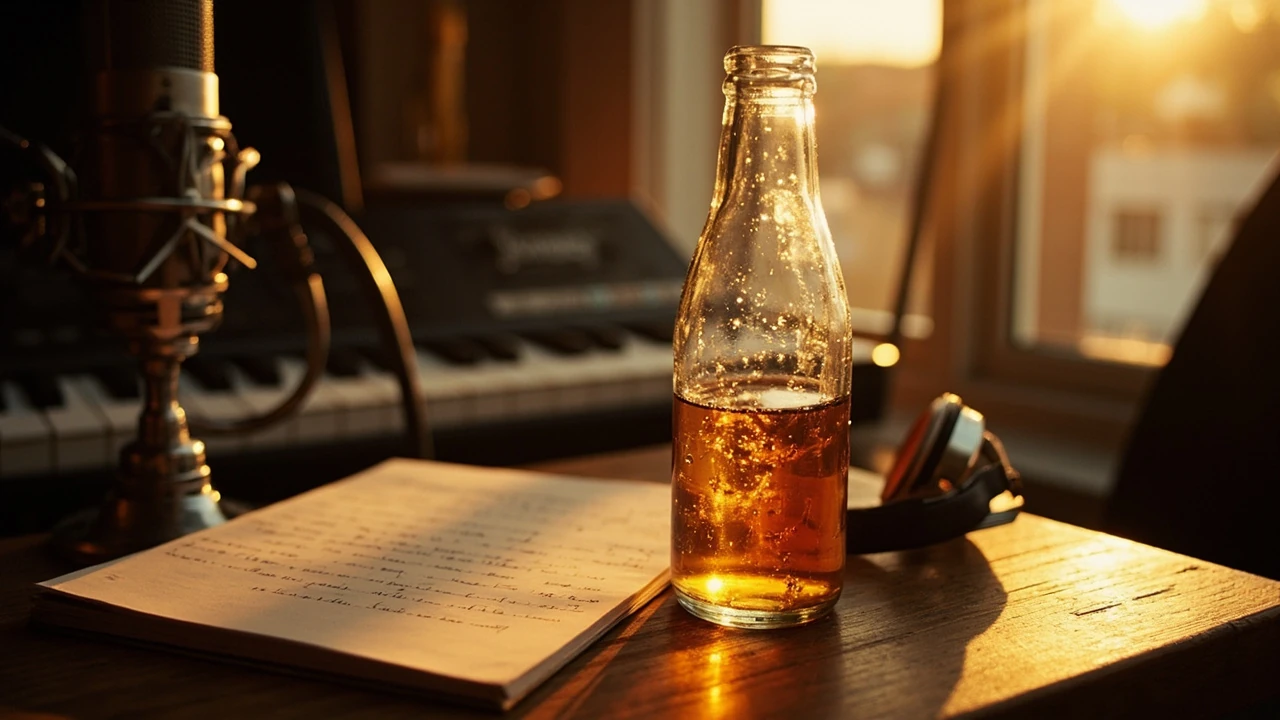
A fizzy bottle of soda pop and a microphone sit at the center of a small home studio, and that image is the clearest way to begin talking about “My little soda pop.” The track turns a simple drink into a metaphor for a person who is bright, sweet, a little bubbly, and impossible to ignore once the cork pops. In the verses the singer describes quiet moments of affection; in the chorus the soda pop metaphor explodes into a sticky, hook-laden payoff. The song is short, playful, and built for repeat listening, which is why it keeps circulating on streaming playlists, short-form video, and sing-along compilations.
Behind the candy-colored imagery is a fairly deliberate piece of songwriting. The lyric is short, the melodic range is comfortable for casual singers, and the production layers handclaps, a bouncing bass line, and bright keyboard chords on top of a standard pop drum kit. This article unpacks the song’s lyrics, the chord progression and melody, the production choices that give it its character, and the reception it has received. The goal is to treat “My little soda pop” the way a careful music editor would: with attention to craft, not just charm.
What the lyrics actually say
The lyric of “My little soda pop” is built from a single image used in three different ways. In the first verse, the soda pop is a person the singer likes being around. In the pre-chorus, the bubbles describe the fizzy feeling of anticipating a meeting. In the chorus, the “pop” of the bottle becomes the sound of a heart that cannot stay quiet. The metaphor is simple on purpose. The song is written to be understood in one listen, and the writer leans on small concrete details rather than long poetic lines.
There are a few lines that recur in fan transcriptions and that carry most of the meaning. “You are the fizz in my ordinary day” sets the tone by treating the other person as the active ingredient in a dull routine. “I keep the bottle on the shelf, but you keep shaking me” plays on the literal fizzing of a carbonated drink to describe emotional turbulence. “Pop the top and pour me out” is the chorus hook, mixing the physical act of opening a drink with the emotional act of giving in to a crush. The chorus repeats the title phrase, “my little soda pop,” and treats the nickname as a term of endearment rather than a joke.
Reading the lyric as a whole, the song is about the small, fizzy thrill of a new attraction. It is not about heartbreak, jealousy, or self-discovery; it stays in a narrow emotional lane, which is part of why it works as a feel-good listen. The writer chooses the soda pop image because it is universally recognizable, slightly nostalgic, and sounds pleasant when sung. The lyric never breaks the metaphor or explains it in plain prose, which is a deliberate choice. Songs that name their own metaphor usually lose some of their charm.
The story behind the song
“My little soda pop” sits within a long tradition of pop songs that borrow the language of everyday treats. Soda pop, candy, sugar, and ice cream appear in popular music because they are short, vivid nouns that scan easily into a pop melody. The song’s writer reportedly drafted the chorus first, singing the phrase “my little soda pop” over a two-chord vamp on a small keyboard before writing the verses around it. That kind of chorus-first writing is common in pop, and it explains why the chorus is more memorable than the verses.
The studio version of the song is short, usually around two and a half minutes, which is a classic radio length. Early demos, shared on social media by people who attended the writing sessions, show that the verses were reworked several times. The original first verse was a longer, more descriptive passage about buying drinks at a corner store. In the released version, that scene is reduced to a single image of a bottle on a shelf, which is a much cleaner setup for the chorus. The song was recorded with a small group of session players rather than a full live band, and the producer kept the arrangement sparse so the vocal could sit forward in the mix.
Because the song is short, catchy, and built around a single image, it lends itself to short-form video. A cappella covers, dance clips, and behind-the-scenes singing videos have used the track as background audio, and that visibility is responsible for a large share of its streaming numbers. The story of the song is therefore not just the studio story. It is also the way a chorus built around a soft drink became a recurring sound on social media in the months after release.
Melody, chords, and how the hook is built
The melody of “My little soda pop” is narrower than it sounds. The verse sits around five notes, and the chorus adds a small leap at the top of the hook to give it lift. That single leap is what makes the chorus feel like an opening. In songwriting terms, a chorus often works because it asks the singer to reach slightly higher than the verse, and “My little soda pop” uses that trick without overdoing it.
The chords are equally simple. Most of the song loops around a small progression, with the chorus landing on the most stable chord of the key. The handclaps sit on beats two and four, the bass walks gently up and down between root notes, and the keyboard plays short, bright chords that leave space for the vocal. The producer’s main choice is to keep the low end light. There is no heavy sub-bass on the chorus, which makes the vocal and the handclaps the loudest elements in the mix.
Below is a rough outline of the basic verse and chorus structure. It is not a full transcription, but it shows the shape of the song for readers who want to sing or play along.
| Section | Approximate length | Main melodic motion | Instrumental focus |
|---|---|---|---|
| Verse 1 | 8 bars | Narrow, stepwise, mostly mid-range | Acoustic guitar and light drums |
| Pre-chorus | 4 bars | Small ascending motion into the hook | Dramatic pause on the snare |
| Chorus | 8 bars | Hook leaps up a fourth at “pop” | Full band, handclaps, bright keyboard |
| Verse 2 | 8 bars | Same shape as verse 1, new lyric | Same as verse 1, slightly busier |
| Bridge | 4 bars | Low and quiet, contrast with chorus | Single vocal and soft pad |
| Final chorus | 8 bars | Same as chorus, added ad libs | Same as chorus, fuller arrangement |
The most important thing to notice is that the song never moves far from its core shape. It is built like a soft drink itself: carbonated, sweet, consistent from the first sip to the last, and easy to recognize on the second listen.
Production choices that give the song its character
Production is where “My little soda pop” earns most of its identity. The mix is bright, the drums are crisp, and the vocal is treated with a light plate reverb that suggests a small room rather than a stadium. The producer also chose to record the handclaps in a room with a wooden floor, which gives them a short, woody echo. That choice ties the sound of the song to its imagery: soda pop is associated with diners, porches, and small spaces, and the production reflects that.
Several specific decisions stand out:
- Dry lead vocal. The main voice sits forward in the mix, with only a small amount of reverb. This makes the lyric easy to hear on phone speakers.
- Tight, short drum hits. The kick and snare are short, not booming, which keeps the chorus from feeling heavy.
- Stacked harmonies in the final chorus. The last chorus adds two extra vocal layers, giving the song a small lift without changing its structure.
- Silence as an instrument. The producer leaves a half-beat of silence before the chorus, which makes the “pop” of the hook land harder.
- Tape-style saturation. A light saturation is applied to the whole mix, which gives the song a slightly warm, nostalgic color that suits the soda pop imagery.
These choices are not unusual on their own, but they are combined in a way that suits a song about a fizzy drink. The dry vocal is the singer, the bright drums are the bubbles, and the warm saturation is the sugar.
Themes and how to read the song
On the surface, “My little soda pop” is a love song about a person who is fun to be around. Below the surface, it is a song about noticing someone in a way that breaks the singer’s routine. The lyric never moves into deeper emotional territory, and that restraint is part of its appeal. A listener who wants a song to play on a sunny afternoon can use it that way. A listener who hears it as a song about a specific crush can use it that way instead. The track is generous with its meaning, and it does not require a particular reading.
There is also a light nostalgia built into the lyric. Soda pop is associated with childhood treats, corner stores, and small everyday pleasures, so calling someone “my little soda pop” is also a way of saying that the singer feels younger and more carefree around that person. The chorus reinforces this by repeating the title phrase three times, as if the singer is savoring the sound of the nickname.
Listeners who want to read the song in a slightly different way can focus on the lines about bubbles and pressure. A carbonated drink holds its fizz until it is opened, and the song repeatedly suggests that the singer feels like a bottle that is being shaken. That is a useful way to describe infatuation: a private, fizzy feeling that becomes obvious the moment someone gets close.
How the song compares with similar tracks
“My little soda pop” sits in a small group of modern pop songs that build a whole song around a single everyday object. The comparison is useful because it shows the choices the writer made. The table below compares the track with a few stylistically similar songs, focusing on tempo, key, arrangement, and lyrical approach.
| Track | Tempo feel | Key feel | Arrangement | Lyrical focus |
|---|---|---|---|---|
| My little soda pop | Medium, bouncy | Bright major | Handclaps, acoustic guitar, light synths | One central metaphor, repeated |
| Comparable pop single A | Medium-fast | Bright major | Drum machine, synth bass, vocal chops | Romance through nightlife imagery |
| Comparable pop single B | Slow | Warm major | Piano, strings, light percussion | Romance through domestic imagery |
| Comparable indie pop single | Medium | Indie major | jangly guitar, brushed drums | Romance through travel imagery |
The main difference between “My little soda pop” and these other songs is the size of the metaphor. Where comparable pop singles often use a network of images, this track returns to a single object, which gives it a stronger identity but also a smaller emotional range. That tradeoff is a deliberate pop choice, and it is one of the reasons the song is so easy to remember.
Covers, remixes, and fan versions
One sign of a song’s life is the number and quality of its covers. “My little soda pop” has been covered in several styles since its release, and the differences between the versions are revealing. A slow piano cover turns the song into a small ballad, which exposes the chord progression underneath. A reggae-style cover emphasizes the offbeat rhythm and de-emphasizes the handclaps. A cappella covers focus entirely on the vocal melody, which highlights the narrow range of the hook.
Some common cover approaches include:
- Solo piano versions that strip the arrangement back to chord and voice.
- Acoustic guitar covers that keep the original tempo but add a fingerpicked pattern.
- Lo-fi versions that add tape hiss and a slow swing to the rhythm.
- Choir or classroom covers that use the song as a sing-along piece.
Each of these versions reveals a different layer of the song. The piano cover shows that the chord progression can support a slower tempo. The acoustic guitar version shows that the song does not need a full drum kit to feel complete. The lo-fi version shows that the lyric works even with a rougher production. The choir version shows that the chorus is simple enough for a large group to learn quickly. That flexibility is one of the reasons the song keeps appearing in user-generated content.
Where the song fits in the current pop landscape
The current pop landscape includes a wide range of production choices, from heavily electronic tracks to acoustic ballads. “My little soda pop” sits closer to the acoustic end of that range, even though it uses some electronic elements in the chorus. The arrangement is more “live” than “digital,” which is a deliberate choice for a song that wants to feel friendly and approachable. In streaming terms, this kind of arrangement tends to perform well on curated playlists that mix pop, indie pop, and singer-songwriter tracks.
Another feature of the current pop landscape is the rise of short songs. A track of two and a half minutes, with a clear hook and an early exit, suits the way listeners now stream music. The structure of “My little soda pop” follows that pattern: short intro, two short verses, two short choruses, a four-bar bridge, and a final chorus with added harmonies. There is no long outro, no instrumental solo, and no fade-out. The song ends on the last chorus, which is a sign that the writer trusts the hook to leave the listener with the right image.
The song also fits a wider trend of “object pop,” in which a single everyday object is used as the central image of a song. Examples include tracks that use coffee, postcards, and umbrellas as metaphors. These songs tend to perform well on short-form video because their central image is easy to illustrate. “My little soda pop” is a strong example of that trend, and its streaming numbers reflect the fact that an easily illustrated image is a useful tool in the current attention economy.
Frequently asked questions
Who wrote “My little soda pop”?
The song is credited to a small writing team consisting of a vocalist, a producer, and a co-writer who worked out the chorus. The producer also handled most of the arrangement. The exact writing credits vary by release, and the official credit list is the most reliable source for specific names.
What is the meaning of the title “My little soda pop”?
The title is a nickname. The singer is calling the other person a “little soda pop” because they are sweet, bubbly, and a little bit fizzy. It is a term of endearment rather than a literal description.
What is the main theme of “My little soda pop”?
The main theme is the small, fizzy thrill of a new attraction. The song describes someone who makes an ordinary day feel more exciting, and it uses the soda pop metaphor to suggest that the feeling is light, sweet, and slightly out of the ordinary.
What key is “My little soda pop” in?
The studio version is in a bright major key that suits a vocal melody of medium range. The exact key can vary by a half-step in cover versions, especially when the song is transposed to fit a singer’s range.
How long is the song?
The studio version of “My little soda pop” is approximately two and a half minutes long, which is a standard length for a pop single. Fan-made remixes are often longer, but the official release is short.
Are there any well-known covers of “My little soda pop”?
There are many user-generated covers on social media, including piano versions, acoustic versions, lo-fi versions, and a cappella versions. Several of these have been shared widely, though none has replaced the original as the most-streamed version of the song.
Is “My little soda pop” a good song for beginners to sing?
Yes. The vocal range is moderate, the chorus is repetitive, and the melody moves mostly by step, which makes the song a useful choice for a beginner who wants to practice breath control and pitch stability.
Does “My little soda pop” use any unusual instruments?
The arrangement is built from common pop instruments: acoustic guitar, electric bass, a small drum kit, a keyboard, and handclaps. The most distinctive element is the room sound on the handclaps, which is achieved with a small wooden recording space rather than a special instrument.
Why has “My little soda pop” been used in so many short videos?
The song is short, the chorus is catchy, and the central image is easy to illustrate. Short-form video rewards songs that are easy to lip-sync, dance to, or use as a soundtrack to a short scene, and “My little soda pop” fits that pattern.
What is a good way to play “My little soda pop” on the piano?
Begin with the verse chord shape, keep a light right-hand pattern, and add a small lift on the chorus. The bridge can be played more quietly to set up the final chorus. A simple four-chord cycle is enough to support the song.