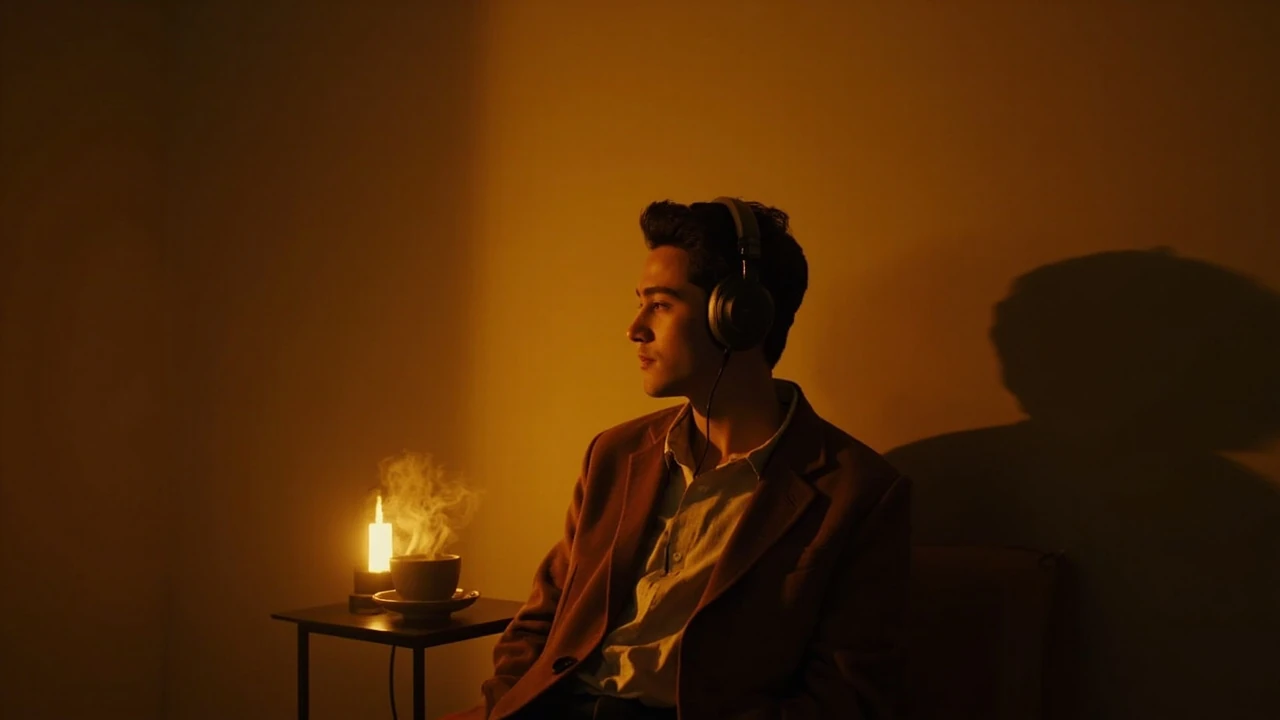
Relaxing music: what actually makes a sound feel calming
A library in Oslo installed soft string recordings near its reading desks, and within weeks the noise floor dropped by a few decibels because people instinctively lowered their voices. Nothing in the playlist was labeled therapy, no track promised focus, and the speakers were modest. The change came from how the recordings were built: long sustained notes, slow harmonic movement, low dynamic range, and instruments that did not pierce the room. That is the practical core of relaxing music. The label on a streaming category matters far less than the acoustic decisions behind the track.
Readers searching for relaxing music usually have a concrete need. They want to fall asleep, study, decompress after work, settle a restless toddler, or simply make a loud apartment feel less hostile. Each use case rewards a different combination of tempo, instrumentation, and playback. This article explains the mechanisms that turn an ordinary recording into something the body reads as calm, and then shows how to choose tracks and setups for the most common situations without falling for marketing language or false promises.
Why some sounds calm the body and others keep it alert
The ear and the brain process relaxing music and an action movie trailer through very different filter chains. A few measurable properties explain most of the difference, and they are useful guides when you are building a personal playlist or evaluating a recommendation.
- Tempo: Tracks in the 50 to 80 beats per minute range sit close to a resting heart rate, so the body has less to synchronize against. Faster tempos invite movement and raise alertness.
- Dynamic range: When a recording stays within a narrow loudness window, the listener does not have to brace for sudden peaks, which removes a small but real source of stress.
- Timbre: Soft-attack instruments, including felted piano, flute, marimba, and string ensembles, enter each note with a gentle curve rather than a click, and that curve feels safe to the nervous system.
- Harmonic movement: Slow chord changes give the ear time to settle. A chord change every four to eight bars usually feels more restful than one every measure.
- Spectral balance: Too much high-frequency energy can read as bright or harsh, while a slight warmth in the lower mids often reads as enveloping.
None of these properties are mysterious. They are the same decisions a composer, sound designer, or recording engineer makes while shaping a track. The reason relaxing playlists feel different from ordinary music is that the decisions across these axes point in the same direction at the same time.
The tempo window where calm usually lives
Heart rate variability research has repeatedly shown that slower musical tempos encourage parasympathetic activity, the branch of the nervous system associated with rest and recovery. A useful starting range is 50 to 80 beats per minute, which is also the range most often used in bedtime playlists, yoga sessions, and guided meditation music.
Tempo is not the only variable, though. A 60 beat per minute track with heavy sub-bass and sharp percussion will not feel calm, while a 90 beat per minute solo flute improvisation can feel completely restful. The combination of tempo, attack, and harmonic speed matters more than any single number. This is why some ambient tracks at 100 beats per minute still help people focus, and why some slow tracks feel heavy rather than peaceful.
| Tempo range (BPM) | Typical feel | Common uses | Watch out for |
|---|---|---|---|
| 40 to 60 | Deep rest, near stillness | Sleep, meditation, grief support | Can feel funereal if harmonies are dark |
| 60 to 80 | Calm but engaged | Reading, slow work, decompression | Drone-heavy tracks may feel oppressive |
| 80 to 100 | Gentle forward motion | Light focus, walking, cooking | May still feel alert at the upper end |
| 100 to 120 | Active but contained | Stretching, light cleaning | Often too energetic for sleep |
| Above 120 | Movement-oriented | Exercise, dance | Generally not relaxing |
Timbre and why pipe organs are quietly good at it
Timbre is the personality of a sound, and it is where relaxing music often wins or loses. A soft-attack instrument begins each note with a slow rise in volume, which gives the ear time to prepare. A sharp-attack instrument, like a snare drum or a hammered dulcimer, hits the listener with a sudden transient that the brain reads as a possible signal of danger.
Pipe organs sit in an interesting middle ground. When a rank of pipes is voiced softly and enclosed in a swell box, the attack becomes very gentle, almost flute-like, and the harmonic structure is rich without being bright. The Martinott Pipe Organ studio in Bergamo has documented this in its guide to organ stops, where the family of stopped wooden flutes and string registers is described as especially useful for soft combinations. The same principle shows up in a felted piano, a solo cello, or a clarinet played piano.
For practical listening, the safest timbral palette for relaxing music includes:
- Soft strings, especially solo or small ensemble rather than full orchestral swells.
- Woodwinds in their low and middle registers, played piano or mezzo-piano.
- Felted or prepared piano, where small objects mute the attack.
- Flute and recorder, particularly alto and bass sizes that have less edge.
- Pipe organ flues at low wind pressure, especially stopped diapasons and salicionals.
- Synthesizer pads with long release times, used at moderate volume.
How dynamic range and loudness shape the listening experience
Dynamic range is the gap between the quietest and loudest moments in a recording. A wide dynamic range means the listener has to ride the volume control to keep things comfortable, which pulls attention away from rest. A narrow dynamic range keeps the sound at a steady, predictable level, which lets the body settle.
Modern mastering has compressed many pop tracks to a very narrow range, which is why some listeners find them tiring even at moderate tempos. Relaxing music tends to sit in the opposite corner: not compressed to the point of lifelessness, but controlled enough that no single moment startles the ear. A useful rough benchmark is a peak-to-average difference of around 6 to 10 decibels, with no sudden jumps in level.
On the playback side, the same idea applies. A small speaker at low volume in a quiet room is more relaxing than a large speaker at high volume, even when the track itself is calm. Loudness is interpreted by the body as engagement, no matter how gentle the music. If you are using a speaker, place it at roughly head height and slightly in front of the listener. If you are using headphones, keep the level low enough that you can still hear a normal speaking voice without removing them.
Recording spaces, room acoustics, and why the room matters
Few listeners think about the room that produced the recording, but it shapes relaxing music more than most people realize. A recording made in a small, dry studio with hard walls tends to feel close, sometimes even claustrophobic. A recording made in a medium-sized hall with wood floors and soft furnishings carries a small amount of reverb that the brain reads as space and safety.
This is also why pipe organ recordings of soft combinations often feel unusually calm. The instrument is housed in a real room, often with stone or wood surfaces, and the listener hears the air around the notes as well as the notes themselves. The Martinott team discusses this directly in their guide to organ registration, where the relationship between stop choice, room acoustics, and listener perception is treated as a single design problem rather than three separate ones.
If you are recording or mixing relaxing music at home, a few practical moves help:
- Place a soft surface, such as a rug or a fabric panel, behind the speakers to control hard reflections.
- Avoid recording right next to a window, where traffic noise and HVAC hum leak in.
- Use a large-diaphragm condenser or a matched pair at a moderate distance to capture room sound along with the instrument.
- Keep the room warm, not cold, because very dry air changes how soft strings and flutes feel to the microphone.
Frequency balance: which parts of the spectrum to soften
Human hearing is most sensitive in the 2 to 5 kilohertz range, which is also where consonant sibilance, snare rattle, and bright cymbals live. Relaxing music usually de-emphasizes this region, either through instrument choice or through gentle equalization. A slight dip around 3 kHz, paired with a small lift in the low mids around 200 to 400 hertz, tends to feel warm and unhurried.
Sub-bass below 60 hertz is a separate question. A small amount of sub-bass can feel enveloping, especially on good headphones, but too much of it makes the chest vibrate and the body reads that as physical activity rather than rest. Most relaxing playlists are mixed with sub-bass present but restrained, sitting a few decibels below the body of the track.
| Frequency region | Common role in relaxing music | Risk when overdone |
|---|---|---|
| 20 to 60 Hz (sub-bass) | Sense of space, gentle weight | Chest pressure, feeling of vibration |
| 60 to 250 Hz (bass) | Warmth, body, foundation | Muddiness, listener fatigue |
| 250 Hz to 2 kHz (mids) | Main melodic content, presence | Honky or boxy tone if peaked |
| 2 to 5 kHz (upper mids) | Definition, articulation | Harsh, edgy, attention-grabbing |
| 5 to 12 kHz (air) | Openness, room sense | Sibilance, listener tension |
Choosing relaxing music for specific situations
The same track can feel right for a yoga class and completely wrong for a desk job, because the tasks themselves ask for different things from the body. A short, practical guide for the most common situations.
For falling asleep
Pick tracks with a tempo near 50 to 60 beats per minute, a narrow dynamic range, and no vocal content. Continuous textures, such as slow organ chorales, ambient pads, or solo guitar, work better than pieces with strong melodic arcs that pull attention. Keep the volume very low, just above the threshold of hearing, and set a sleep timer if your player supports one. A 30 to 45 minute session is usually enough to let sleep onset happen.
For focused work
Choose music that is calm but not sleepy, with a tempo around 70 to 90 beats per minute and slightly more harmonic motion than a sleep track. Instrumental tracks work better than lyrical ones because the brain has to process words. A long mix of soft piano, lo-fi beats at moderate volume, or a slow string playlist is often enough.
For decompression after a stressful event
Start with slow, predictable textures for ten to fifteen minutes before moving into anything more shaped. A solo cello, a slow string quartet, or a softly voiced pipe organ is a reasonable entry point. The Martinott approach to pipe voicing is relevant here, because the same idea applies: reduce attack, reduce brightness, and let the listener hear the air moving with the sound.
For children
Children respond to relaxing music most reliably when the tempo is steady, the dynamics are narrow, and the instrumentation is simple. A solo glockenspiel, a music box, or a small recorder ensemble at low volume can work better than a complex orchestral piece, because the ear has fewer sources to track.
Common mistakes that quietly break the calm
Even careful listeners can undermine relaxing music with a few small habits. None of these are deal-breakers, but each one adds a little friction.
- Playing calm music too loud. Loudness is read by the body as engagement, no matter how gentle the content.
- Mixing in a notification or two. Every notification resets attention, which is the opposite of what relaxing music is trying to do.
- Choosing tracks with lyrics in a language you understand well. The brain will start parsing them, and that parsing is work.
- Switching tracks every few minutes. Each switch is a small cognitive event. Letting a single piece or playlist run for 20 to 30 minutes is usually more restful.
- Using bright earbuds in a noisy room. Turning the volume up to overcome noise negates the benefits of a calm mix.
How streaming services and playlists shape the experience
Most major platforms now offer a relaxing music or sleep category, and they are not interchangeable. The differences come from curation style, target use case, and the loudness target used during mastering. Some playlists are built from the same handful of well-known tracks repeated across millions of accounts, which makes them familiar but also makes them less effective over time as the novelty fades. Others are algorithmically generated from soft-sounding tracks without much human review, which can include occasional jarring choices.
For long-term use, a personal playlist built around a few trusted artists or instrument families tends to outperform a generic category. Familiarity is a feature here, not a bug. The brain has to do less work when it already knows the shape of a piece, and that lower workload is part of the relaxation.
When relaxing music is not enough
Music is a tool, not a treatment. If the underlying cause of poor sleep, persistent anxiety, or chronic tension is a medical or psychological issue, music can support other care but is unlikely to resolve it on its own. In those cases, the right next step is usually a conversation with a clinician, not another playlist. Relaxing music works best when it is part of a broader set of habits, including a regular sleep window, a reasonably quiet environment, and some form of daytime physical activity.
For listeners with hearing sensitivity, tinnitus, or sound-triggered migraines, even carefully chosen relaxing music can be problematic. In those situations, noise-isolating headphones with a very low volume, or non-musical sounds like rainfall or brown noise, may be a better starting point. The mechanism of relaxation is similar, but the spectral content is different.
A short practical checklist for setting up a calm listening session
- Pick a track or playlist in the 50 to 80 beats per minute range.
- Choose instrumental music, or vocal music in a language you do not parse automatically.
- Set the volume to a level where you can still hear a person speaking nearby.
- Place the speaker in front of you, roughly at head height, and avoid putting it directly on a hard desk.
- Turn off notifications for the length of the session.
- Let the music run for at least 20 minutes before judging the effect.
Frequently asked questions
What tempo is best for relaxing music?
Tempo between 50 and 80 beats per minute is the most common choice for sleep, meditation, and general calm, because it sits close to a resting heart rate. The exact number matters less than the combination of tempo, soft attack, and slow harmonic movement.
Is it better to use headphones or speakers for relaxing music?
Both can work, and the right choice depends on the room. Headphones are useful in noisy environments because they let you keep the volume low. Speakers are often better in a quiet room because they let the sound breathe, especially for pipe organ and string music that was recorded with room acoustics in mind.
Does relaxing music actually lower heart rate?
Several studies on slow-tempo music have shown small reductions in heart rate and blood pressure, especially in people who are already at rest. The effect is modest and depends on personal preference, but it is consistent enough to be useful as a habit rather than a one-off trick.
Can relaxing music help with focus while working?
Yes, for most people. Instrumental tracks in the 70 to 90 beats per minute range tend to support sustained attention better than lyrical tracks, because the brain does not have to process words. Lo-fi and ambient playlists are popular for this reason.
How long should a relaxing music session last?
Twenty to forty-five minutes is a common range. Shorter sessions are useful as a quick reset, while longer sessions help with sleep onset. A sleep timer is helpful if the goal is to fall asleep rather than to stay in a calm state for a fixed period.
Is there a difference between relaxing music and ambient music?
There is overlap, but they are not identical. Ambient music usually emphasizes texture, space, and slow evolution, while relaxing music is a broader label that includes anything intended to feel calm, including classical solo pieces, lo-fi beats, and nature-influenced soundscapes.
Can children and babies benefit from relaxing music?
Many families use calm instrumental music as part of a bedtime routine, and the predictability of a steady tempo can help with sleep onset. The key is to keep the volume low, the lyrics absent, and the playlist short enough that the child does not associate it with stimulation.
What should I avoid in a relaxing playlist?
Tracks with sudden dynamic peaks, sharp percussion, bright synth leads, and lyrical hooks all tend to pull attention. If a track makes you tap your foot or want to sing along, it is probably better suited to a different mood.
Do pipe organs count as relaxing music?
When voiced softly and played in a moderate-sized room, pipe organs are among the most relaxing instrument families available. Stopped wooden flutes, narrow-scale strings, and lightly voiced principal ranks are particularly effective, and the Martinott team has written about this in their work on organ stops and organ registration.
How do I know if my current playlist is actually working?
A useful check is body state after twenty minutes. If your shoulders have dropped, your breathing has slowed, and you have not reached for the skip button, the playlist is doing its job. If you keep adjusting the volume or switching tracks, the music or the listening setup probably needs adjustment.
Organ stops explained: families, ranks, and how to read a stop list · Organ registration: a practical guide to shaping pipe organ sound