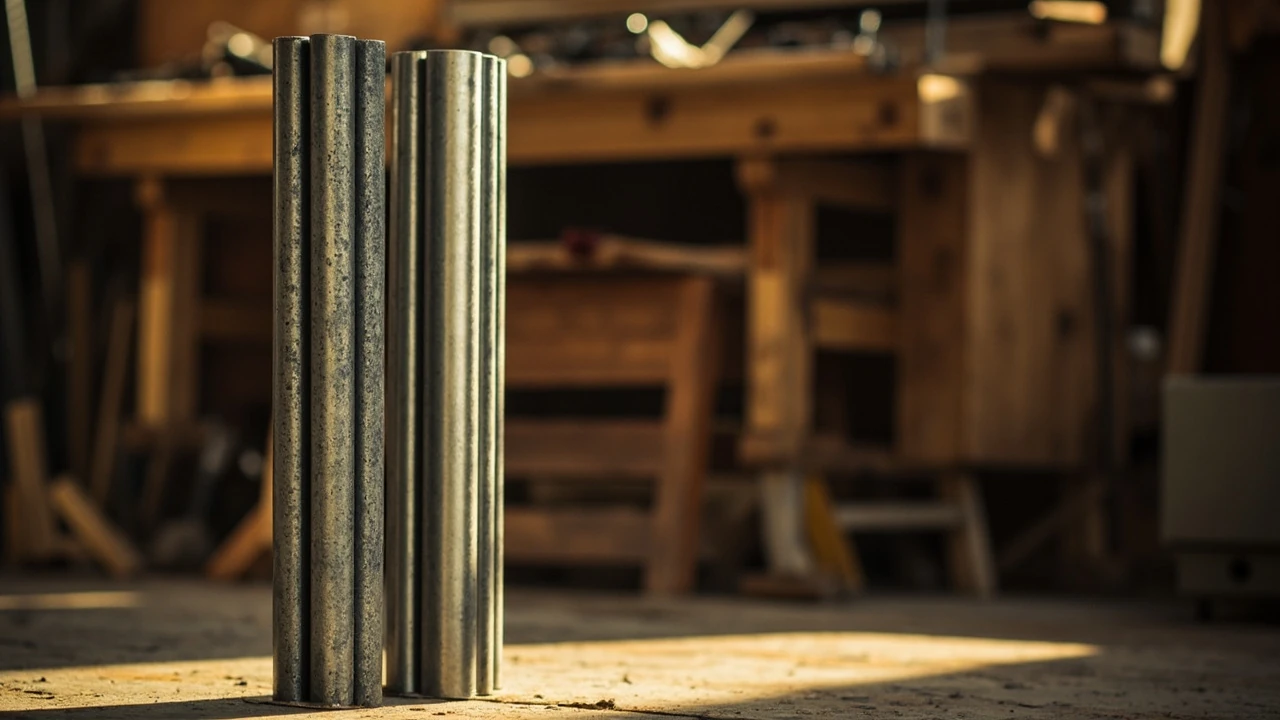
A pipe organ builder in a small workshop slides a fresh length of metal across the bench and taps it. The sheet rings out with a quick, slightly higher pitch than the roll sitting next to it. That small difference in tone tells the builder almost everything: one strip is spotted metal, the other is a more common tin and lead alloy. The choice between these two families of pipe metal shapes how a rank of pipes speaks, how long the organ will hold its tuning, and how much the client will pay. The conversation about spotted metal vs common metal organ pipes is not about which alloy is universally better, but about which alloy fits which rank, which room, and which budget.
This article looks at both metals from the viewpoint of someone planning a new organ, restoring an older one, or trying to understand why two pipes of the same length can sound and behave so differently. We will walk through composition, manufacturing, tone, stability, cost, and the practical situations in which a builder will pick one alloy over the other.
Spotted metal vs common metal organ pipes: what the terms actually mean
Before comparing them, it helps to separate marketing language from metallurgical facts. In modern organ building, “common metal” refers to a worked alloy of tin and lead, usually with a tin content between 30 and 60 percent, the rest being lead with small amounts of copper, antimony, or bismuth that fine-tune casting and rolling behavior. “Spotted metal” refers to a specific high-tin alloy that contains deliberate inclusions of copper, which appear as small dark dots on the polished surface. The spots are not a defect; they are the visible signature of a controlled metallurgical structure.
The key practical difference is tin content. Spotted metal typically runs between 80 and 95 percent tin, with a small percentage of lead and a deliberate addition of copper, often 2 to 7 percent, that forms hard intermetallic phases. Common metal runs lower in tin and higher in lead. That single compositional shift changes stiffness, density, casting behavior, damping, and price.
Why the name “spotted”
When a sheet of spotted metal is polished, the copper-rich regions do not reflect light the same way as the surrounding tin matrix. Under workshop lighting the surface looks like a fine field of darker freckles against a brighter background. Founders originally called the alloy “spotted metal” because the pattern was a reliable visual cue that the tin content was high. Modern mills can produce the alloy in different grain sizes, so the spots can be coarse or fine, but the principle is the same: visible heterogeneity is the alloy’s calling card.
How composition changes the physical behavior of the pipe wall
An organ pipe is a thin-walled metal resonator. Its acoustic behavior depends on three things: the geometry of the pipe, the air column inside it, and the way the wall itself vibrates, stores, and radiates energy. Metal choice changes how the wall participates in sound production, especially in larger pipes.
Stiffness and internal damping
Higher tin content makes the alloy stiffer, which raises the speed of sound in the wall material itself. A stiffer pipe wall tends to radiate sound a little more efficiently, especially in the upper partials that give a pipe its speech and edge. At the same time, tin-rich alloys have higher internal damping than lead-rich alloys, which means the wall absorbs a little more vibration instead of passing it straight through. The net acoustic result is a tone that many builders describe as more rounded, more “present,” and slightly more resistant to harshness than stiffer but lossier materials.
Density and mass
Lead is denser than tin. A common metal pipe wall is heavier per square meter than a spotted metal wall of the same thickness. For large bass pipes, the extra mass can be welcome: a heavier wall resists the low-frequency flexing that can rob a sub-bass of definition. For smaller pipes, the extra mass is mostly unnecessary because the pipe is already self-supporting.
Casting and rolling behavior
Spotted metal is more difficult to cast and roll cleanly. The copper inclusions raise the working temperature and make the melt more viscous. Sheets have to be cast carefully and rolled slowly to keep the spots evenly distributed. Common metal flows more easily, accepts finer surface finishes, and tolerates small variations in workshop practice. That ease of working is one of the main reasons common metal dominates volume production.
Where each alloy traditionally appears in a pipe organ
Most pipe organs are not built from a single metal. The builder chooses the alloy for each rank based on pitch, scale, acoustic role, and budget. The division of labor between spotted and common metal follows a fairly stable pattern across much of the European and North American traditions.
| Rank type | Pitch range | Typical alloy | Reason for the choice |
|---|---|---|---|
| Principal chorus (large) | 16′ and 8′ principals, sometimes 4′ | Spotted metal, 80-95% tin | Stiffer wall, more stable tuning, refined tone at full chorus volume |
| Principal chorus (medium and small) | 8′ to 2′ principals | High-tin spotted or fine common metal | Balance of cost and tonal refinement; smaller pipes need less mass |
| Flue chorus (mixtures) | 1-1/3′ and higher | Common metal or pure tin | Small pipes dominate high partials; alloy cost matters more per pipe |
| Flute ranks | All pitches | Common metal, sometimes spotted for large basses | Flutes need smooth, even tone; alloy choice follows speaking pipe size |
| String ranks | All pitches | High-tin spotted or pure tin | Strings benefit from the stiffer, brighter response of tin-rich alloys |
| Reed resonators | All pitches | Spotted metal or pure tin | Resonator tone is alloy-sensitive; shallots use zinc for functional reasons |
This pattern is not a rule. Many small organs are built entirely from common metal, and many large Romantic-era organs were built almost entirely from spotted metal. The table shows the kinds of choices a builder is making behind the scenes on a typical mid-size instrument.
A closer look at cost, scale, and tonal budget
The decision to specify spotted metal is rarely an all-or-nothing choice. It is a line-item calculation that a builder runs against the organ’s tonal budget, the total sum the client has allocated to sound quality. Spotted metal can easily double the material cost of a single rank compared with common metal, so it is reserved for the ranks where the acoustic return is largest. In a 32-rank organ, the builder might specify spotted metal for fewer than ten ranks and use common metal for the rest, with the result that the organ sounds coherent but the most exposed ranks carry the refinement.
| Factor | Spotted metal | Common metal |
|---|---|---|
| Tin content (typical) | 80-95% | 30-60% |
| Lead content (typical) | 2-10% | 40-65% |
| Copper addition | 2-7% (deliberate) | Trace or none |
| Relative sheet cost | 1.3x to 1.8x common metal (varies) | Baseline |
| Wall stiffness | Higher | Lower |
| Density | Lower | Higher |
| Internal damping | Higher | Lower |
| Creep resistance | High | Moderate; soft in high-lead mixes |
| Soldering temperature | Higher | Lower |
| Typical use | Foundation principals, large flutes, string trebles, reed resonators | Mixtures, utility ranks, small chorus pipes, budget instruments |
These figures vary by region and by foundry. The ratios are useful as a working reference, not as a binding standard.
How each alloy changes what you hear at the console
The acoustic difference between spotted metal and common metal is real but subtle in any single rank. It becomes obvious when two ranks of the same scale sit next to each other and a long chord is sustained. The differences fall into a few predictable categories.
Tone color and harmonic profile
Spotted metal tends to give a rank a slightly more velvety attack, a smoother release, and a touch more energy in the upper midrange partials. Common metal tends to sound a little more direct, with a marginally brighter transient and a faster decay in the highest partials. On a single 8′ open diapason played alone, the difference is small. On a full principal chorus with mixtures, the cumulative effect of spotted metal on the larger ranks is often described as more cohesive and less edgy at full organ.
Speech and response
Speech refers to how quickly a pipe begins to sound after a key is pressed. The wall material has a small but real influence on speech because it affects how the standing wave inside the pipe couples to the air outside. Spotted metal pipes often have a slightly softer attack in the largest basses, partly because the higher internal damping rounds off the very first instant of vibration. Common metal pipes can feel a touch more immediate in the same scale. The difference shrinks as pipes get smaller.
Blend across a chorus
Because the principal chorus is built from ranks of different pitches and scales, the choice of alloy for the larger ranks quietly sets the house sound of the whole chorus. If the 16′ and 8′ principals are spotted metal and the mixture ranks are common metal, the chorus tends to settle into a particular tonal balance. If the entire chorus is built in common metal, the blend is often slightly more uniform, but the foundation can feel a little thinner when all the stops are pulled. This is one of the main reasons builders reach for spotted metal on the foundational ranks of larger organs.
Stability, tuning, and the long-term life of a pipe
An For additional context, organ pipe has to do its job for decades, often for more than a century. The metal has to hold its dimensions, resist corrosion, and stay elastic enough to handle the constant small vibrations of the wind supply without cracking or creeping. Here the difference between spotted and common metal becomes more obvious than in the first few seconds of sound.
Thermal expansion and tuning drift
Both alloys expand and contract with temperature changes, and organ pipes have to be tuned to compensate. Spotted metal has a slightly lower coefficient of thermal expansion than common metal, so a spotted metal pipe changes pitch less for a given change in temperature. In a stable, climate-controlled room, the practical difference is small. In a building that swings from cold winter nights to warm summer days, spotted metal pipes hold their tuning a little better, especially in the largest diameters where small dimensional changes are most audible.
Creep and sag over time
Lead is soft, and over decades a high-lead pipe wall can slowly deform under its own weight, particularly in long bass pipes that are not heavily reinforced. This is called creep. Spotted metal, with its much higher tin content and copper-bearing intermetallic phases, resists creep much better. A spotted metal bass pipe from the early 1900s is often closer to its original geometry than a comparable common metal bass pipe of the same age.
Corrosion and patina
Both alloys oxidize over time, but they oxidize differently. Common metal develops a dull gray patina that is mostly stable. Spotted metal tends to develop a slightly warmer, more uneven patina because the copper-rich spots oxidize at a different rate than the tin matrix. Neither patina is harmful to sound. In fact, a stable patina protects the underlying metal. The visible difference is mostly aesthetic.
Repair and re-soldering
Common metal is easier to repair because it solders at a lower temperature and tolerates a wider range of workshop conditions. Spotted metal, with its higher tin content, needs a hotter iron or torch and a more careful flux. A skilled voicer can repair either alloy, but the workshop habit of using spotted metal for important ranks and common metal for utility ranks carries over into maintenance schedules.
Cost, availability, and the economics of choice
Spotted metal costs more than common metal for three reasons. Tin is more expensive than lead. The melting and rolling process is slower and more wasteful. And the alloy is usually produced in smaller batches by specialist mills. The cost gap varies year to year with commodity prices, but as a rule of thumb a sheet of spotted metal is roughly 30 to 80 percent more expensive than a comparable sheet of common metal, sometimes more in small quantities.
For a large organ with several hundred ranks of pipes, that cost difference adds up quickly. A builder planning a budget has to decide which ranks will benefit most from the higher cost and which ranks can use common metal without anyone noticing the difference at the console.
When the cost is justified
- Foundational principal ranks at 16′ and 8′ pitch, especially in organs intended to play Romantic or symphonic repertoire at high wind pressures.
- Bass pipes of flute and string stops, where the larger diameters show the differences in stiffness and damping.
- Resonator pipes of reed ranks, where the alloy has a strong influence on the characteristic reed tone.
- Restoration projects where the original builder used spotted metal and the client wants to preserve the historical tonal identity.
When common metal is the rational choice
- Small organs in dry, climate-controlled rooms where tuning stability is easy to maintain.
- Mixture ranks and high-pitched chorus work where the pipe is small and the wall is thin.
- Budget projects where the priority is a coherent, well-voiced instrument rather than maximum tonal refinement.
- Utility stops and chorus repeats that are heard mostly in combination with other ranks.
How to recognize which alloy you are looking at
If you walk into an organ and want to know which metal was used, a few visual and physical cues help. None of them is a substitute for asking the builder, but they are useful when a builder is not available.
- Look at the surface finish. Spotted metal often shows fine, evenly distributed darker dots under direct light, especially on a polished or recently cleaned pipe. Common metal looks more uniformly silvery or gray.
- Tap the pipe gently. Spotted metal tends to ring with a slightly higher, longer sustain. Common metal gives a duller, shorter response. The difference is small and takes a practiced ear.
- Check the date and builder. A late 19th-century English or French builder working in the Romantic tradition is more likely to have used spotted metal. A 20th-century American builder working in a more eclectic or economical style is more likely to have used common metal for at least some ranks.
- Weigh the pipe if you can. Two pipes of identical dimensions, one spotted and one common, will show a measurable weight difference in favor of the common metal pipe, which carries more lead.
What builders actually do in practice
Most working organ builders think of spotted and common metal as two tools in a kit, not as competing options. The decision is part of the larger design process that includes scale, wind pressure, voicing style, and the acoustic of the room. In a new organ, a builder will typically start with a metal specification for the whole instrument and then adjust individual ranks as the voicing progresses.
The specification is often a matter of house tradition. A German Baroque-revival builder may specify a higher tin content across the board to match a historical reference. A French Romantic-revival builder may use spotted metal almost everywhere. A workshop building small practice organs in common metal may not use spotted metal at all, and the results can still be excellent because the voicing has been tailored to the metal’s character.
The point is that the alloy is one variable among many. It does not save a bad design, and it does not ruin a good one. Used thoughtfully, it adds an extra layer of refinement that experienced listeners can hear, especially in a full chorus.
What this means if you are commissioning or evaluating an organ
If you are working with a builder on a new organ, ask early in the process which alloys are being specified and why. A good builder will be able to explain the choice in plain language and tie it to the kind of repertoire the organ will play, the room it will sit in, and the budget you have set. If the answer is “we always use common metal” or “we always use spotted metal,” ask what trade-offs that implies.
If you are evaluating an existing organ, the alloy specification is part of the organ’s identity. Changing it during a restoration can shift the tonal character in ways that the original builder may not have intended. Most reputable restorers will research the original specification and match it where the budget allows, even if the original alloy is no longer the cheapest option on the market.
A practical checklist for choosing between spotted and common metal
- Define the role of each rank in the chorus before choosing the alloy.
- Match higher-tin alloys to foundational ranks and to the larger pipes of solo stops.
- Reserve common metal for utility ranks, small chorus work, and budget-sensitive projects.
- Consider the room’s climate stability. Less stable rooms benefit more from spotted metal.
- Ask the builder to voice a sample pipe in each alloy so the difference can be heard at the console.
- Document the alloy choice in the organ’s specification so future restorers can match it.
Frequently asked questions
What is spotted metal in organ pipes?
Spotted metal is a high-tin alloy used for organ pipes, typically containing 80 to 95 percent tin with a small amount of lead and a deliberate addition of copper. The copper forms hard intermetallic phases that appear as small dark dots, or spots, on the polished surface, which is where the alloy gets its name. The high tin content makes the alloy stiffer, more elastic, and more resistant to creep than common metal.
What is common metal in organ pipes?
Common metal is the everyday working alloy used for most organ pipes, with a tin content typically between 30 and 60 percent and the balance made up of lead, with small amounts of other elements. It is easier to cast and roll than spotted metal, takes a fine surface finish, and is significantly cheaper per kilogram. The tonal character is slightly brighter and more direct than spotted metal in matched scales.
Does spotted metal really sound different from common metal?
Yes, but the difference is subtle in a single rank and becomes obvious across a chorus. Spotted metal tends to give a slightly more rounded attack, smoother release, and a touch more energy in the upper midrange partials. Common metal tends to feel more immediate and a little brighter. The two alloys also differ in how the wall damps vibration, which affects the harmonic profile of the sustained tone.
Why is spotted metal more expensive than common metal?
Tin is more expensive than lead, and the metallurgical process of keeping the copper inclusions evenly distributed is slower and more wasteful than producing a simple tin-lead alloy. Spotted metal is also produced in smaller batches by specialist mills, which raises the per-unit cost. The price gap varies with commodity markets but is usually in the range of 30 to 80 percent over common metal for comparable sheet sizes.
Can you mix spotted metal and common metal in the same organ?
Yes, and most medium and large organs do exactly that. The typical pattern is to use spotted metal for the foundational principal ranks and the larger pipes of solo stops, and common metal for mixture ranks, utility stops, and budget-conscious chorus work. The two alloys can be voiced to sit comfortably in the same chorus if the builder plans the specification carefully.
How long does a spotted metal pipe last compared with common metal?
Both alloys last for many decades in a stable environment, and there are working examples of each from the 19th century. Spotted metal tends to hold its geometry better over time because it resists creep, which is most visible in the largest bass pipes. Common metal can slowly deform under its own weight in long, thin-walled bass pipes, especially in warm or humid rooms.
Does alloy choice affect how stable the organ’s tuning is?
Yes, modestly. Spotted metal has a slightly lower coefficient of thermal expansion than common metal, so a spotted metal pipe drifts less in pitch for a given change in temperature. In a well-controlled room the difference is small. In a room that swings through large temperature cycles, spotted metal pipes tend to hold their tuning a little better, especially in the largest diameters.
Is spotted metal always the better choice for principal pipes?
Not always. Spotted metal is often the better choice for large foundational principals in organs intended to play Romantic or symphonic repertoire, but for small organs in stable rooms the additional cost is not always justified. The choice should be tied to scale, pitch, repertoire, room acoustics, and budget rather than applied as a universal rule.
How can I tell which alloy a given pipe is made from?
Look at the surface under good light. Spotted metal often shows fine, evenly distributed darker spots, especially on a polished pipe. Common metal looks more uniformly silvery. Tapping a pipe gently gives a slightly higher, longer ring for spotted metal and a duller, shorter response for common metal. A workshop test with a small sample and a torch can confirm the alloy, but the visual and acoustic cues are usually enough for an experienced eye.
Does the alloy matter for reed pipes as well as flue pipes?
Yes. The resonator of a reed pipe is functionally a flue pipe and responds to alloy changes in the same way, often more strongly because the resonator has to project a clear tone through the characteristic sound of the reed. Many builders specify spotted metal or pure tin for the larger reed resonators and accept common metal or zinc for shallots and small treble resonators where the acoustic contribution of the wall is smaller.
For a broader look at how organ pipes are voiced and how voicing decisions interact with metal choice, the Wikipedia article on the pipe organ covers the history, families, and construction of the instrument in more detail. The Organ Historical Society’s essay on large organ metals also gives a working builder’s view of how tin, lead, and copper contents shape the pipes that end up in the case.