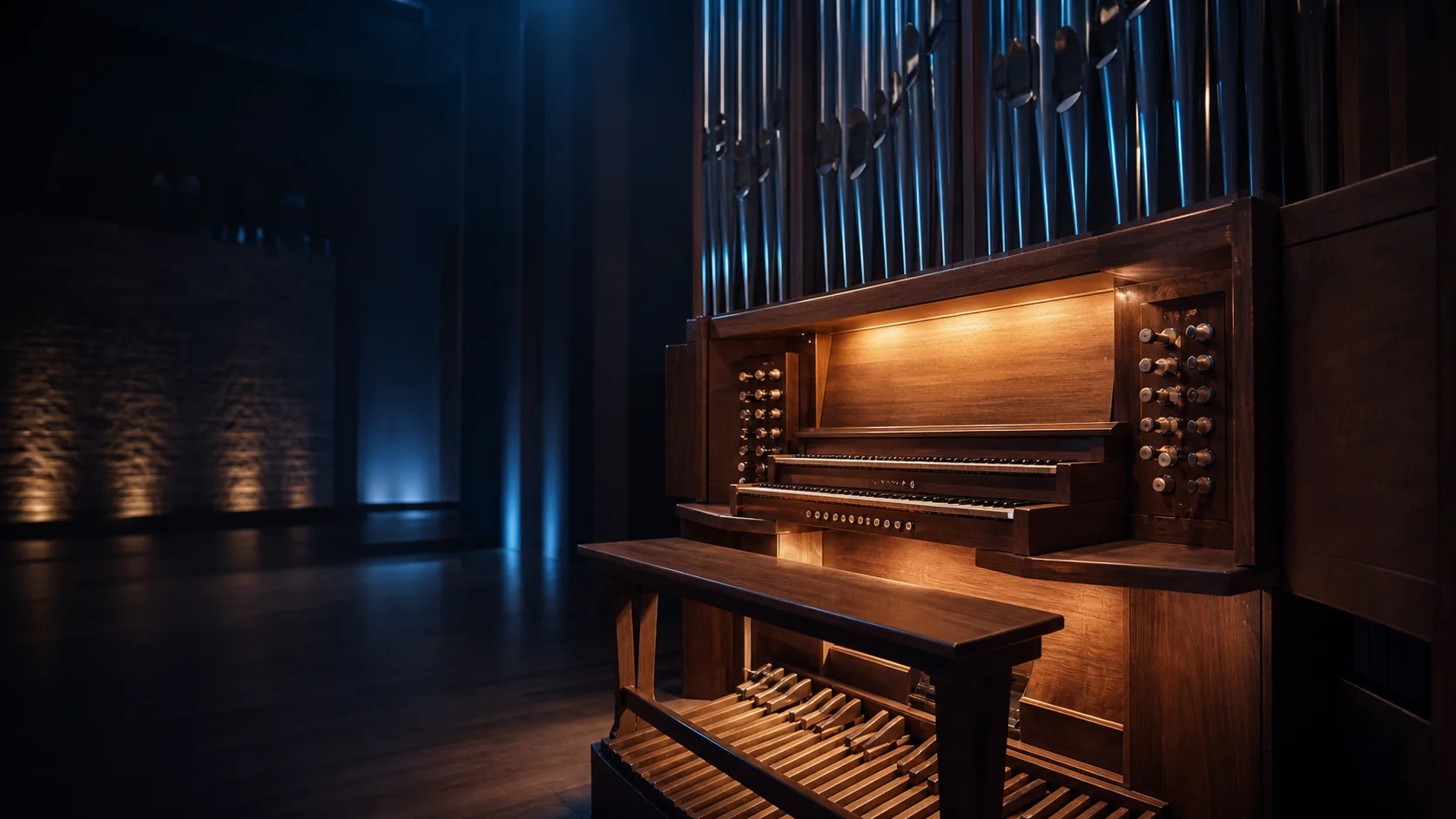
The instrument associated with Christ Episcopal Church: Opus 57
Martin Ott Opus 57 was a tracker organ built in 1989 for Christ Episcopal Church in Denver. The commission began early enough for the builder to work with the architect and acoustician Robert F. Mahoney and Associates. The free-standing red-oak case has an attached keydesk and suspended mechanical action.
The surviving chronology begins with 1989 beside Opus 57. For the Christ Episcopal Church project in Denver, Colorado, no day, month, or event label accompanies that year. Christ Episcopal Church in Denver, Colorado fixes the historical setting, but a contract or dedication programme would be needed for a tighter sequence. Within the documented Denver chapter, the entry does not answer present access or condition.
The room question behind Opus 57
For Opus 57, the geographic anchor is Christ Episcopal Church in Denver, Colorado. The church setting gives the Denver project a clear institutional frame, yet it cannot stand in for evidence about liturgy, repertoire, access, or sound. Unless a recital, hymn event, placement, or acoustic observation appears in the Denver project history, those details should remain unstated.
Reading the numerical outline for Christ Episcopal Church: Opus 57
A total of 22 stops and 26 ranks is attached to Opus 57. At Christ Episcopal Church in Denver, Colorado, the first figure belongs to the console controls and the second to sets of pipes, so the numbers should not be treated as synonyms. There are 4 additional listed ranks in the Opus 57 totals. In the Christ Episcopal Church account from Denver, Colorado, that is compatible with stops drawing several pipe rows, though the short overview does not say which ones. Within the documented Denver chapter, they provide a useful scale marker while leaving voicing, wind pressure, pipe count, and division layout unresolved.
The figures for Opus 57 give one fixed point in the history of Christ Episcopal Church. They allow the Denver project to be compared with a future dated disposition, although they do not reveal the names or pitches of individual voices. In the Christ Episcopal Church account from Denver, Colorado, if the two records differ, that change would need its own explanation and date. Within the documented Denver chapter, the present account keeps the builder's numerical outline intact rather than smoothing over an unknown later history.
Touch, control, and the missing technical detail: Opus 57
For Opus 57 at Christ Episcopal Church, the action is recorded as mechanical. For the Christ Episcopal Church project in Denver, Colorado, that tells us how the key command began its journey to a pipe valve; it does not tell us how the stops operated, how the console sat in the room, or how the mechanism has aged. In the Christ Episcopal Church account from Denver, Colorado, historic action type and current playing condition are not the same claim.
What the project facts suggest, cautiously: Opus 57
For Christ Episcopal Church, the strongest surviving clues are concrete: planning began in coordination with architect and acoustician and the source names Robert F. Mahoney and Associates. At Christ Episcopal Church in Denver, Colorado, the worship setting makes pipe placement and support for singers relevant to the design. For the Christ Episcopal Church project in Denver, Colorado, the archived account does not describe the complete tonal balance or document day-to-day use. Contemporary parish records, a stop list for Christ Episcopal Church, or a dedication booklet could supply that missing musical context. The listed 22-stop, 26-rank scale remains the numerical boundary for this reading.
What happened after the organ was built: Opus 57
The brick sanctuary is wider than it is deep, with choir and instruments along the altar's left wall. Flush mortar behind the musicians encouraged reflection, while deeper joints elsewhere reduced opposing-wall flutter. The archived account treats room proportions, brickwork, case position, and action as a coordinated design rather than adjustments made after construction.
Where the evidence stops for Opus 57
For Opus 57, the source links 1 numbered image file; images/057/057_m.jpg is the first candidate. It may show the instrument associated with Christ Episcopal Church, yet the link alone cannot confirm every subject or permit reuse. For the Christ Episcopal Church project in Denver, Colorado, no photographer, date, or licence is attached in the extracted material.
For Opus 57, the open end of the story lies in Denver, Colorado. The historical account does not say whether the instrument at Christ Episcopal Church remains accessible or unchanged. A dated survey from Christ Episcopal Church could confirm the present specification and separate surviving fabric from later work.