At the bench
A maker or repairer talks through one current job and the choices hidden inside it.
Pipe & Tone editorial desk
A musical life is built from practical decisions: what to practise, what to repair, when to tour, what to keep, and what to leave alone. People is where those decisions have a name and a voice.
Profiles and interviews stay close to the person's actual work. The instrument may be important, but the subject is the player, maker, technician, teacher, collector, or researcher using it.
Editorial test
Filed here
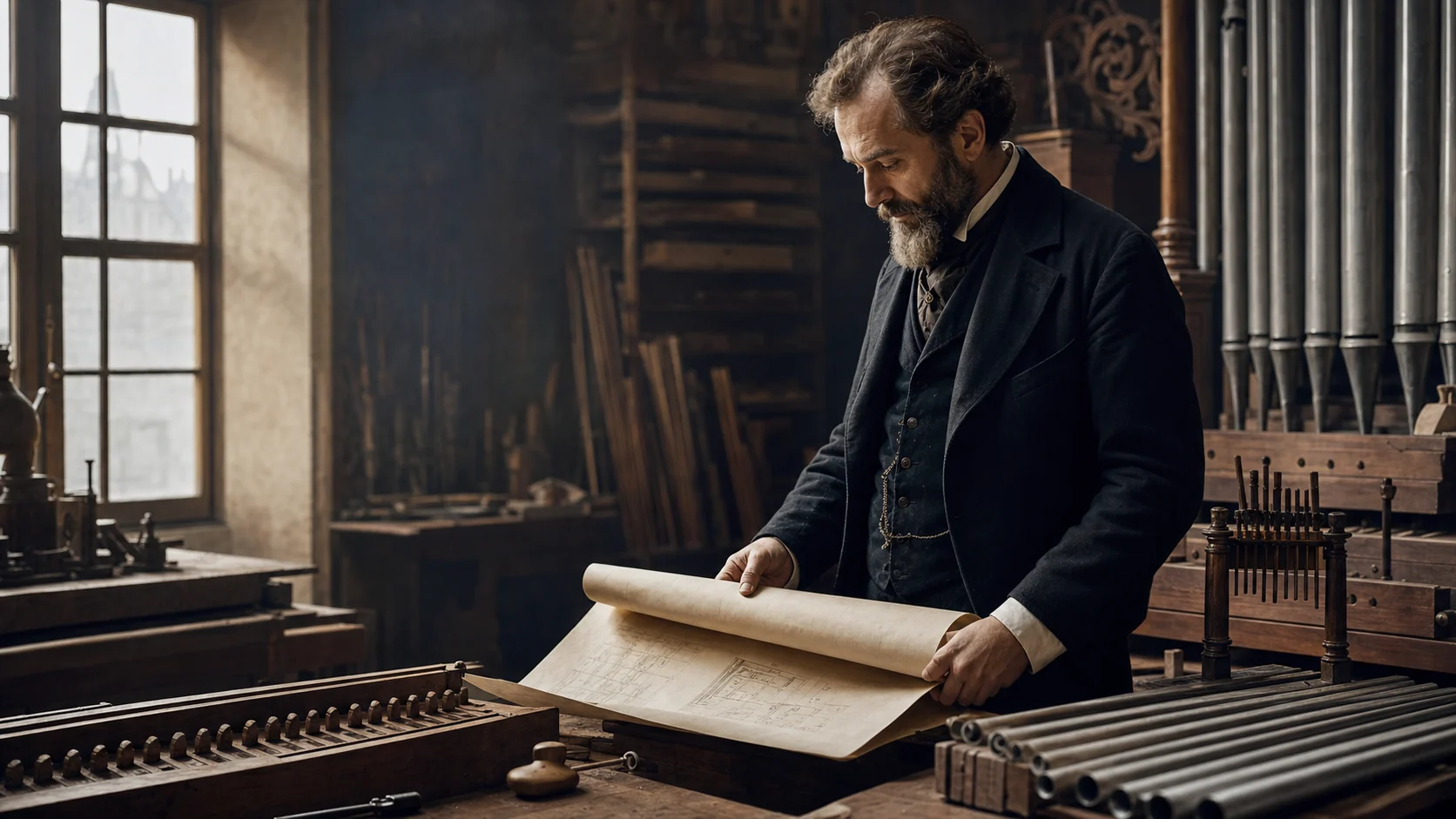
A builder portrait told through wind, mechanism, orchestral color, and three Paris instruments that changed what an organ could do.
Read article →Recurring formats
A maker or repairer talks through one current job and the choices hidden inside it.
A performer explains a stubborn passage, a changed routine, or a useful failure.
Collectors, engineers, teachers, and researchers discuss how their ears changed over time.
Music people stories follow a performer, maker, technician, teacher, collector, or researcher through a decision that can be observed and reported. A list of achievements is not yet a portrait. The article needs a center: a stubborn passage, a repair choice, a changed routine, a collaboration under pressure, or a body of work whose consequences remain audible.
A useful workshop opening might show a violin maker deciding not to remove old varnish. The physical action is small, but it raises questions about conservation, appearance, sound, value, and responsibility. The scene earns its place because the rest of the profile can test why the decision mattered.
Observe ordinary work as well as the demonstration prepared for a visitor. Where are tools placed? Which task gets repeated? What does the subject check before saying a job is finished? These details should support the article’s argument, not decorate a personality with atmospheric clutter.
When an answer becomes broad or promotional, ask for one occasion when the principle changed an action. “I listen to the instrument” becomes useful only after the person explains what they heard, what they changed, and what happened next. Follow the nouns in the answer: which instrument, room, colleague, document, or recording?
Quotations should carry voice or decision-making. They should not do the work of chronology that a dated programme, invoice, catalogue, or session record can establish more reliably. Keep the recording or transcript beside the notes so a polished sentence does not drift away from its original meaning.
Memory is evidence of experience, not an automatic calendar. Build a simple chronology from independent records, then ask the subject where memory agrees, sharpens, or conflicts. A disagreement can reveal how an event was understood later; it should not be silently repaired into the tidier version.
For oral-history method and preservation, the Smithsonian Institution Archives guide offers a useful institutional starting point. A Pipe & Tone profile still needs its own reporting plan, consent, credit, and boundaries around private material.
Access does not equal endorsement, and intimacy does not make every detail publishable. Include private life only when it is documented, necessary to understand public work, and handled without spectacle. Ask whether a health detail, family conflict, or casual remark changes the reader’s understanding of the music or merely makes the page feel more revealing.
Technical claims need checking even when the speaker is highly respected. A performer can describe touch and sound with authority while a maker or measurement source may be better placed to explain mechanism. Attribution lets those forms of knowledge stand together without forcing one person to represent an entire field.
If the person can be removed while the mechanism remains intact, move the article to Instruments. Return to the Blog index when another desk better matches the central question. A People story succeeds when the reader can see a working life through specific decisions, not through a manufactured brand.
Move from this editorial desk to the guide or tool that answers the next practical question.