Under the case
One mechanism shown in sequence, with the parts named and the motion made clear.
Pipe & Tone editorial desk
Instruments are physical arguments about how sound should begin. A bow grips a string, a hammer leaves it, a reed interrupts air, and a circuit can invent the source entirely.
This section takes the object seriously. Expect cutaways, comparisons, maintenance notes, construction history, and close explanations of what changes when one part moves by a millimeter.
Editorial test
Filed here
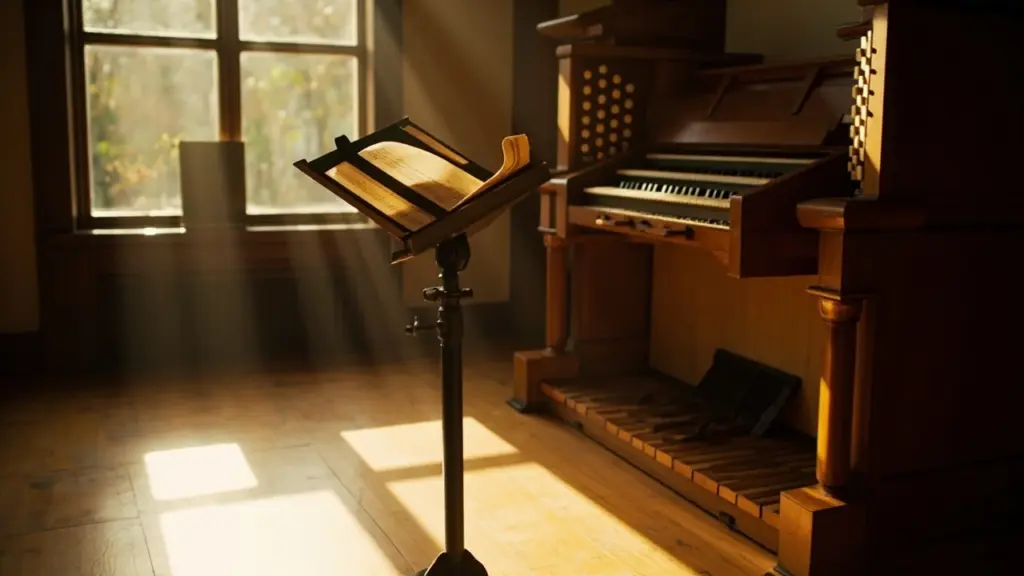
Choose a music stand that fits your score and playing position. Compare real dimensions, folding designs and adjustment methods, with model-specific care advice.
Read article →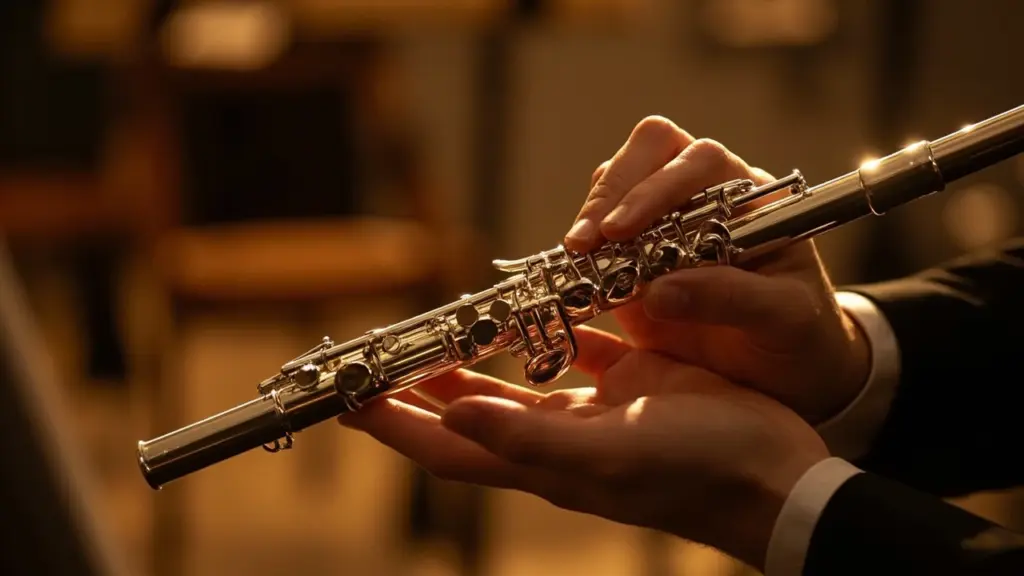
Piccolo instrument: a practical guide to the small flute A piccolo is the smallest member of the Western flute family, pitched one octave above the concert flute and...
Read article →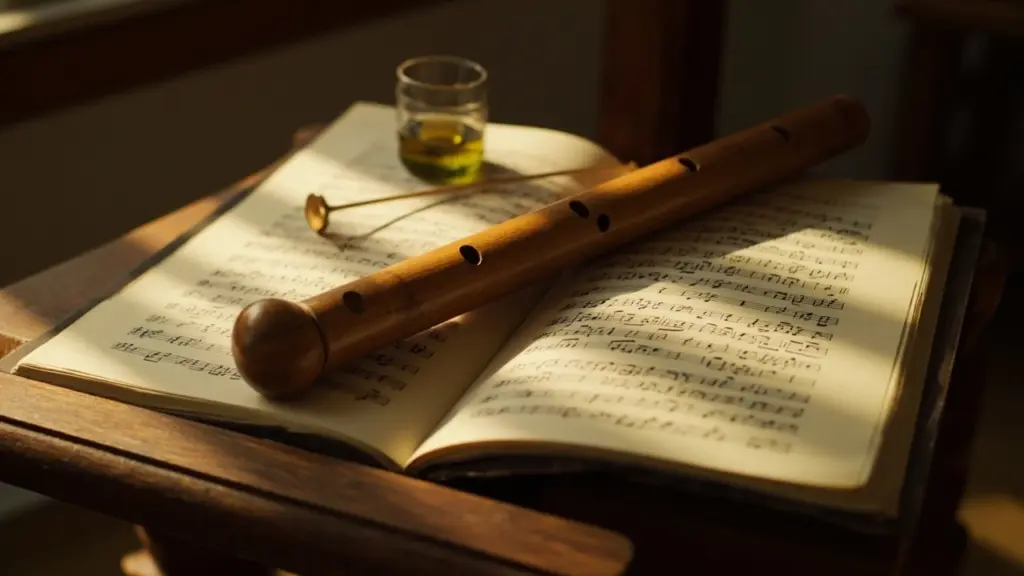
Recorder instrument: a practical guide to the wooden end-blown flute A school music teacher hands a seven-year-old a pale wooden tube with seven finger holes and a beak-shaped...
Read article →
k pop demon hunters coloring pages: a practical guide for fans, parents, and classroom use A child finishes a sharp-toothed demon hunter mid-strike and asks for another sheet....
Read article →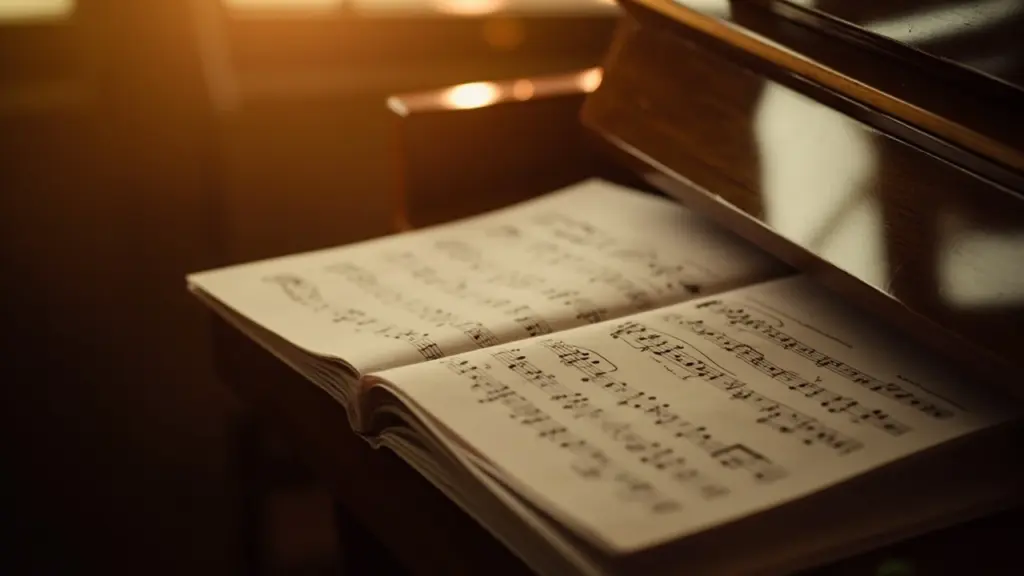
A first page of piano sheet music can look like a dense code: two staves joined by a brace, notes climbing in both directions, sharps and flats scattered...
Read article →
A pair of true wireless earbuds rarely changes how someone listens to music, but it can change where and how often they do. The JLab Go Air Pop...
Read article →
A pipe organ is often described as a whole orchestra compressed into one piece of furniture, yet the basic idea behind it is older and simpler than that...
Read article →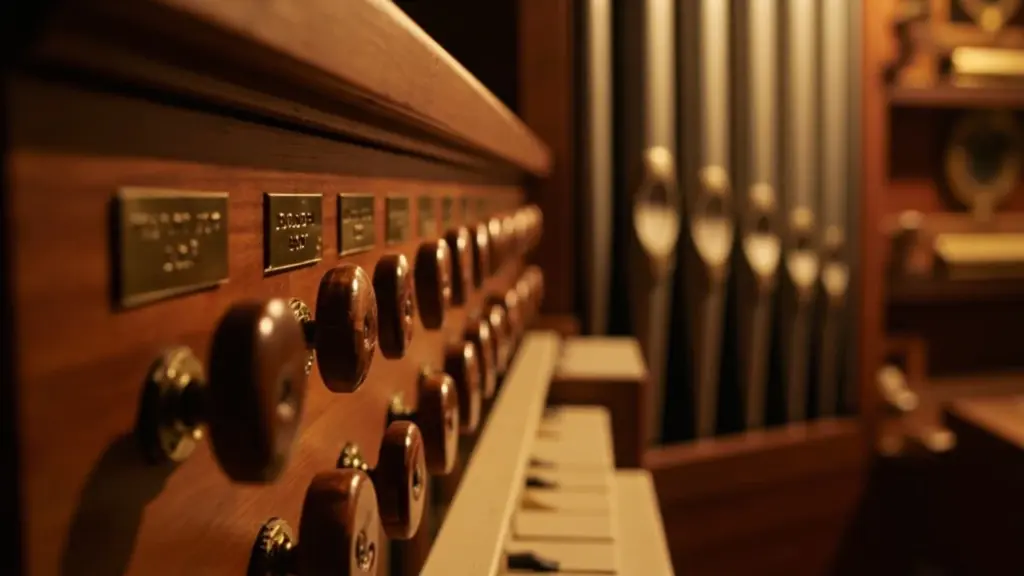
The bass instrument on a pipe organ When an organist pulls a single stop labelled Subbass, Bombarde, or Violone, the listener often hears one clear line sitting at...
Read article →
Why do organs have multiple keyboards At a pipe organ console, the stacked keyboards can look redundant. They are not. Each hand-played keyboard, called a manual, gives the...
Read article →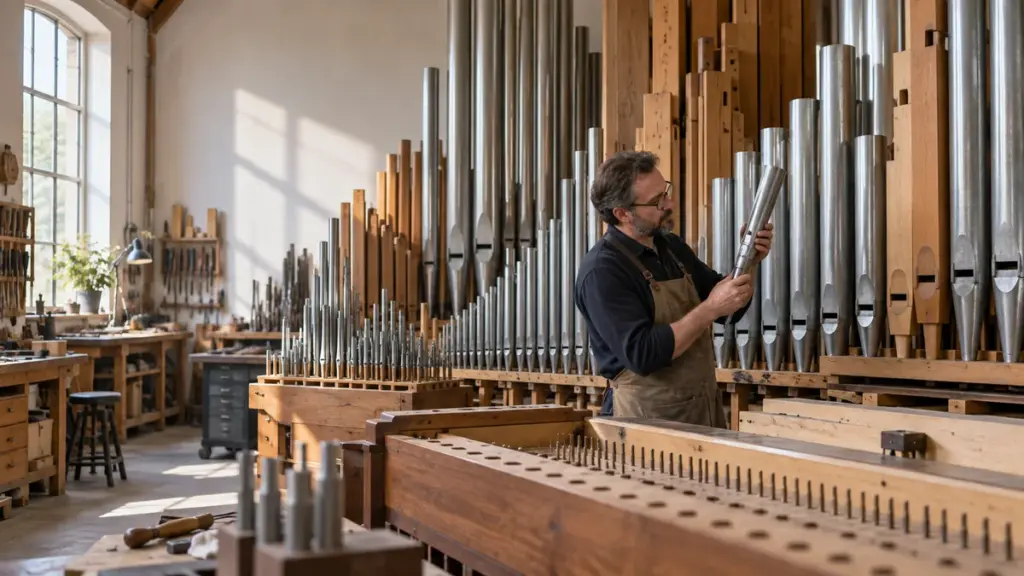
How many pipes are in a pipe organ? Answering the question "how many pipes are in a pipe organ" depends almost entirely on what kind of instrument you...
Read article →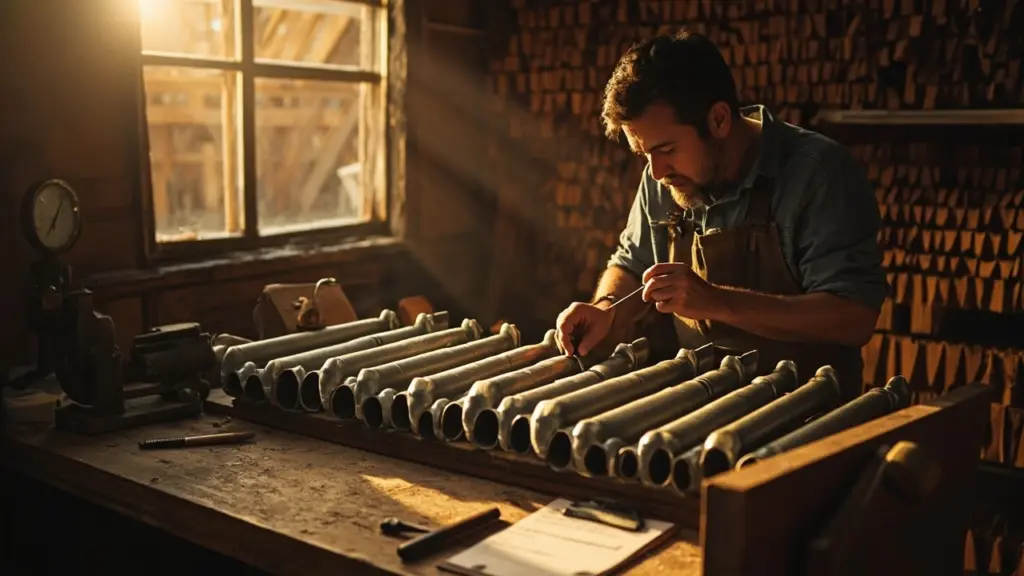
How organ builders test a new pipe rank: a practical workshop guide A new rank of pipes arrives at the workshop in a long wooden box, every pipe...
Read article →
When a piece of popping candy cracks in your mouth, the sound is small, sharp, and surprisingly layered. A crack becomes a hiss, the hiss becomes a fizz,...
Read article →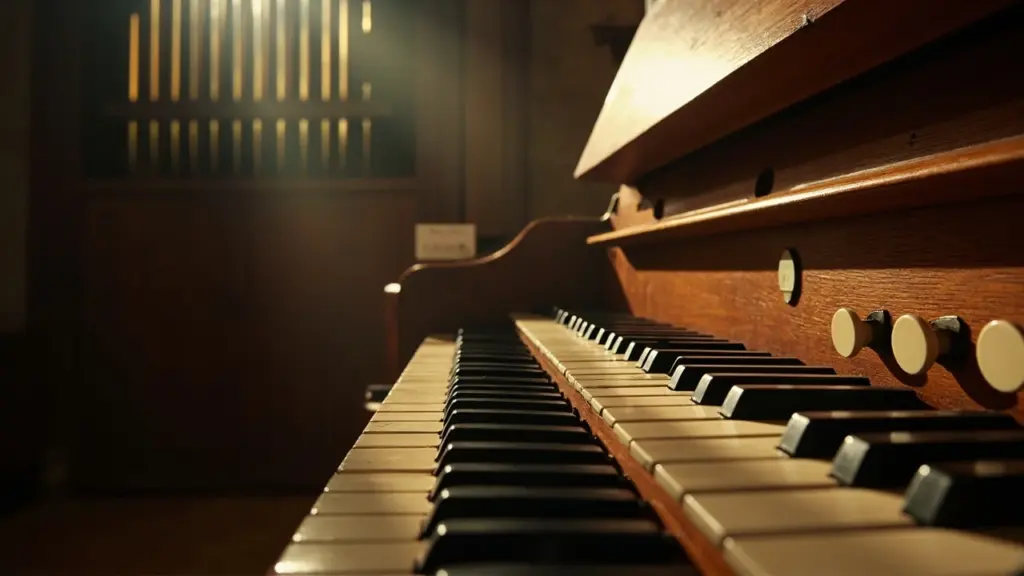
Tracker action vs electric action feel: what actually changes under your fingers Sit down at two otherwise similar pipe organs, play the same passage, and most experienced players...
Read article →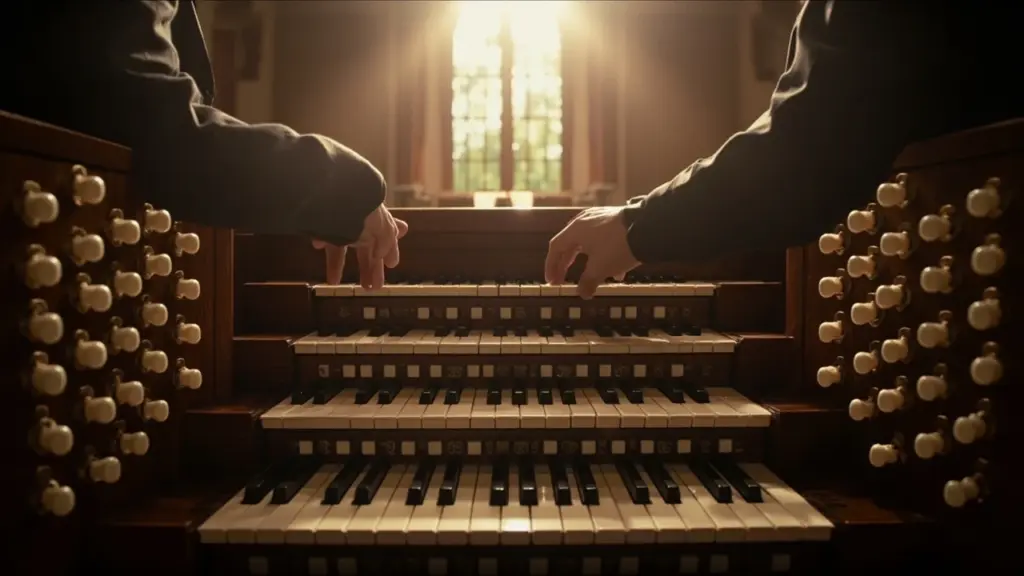
How organ couplers affect registration A registrar sits at a three-manual console, reaches up, and draws three little metal tabs on the left-hand jamb. Nothing happens to the...
Read article →
Mixture stops explained for beginners: what a mixture actually is A mixture stop is one of the most distinctive voices on a pipe organ, and it is also...
Read article →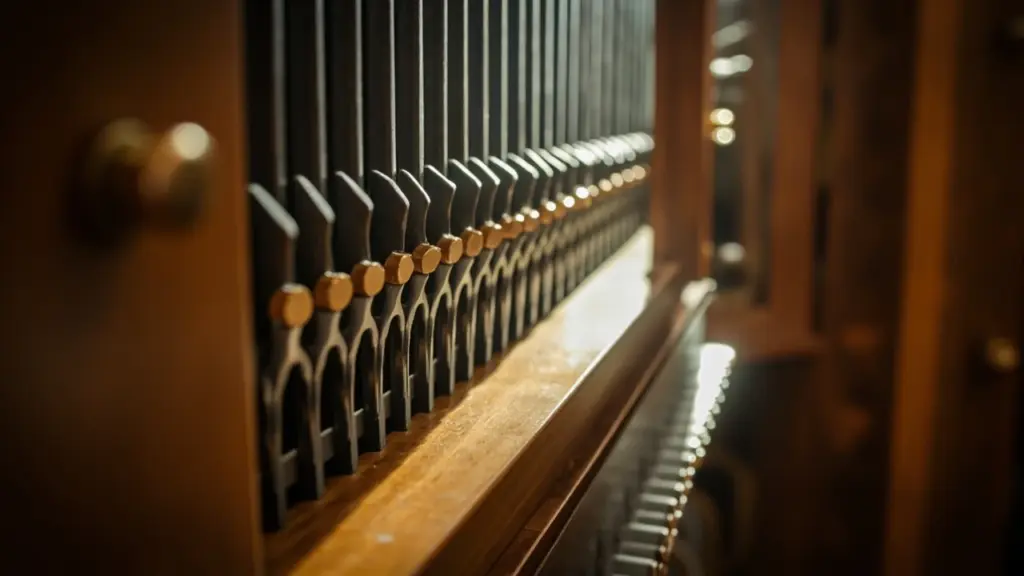
What is a celeste stop and how it works A celeste stop is a rank of organ pipes tuned a small amount sharp or flat against another rank...
Read article →
Why organ tuning starts with a reference rank A pipe organ cannot be tuned pipe by pipe from left to right, the way a piano is worked across...
Read article →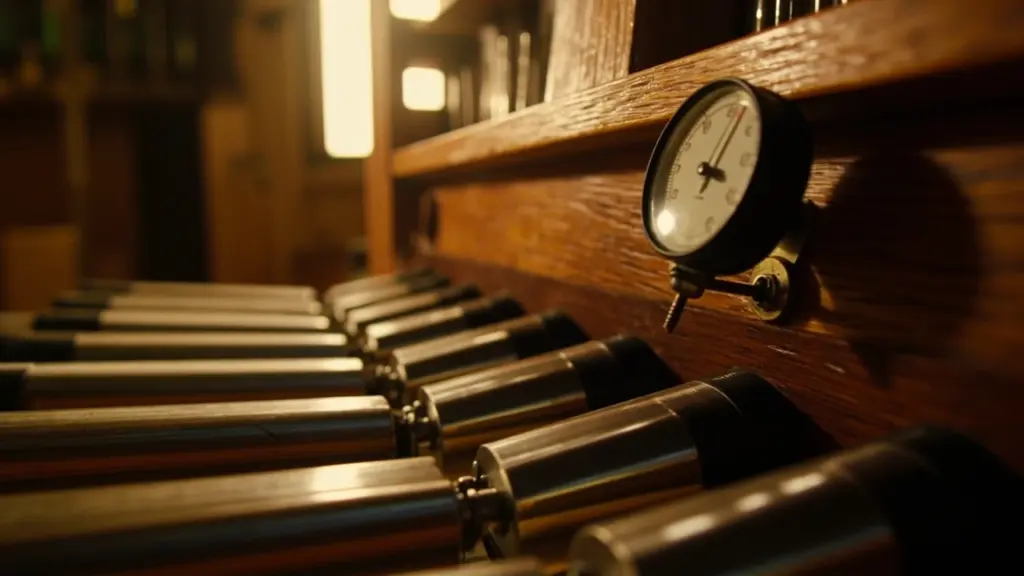
Why organ pipes go out of tune with temperature A church organ can sound perfectly in tune on a Sunday morning and noticeably flat by the Wednesday evening...
Read article →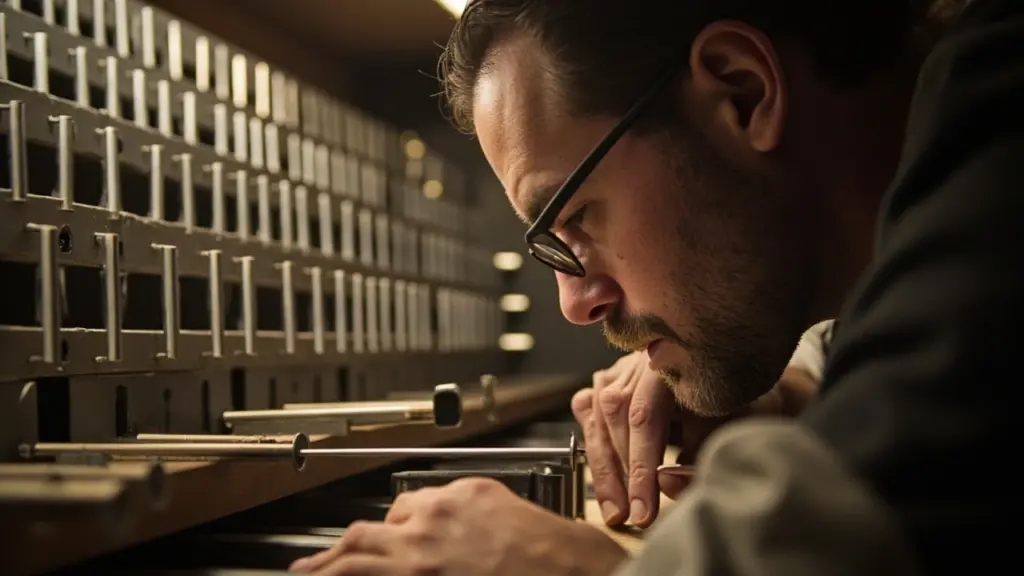
Pop stroke in pipe organs: what it is and why it happens A pipe organ speaks when air passes through a pipe, and the first instant of that...
Read article →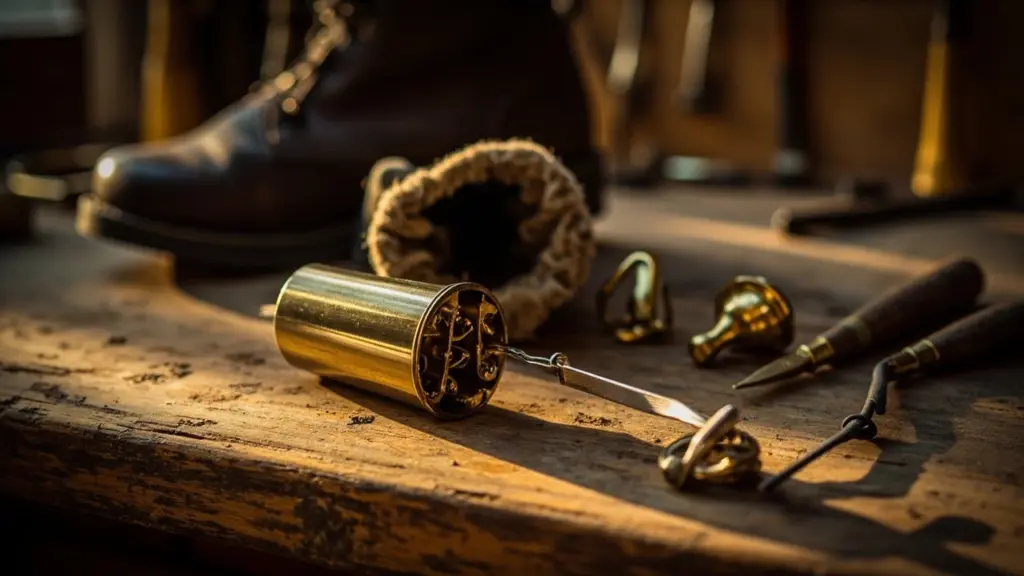
Shallot shapes in reed organ pipes explained Reed stops owe their speech, tone color, and tuning behavior to a small, deliberately shaped brass block called the shallot. In...
Read article →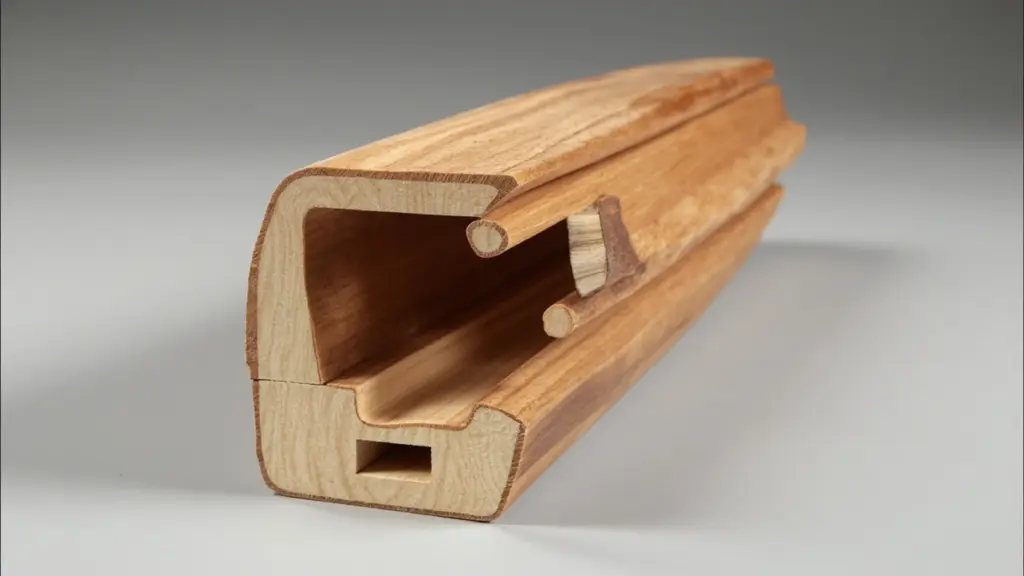
Organ pipe mouth parts explained: how a pipe actually speaks The phrase organ pipe mouth parts explained sounds technical, but the mechanism at the heart of every speaking...
Read article →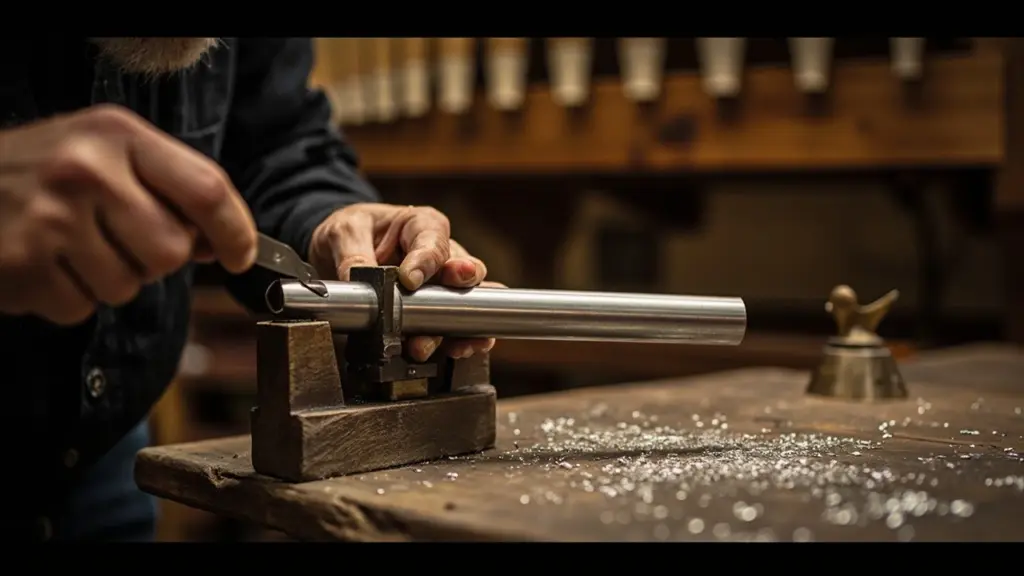
How organ pipe nicking changes speech A small nick filed into the edge of an organ pipe's languid can shift the way that pipe speaks in ways that...
Read article →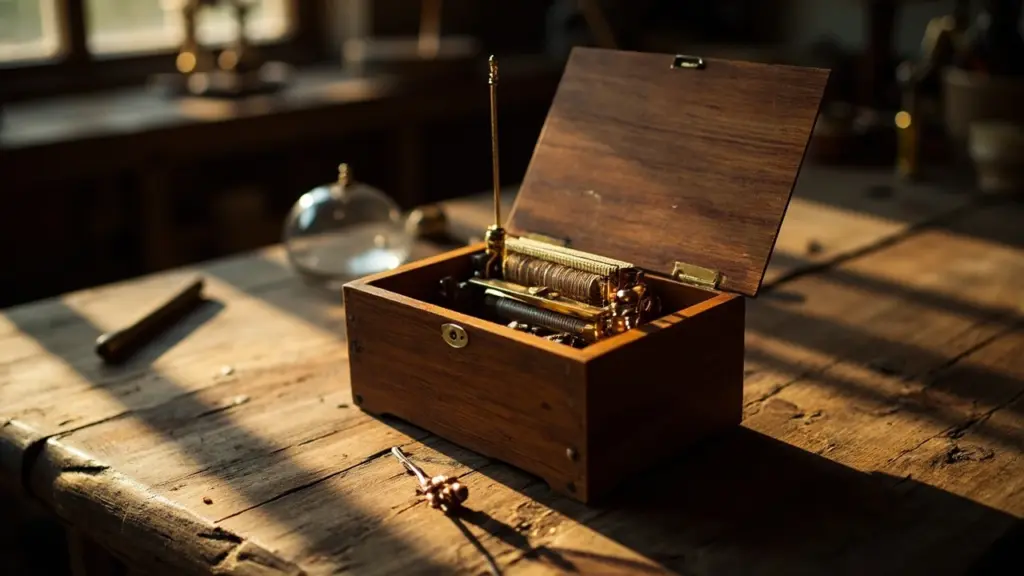
Music box: how the mechanism works and what to know before buying one A small wooden box on a collector's shelf, a brass cylinder turning under a comb...
Read article →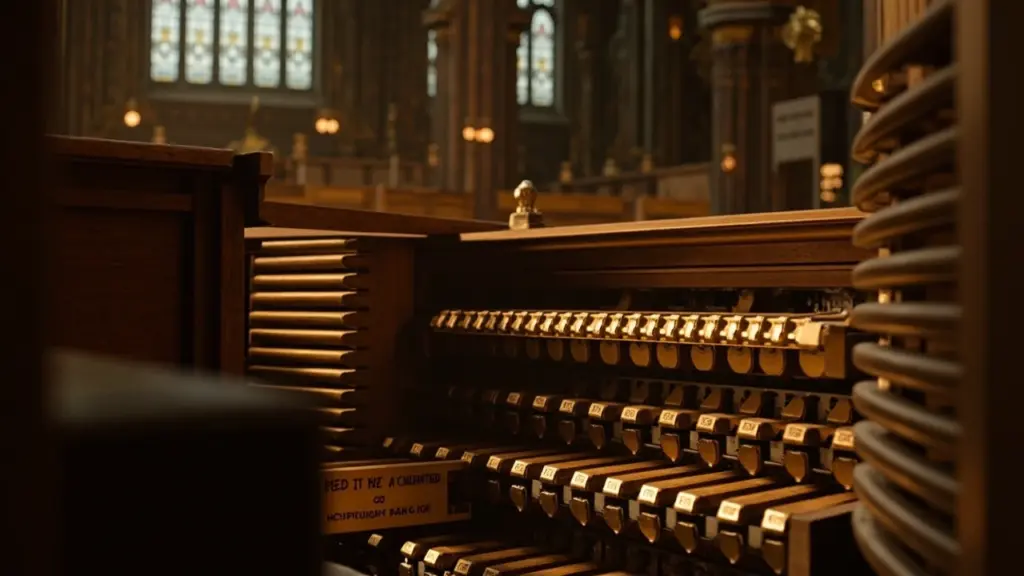
How organ swell shutters change volume on a pipe organ A swell shutter is a louvered wooden blind, usually hung in a vertical frame, that sits in front...
Read article →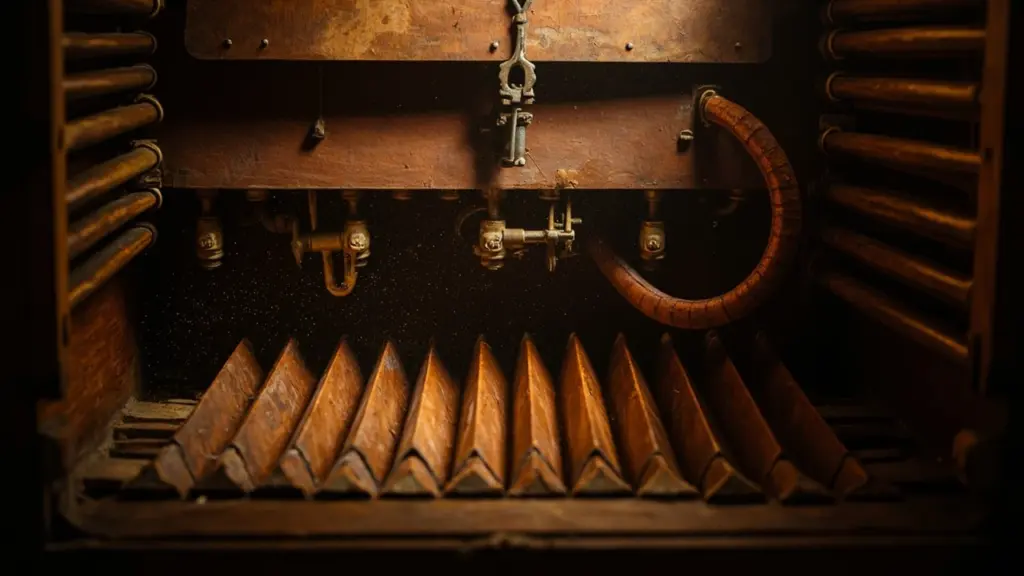
What causes pipe organ wind sag, and how to recognise it in practice When a full chorus suddenly sounds woolly on the last beat of a phrase, or...
Read article →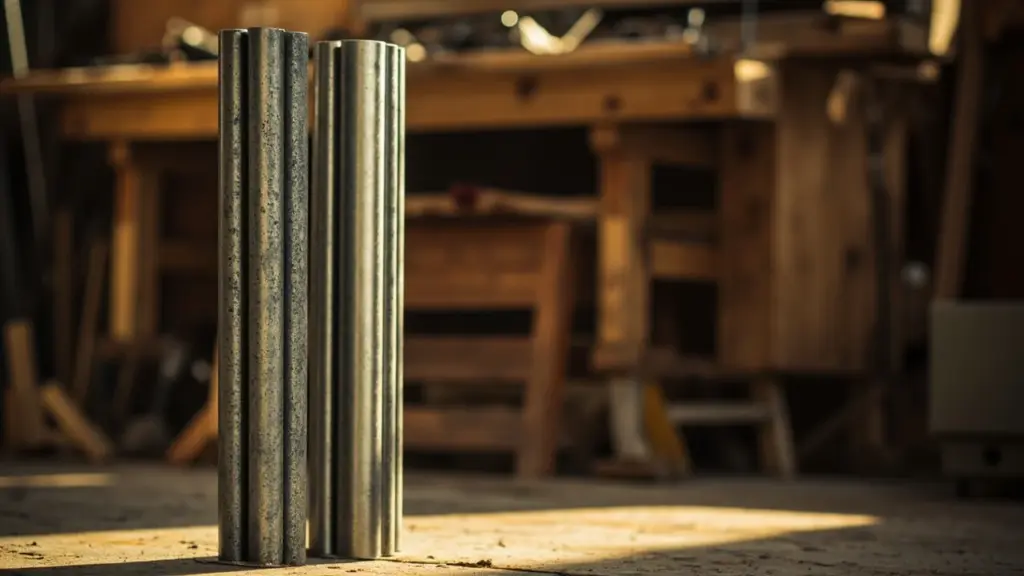
A pipe organ builder in a small workshop slides a fresh length of metal across the bench and taps it. The sheet rings out with a quick, slightly...
Read article →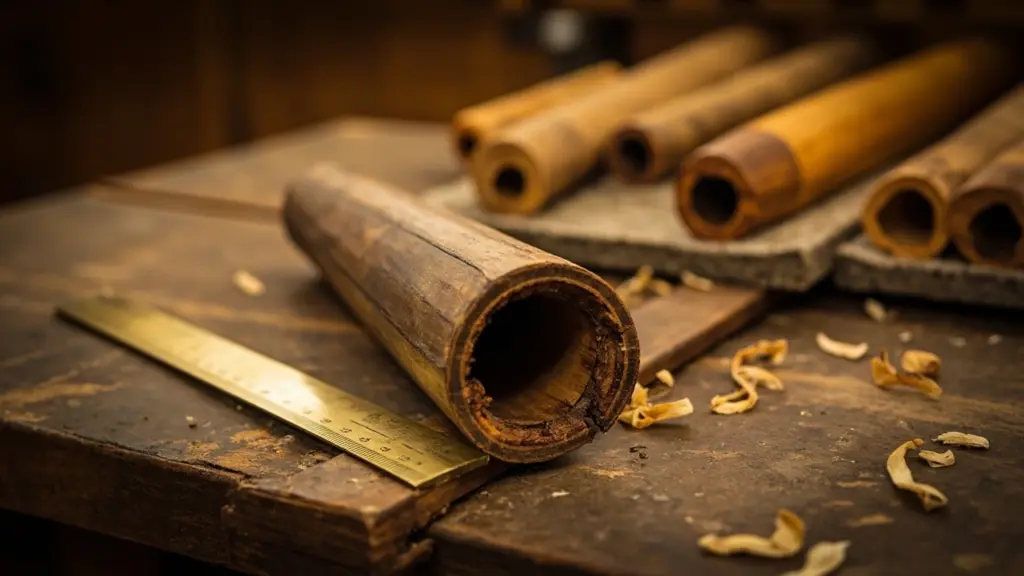
A wooden pipe that sings beautifully in a 19th-century gallery and the same design that sounds papery in a dry loft usually differ in one quiet number: wall...
Read article →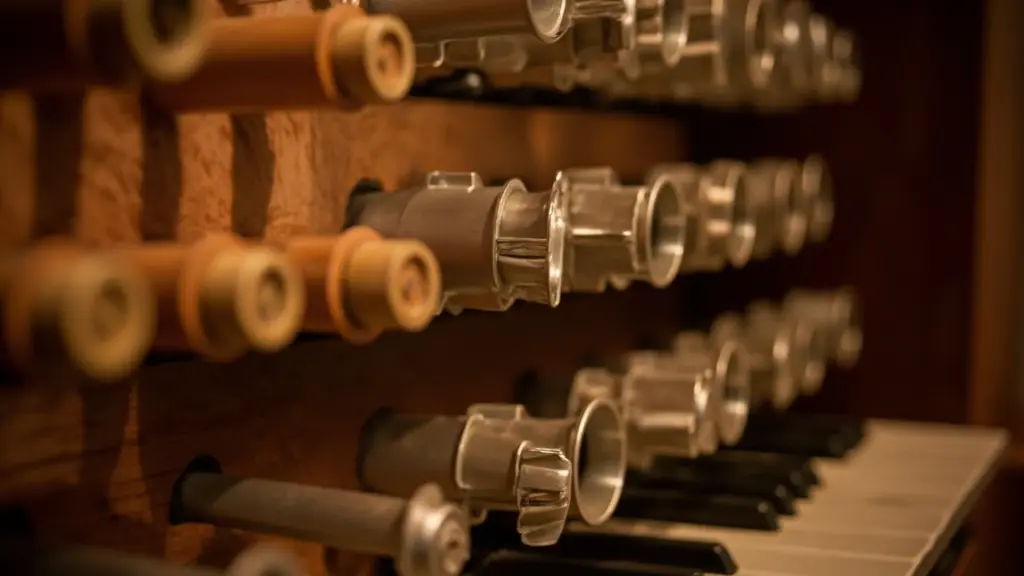
Chimney flute vs stopped flute organ stops Place a stopped wooden pipe and a small pierced chimney pipe next to each other on the same organ and the...
Read article →
When an organ builder says a pipe has "good speech," they are usually describing how quickly the pipe begins to sing after a key is pressed. One of...
Read article →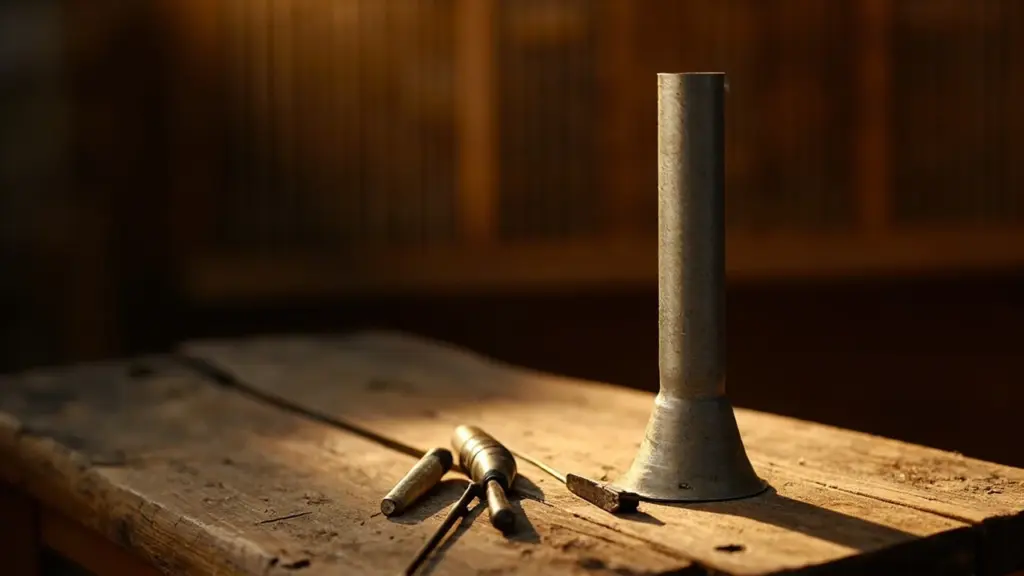
Flue pipe toe hole adjustment explained for working organbuilders and curious players A pipe that speaks cleanly when the wind is on and stays silent when the pallet...
Read article →
Shell, head, tension, and room create a spectrum broader than a single note.
Read article →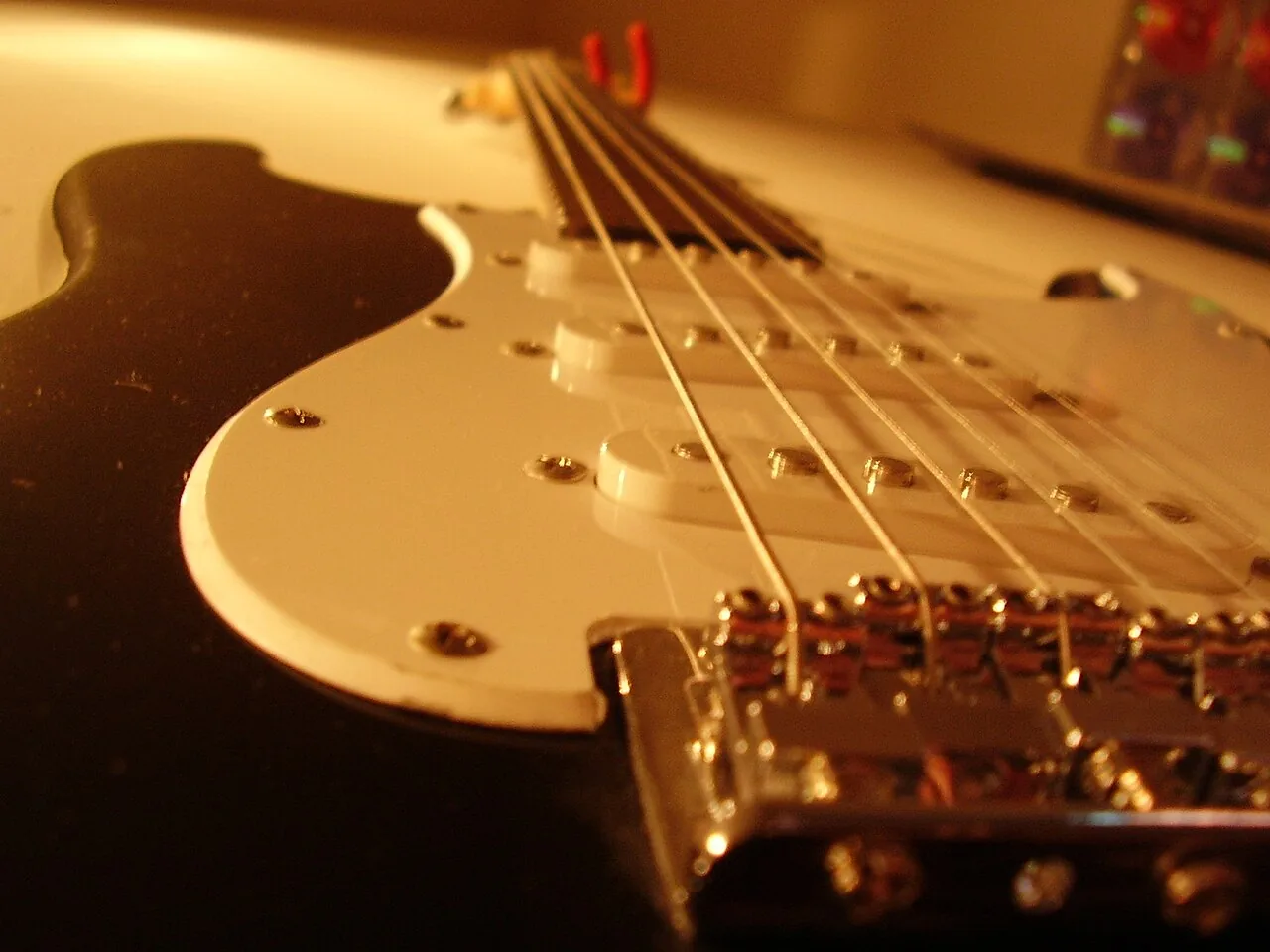
A readable signal path through magnetism, voltage, distortion, and air.
Read article →Recurring formats
One mechanism shown in sequence, with the parts named and the motion made clear.
Two versions of an instrument compared through one meaningful design decision.
Maintenance advice with a clear boundary between safe home care and specialist work.
Musical instrument stories begin where energy enters: breath meets a reed, a hammer leaves a string, a bow grips it, a stick moves a membrane, or a circuit produces an oscillation. The article then follows what resists, regulates, resonates, and finally radiates sound.
A piano escapement is easier to understand as motion than as a parts list. The key lifts the action, the hammer accelerates, the mechanism releases it before impact, and the hammer falls away so the string can vibrate. Name a component when it becomes necessary to follow that sequence. A diagram should make the motion clearer, not add labels the prose never uses.
Whenever possible, connect the mechanism to a symptom a player can recognize. Valve misalignment may restrict an air path. A worn felt changes attack. A loose joint can buzz at one frequency. The explanation becomes useful when it links a physical condition with a repeatable observation while leaving the final repair diagnosis open.
Wood species, alloys, membranes, finishes, magnets, and electronic components matter through dimensions, stiffness, mass, damping, geometry, manufacture, and use. Avoid claims that one material carries a fixed personality in every design. Compare finished objects or controlled changes, and state which variables did not remain equal.
A price category is not an acoustic measurement. Nor does an older object become better merely by surviving. Construction quality, condition, setup, maintenance, player interaction, and room all shape the result. If the evidence supports only “different,” do not inflate it into “superior.”
Instrument parts rarely act alone. Changing a guitar string gauge alters tension, bridge balance, feel, and sometimes intonation. Moving one drum lug changes nearby tension and mode shapes. An organ pipe’s mouth, diameter, pressure, tuning device, and resonator length participate in the same sounding system.
Show those interactions before giving advice. A reader should understand why correcting one visible symptom can create another. Safe observation can include listening, measuring, photographing, checking external movement, or comparing a documented baseline. Filing, internal electrical work, soundpost movement, and structural repair need the appropriate specialist.
A museum object can establish dimensions, materials, maker, date, and surviving form when the catalogue supports those fields. The Metropolitan Museum of Art instrument collection is useful because records lead to particular objects. A broad gallery image should not be used to imply how an instrument currently sounds or plays.
Design history works best around one consequential change: a valve system, a keyboard range, an electric pickup, a manufacturing method, or a repair philosophy. Compare what the earlier and later objects allow, then return to the musician’s hands and ears.
A maker-led portrait belongs in People; this desk keeps the object and its physical behavior at the center. Return to the Blog index for the other editorial routes. The best instrument feature leaves the reader able to hear or inspect one specific relationship that was previously hidden inside the case.
Move from this editorial desk to the guide or tool that answers the next practical question.