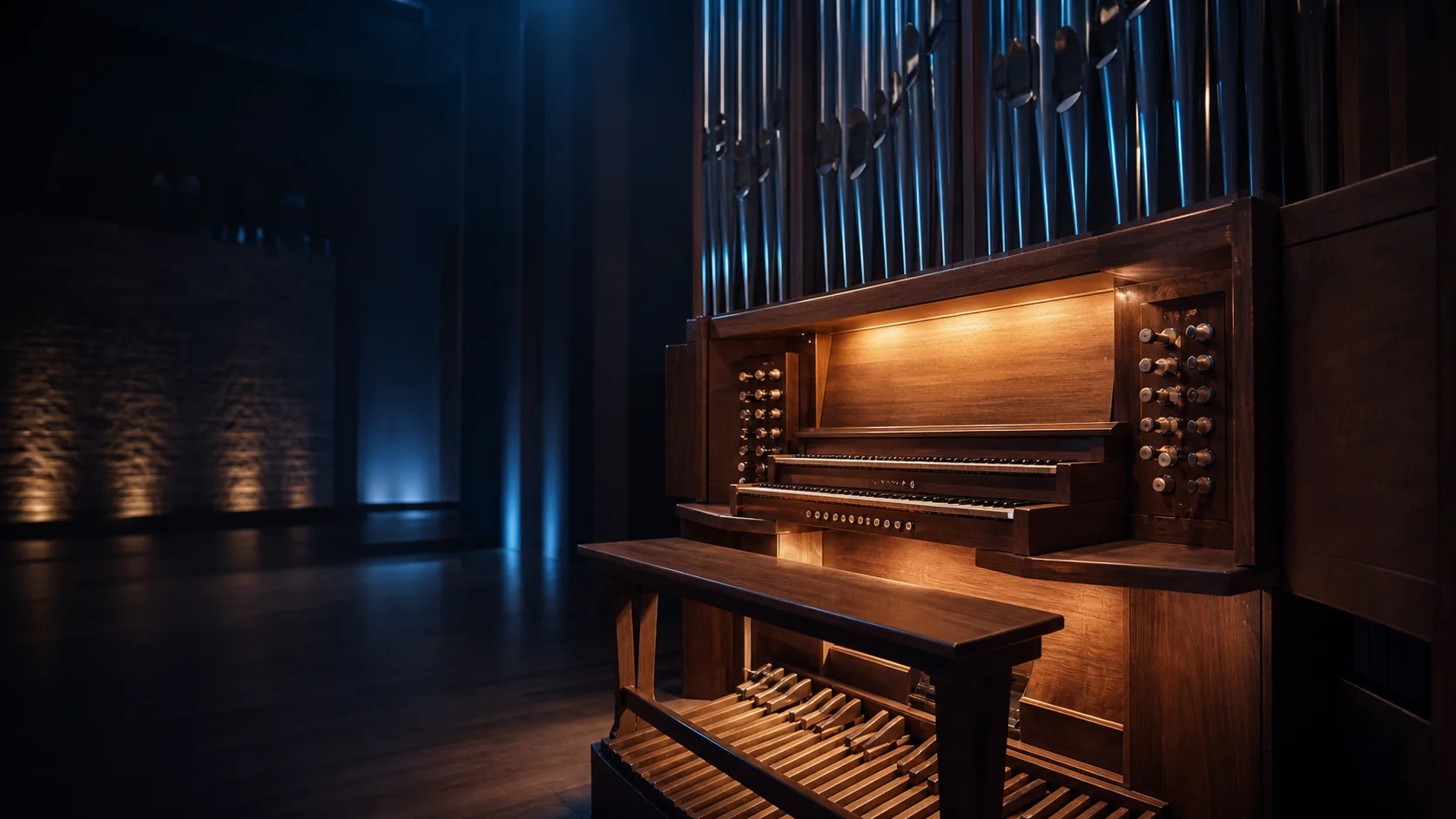
The documented Opus 41 chapter at Morning Star Lutheran Church
Martin Ott Opus 41 was commissioned in 1986 for Morning Star Lutheran Church in Omaha and completed in 1988. The large gallery organ has mechanical key action, electric stop action, and an eight-mode combination system. Divisions stand on opposite sides of the rear gallery, while the Rückpositiv occupies the rail above a horizontal trumpet.
The builder index places Opus 41 in 1986. For the Morning Star Lutheran Church project in Omaha, Nebraska, a single index year is a starting point rather than a complete construction history. At Morning Star Lutheran Church in Omaha, Nebraska, an invoice, programme, or dated photograph could identify the event behind it. The index says nothing about where the instrument at Morning Star Lutheran Church stands now.
What survives about the room at Morning Star Lutheran Church: Opus 41
The institutional name places Opus 41 in a church at Omaha, Nebraska. For the Morning Star Lutheran Church project in Omaha, Nebraska, congregational and choral work are plausible in such a building, but neither should be presented as documented use without a programme or parish account. In the Morning Star Lutheran Church account from Omaha, Nebraska, room size, later alterations, and present access also remain outside the surviving evidence.
Numbers before tonal claims: Opus 41
The short specification for Opus 41 begins with 40 stops and 51 ranks. At Morning Star Lutheran Church in Omaha, Nebraska, those counts distinguish player controls from sets of pipes rather than offering two names for the same thing. Ranks exceed stops by 11 in the Opus 41 summary. In the Morning Star Lutheran Church account from Omaha, Nebraska, the excess may sit in compound stops or another part of the design, but the summary cannot locate it. Within the documented Omaha chapter, an exact pipe count and tonal analysis must wait for the full stop list.
Whatever happened after the documented period, 40 stops | 51 ranks |1 extension Mechanical key action | Electric stop action is the historical baseline for Opus 41. A newer list from Morning Star Lutheran Church might match it, or it might show a rebuild, an addition, or a correction. In the Morning Star Lutheran Church account from Omaha, Nebraska, either result would need a date and a named source. Without that comparison, the old figures can describe the recorded project but not the Omaha organ's present technical state.
The mechanism described for Morning Star Lutheran Church: Opus 41
For Opus 41 at Morning Star Lutheran Church, here the keys and stops are documented as different systems. The keys use mechanical action, while the stops use electrical control. Keeping those terms separate matters because touch and registration are distinct parts of an organ's operation. The page does not establish the current state of either system.
How to read the surviving design evidence: Opus 41
A closer look at the project evidence brings the defining facts forward: it was completed in 1988 and it has an eight-mode combination system. At Morning Star Lutheran Church, an organ might lead hymns, accompany voices, or appear in recital, yet the source names none of those duties unless noted above. The evidence from Morning Star Lutheran Church describes design rather than regular musical practice. Within the documented Omaha chapter, service leaflets, recital programmes, and a complete stop list would answer different parts of that question. The listed 40-stop, 51-rank scale remains the numerical boundary for this reading.
What the source says after 1986: Opus 41
Walter Pelz played the dedicatory recital on May 15, 1988, and wrote a concertato for the occasion. The page also names later recitals by Charles Ore and Paul Manz. Pelz's commissioned music belongs to the instrument's opening event, while the later programs document continued recital use without adding a separate construction chapter.
A source trail for the Morning Star Lutheran Church instrument: Opus 41
The Opus 41 page carries 5 image links with matching filenames. One is images/041/041_m.jpg. Before any appears beside the Morning Star Lutheran Church history, its subject and rights need a separate check. Within the documented Omaha chapter, the archived page offers no complete attribution or publication licence.
The Opus 41 account has a clear documented past and an unverified present. A recent statement from Morning Star Lutheran Church, paired with a dated stop list, would establish whether the instrument remains in Omaha, Nebraska and whether its specification has changed. In the Morning Star Lutheran Church account from Omaha, Nebraska, the existing evidence cannot carry those claims by itself.