Opus 44 in Florissant: the documented commission
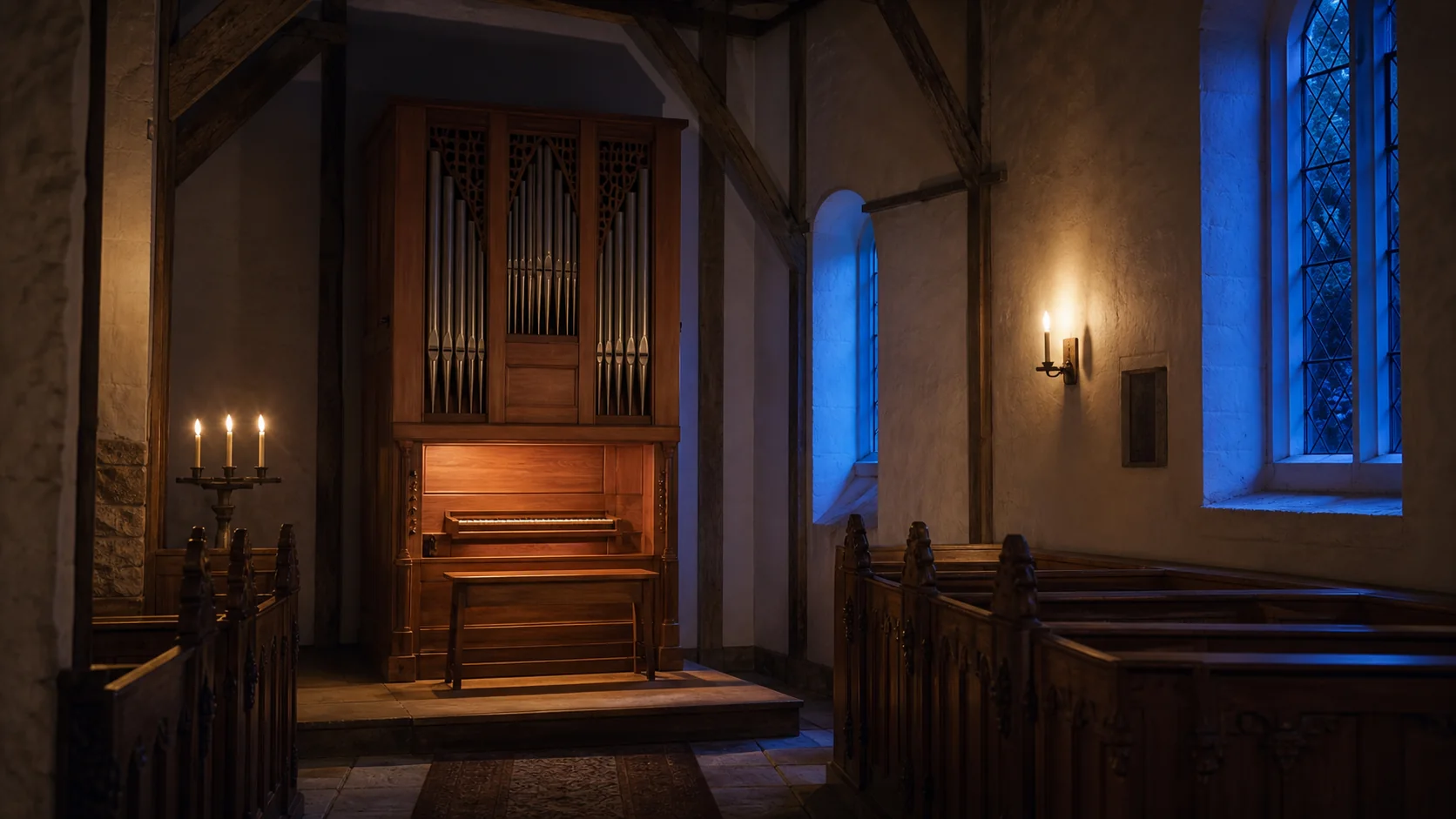
Martin Ott Opus 44 was built in 1988 for Lutheran Church of the Living Christ in Florissant, Missouri. The free-standing red-oak organ stands on the sanctuary floor with an attached keydesk. Its manuals share a windchest; the page gives pressures of 65 millimeters for the manuals and 75 for the Pedal, chosen for the small room.
The historical heading gives 1988 for Opus 44. In the Lutheran Church of the Living Christ account from Florissant, Missouri, that date is reported as written, not converted into a dedication or completion year. Lutheran Church of the Living Christ in Florissant, Missouri sets the scene, and later events remain separate when the source names them. At Lutheran Church of the Living Christ in Florissant, Missouri, the heading cannot establish current ownership, access, or condition.
Lutheran Church of the Living Christ as the documented place: Opus 44
The institution and city establish a parish context for Opus 44: Lutheran Church of the Living Christ, Florissant, Missouri. Architectural and placement details must come from the Florissant project narrative rather than the venue name alone. Within the documented Florissant chapter, a contemporary account of use would add more than a generic description of church music.
Stops, ranks, and the limits of the specification: Opus 44
For Opus 44, the surviving numerical profile is 12 stops and 15 ranks. For the Lutheran Church of the Living Christ project in Florissant, Missouri, the first total belongs to registration and the second to organized pipe rows. The two Opus 44 totals differ by 3, with ranks higher. That arithmetic is secure; assigning the extra rows to particular stops would require the original specification. At Lutheran Church of the Living Christ in Florissant, Missouri, no unlisted reed, flute, string, mixture, manual division, or Pedal resource is added to fill the gaps.
The recorded scale anchors the history of Opus 44 in a measurable fact at Lutheran Church of the Living Christ. It does not describe every pipe or explain how the organ was registered in Florissant, Missouri. Those questions call for a dated stop list and, ideally, a technical note from the institution. Until both appear, the numerical outline can support comparison while the instrument's later development remains open.
How the documented command system works: Opus 44
For Opus 44 at Lutheran Church of the Living Christ, a direct physical key action is the technical fact recorded here. In the Lutheran Church of the Living Christ account from Florissant, Missouri, the wording identifies the operating principle without telling us the length of the trackers, the position of the keydesk, or the present quality of the touch. Those details need inspection or a later report.
Design evidence beyond the recorded totals: Opus 44
Its documented features give Opus 44 an individual profile: it was placed on the main floor and it has a shared manual windchest. For the Lutheran Church of the Living Christ project in Florissant, Missouri, the commission belongs to a parish context, yet the surviving facts concern the build more than its weekly musical life. Without a complete disposition for Lutheran Church of the Living Christ, the tonal resources cannot be mapped in detail. Without local programmes or service records from Lutheran Church of the Living Christ, repertoire and patterns of use remain open. The listed 12-stop, 15-rank scale remains the numerical boundary for this reading.
Moves, music, and later work in the source: Opus 44
The congregation dedicated the organ on Pentecost, May 14, 1989. Dennis Bergin played a recital on October 29, and captions summarize his competition record. The two pressure figures and separate event dates make the short account unusually precise about both workshop design and the parish's introduction of the instrument.
What a future source could clarify about Lutheran Church of the Living Christ: Opus 44
The image list for Opus 44 contains 2 project-number matches, led by images/044/044_m.jpg. Numbering makes the files relevant to identification, but it does not provide a licence or guarantee that every view shows the same stage of the instrument at Lutheran Church of the Living Christ. In the Lutheran Church of the Living Christ account from Florissant, Missouri, photographer, date, and publication permission remain unrecorded in the extracted text.
The present chapter of Opus 44 is not covered by the builder account. Location, access, and technical condition would need confirmation from Lutheran Church of the Living Christ or a qualified survey. For the Lutheran Church of the Living Christ project in Florissant, Missouri, until then, the last historical event should remain the end of the public narrative.