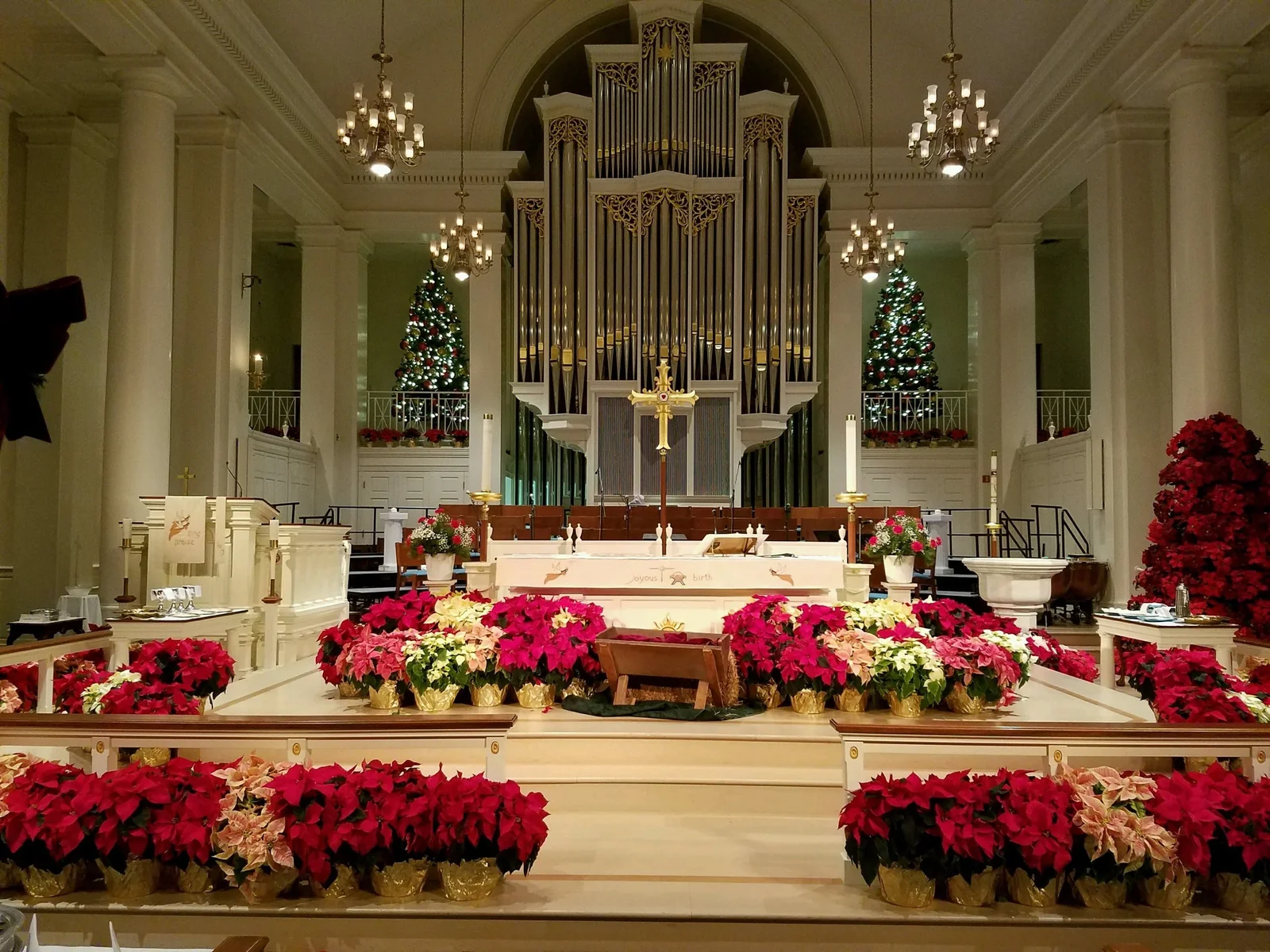
Martin Ott Opus 90 at Trinity Evangelical Lutheran Church
Martin Ott Opus 90 was commissioned in 1997 for Trinity Evangelical Lutheran Church in Lansdale, Pennsylvania. The archive lists 51 stops, 69 ranks, three extensions, mechanical key action, and electric stop action. The builder record uses 1997 as the organ project year. Pipedreams identifies the instrument as a 1999 Ott, while the Philadelphia AGO newsletter calls it Opus 90-1999 and dates its dedication to March 5, 2000. These are separate milestones in one project chronology.
Inside the room: Cherry Rhodes's Lansdale recital
Rhodes opened with Bach's Pastorale in F major after spending time at the church choosing its flute registrations. The program continued with Jean Guillou's Scenes of a Child, followed by Marius Walter's meditations on Salve Festa Dies, music first connected with the dedication of the Mount Angel Abbey organs. That program linked the Lansdale instrument to the wider convention audience and to music associated with the Mount Angel Abbey organs. At Trinity Evangelical Lutheran Church, the organ had to find its place within a working worship space. Front, gallery and balcony sites change the organ's relation to choir and altar; this article follows only positions documented by the builder. No reverberation time or room volume is recorded.
Siting and acoustics need to be read together, though they are not the same evidence. The commission description can locate Opus 90; describing the room's response requires measurements or first-hand technical notes. That evidence has not yet surfaced.
51 stops and 69 ranks: the scale of Opus 90
The published count for Opus 90 is 51 stops and 69 ranks. Stops name the organist's available controls; ranks count the pipe sets behind those choices. The paired counts point to a substantial range of resources. The 51-stop, 69-rank summary for Trinity Evangelical Lutheran Church shows that they do not tell us whether the tonal weight lay in principals, reeds, enclosed colors or pedal work. No manual count appears in the condensed technical note. The entry also counts 3 extensions, showing that one rank supplied more than one pitch or stop function. These figures sketch scale without describing tone. The archived builder count is 51 stops, 69 ranks and three extensions. The 2010 Philadelphia AGO newsletter prints 55 stops and 70 ranks. The later total is reported as a second source, not substituted for the earlier specification.
The two totals for Opus 90 are separated by 18 ranks. Compound stops can create that difference; only the complete disposition can show where the extra ranks lie. The entry separately lists 3 extensions. This is why the two numbers belong together in print.
Console and transmission: Cherry Rhodes's Lansdale recital
A tracker mechanism links the keys, connecting parts and pallets in one physical linkage. The outline assigns that principle to Opus 90. Response and comfort would have depended on the precise layout and subsequent regulation, neither of which is measured on the entry. Key and stop commands followed different paths: mechanical for the notes, electric for registration.
Electric control gave the builder more freedom in locating the playing console and divisions of Opus 90. The project entry must still be consulted before assigning a detached or movable console.
A chronology from the 1997 commission to the 2000 dedication
The surviving dates describe different stages rather than one disputed year. The former builder uses 1997 for the commission, Pipedreams identifies the instrument as a 1999 Ott, and the Philadelphia AGO newsletter calls it Opus 90-1999 while dating the dedication to March 5, 2000.
Cherry Rhodes's recorded convention recital in 2002 supplies a later public-performance milestone. The sources do not provide enough casework or internal-layout detail for a responsible visual reconstruction, so the chronology is more useful here than an invented account of materials or facade design.
From dedication to daily use: Cherry Rhodes's Lansdale recital
The company entry concentrates on a recital by Cherry Rhodes during the 2002 American Guild of Organists convention in Philadelphia. She closed with Jiri Ropek's Variations on Victimae Paschali Laudes. The company account says Martin Ott Opus 90 was recorded during the live performance for a CD. In worship, an organ may accompany congregational music or take a solo role. For Opus 90, those roles are kept separate unless the commission narrative or a dated program connects them. The dated event is a beginning, not a complete record of performances.
Players and consultants are included only where the commission history identifies them. That keeps the musical narrative of Opus 90 personal without inventing a cast.
Evidence, images and unanswered questions for Opus 90
The former Martin Ott page for Opus 90, dated February 6, 2020, provides the principal evidence for this article. The entry supplies 3 linked images to be read beside the written account. Their presence in the project entry ties them to Opus 90. The project sources for Trinity Evangelical Lutheran Church leave one question open: individual image credits are absent from the extracted material. Its evidence stops before the present day; present location, access and condition need more recent confirmation. The most valuable additions would be a full disposition and a recent survey.