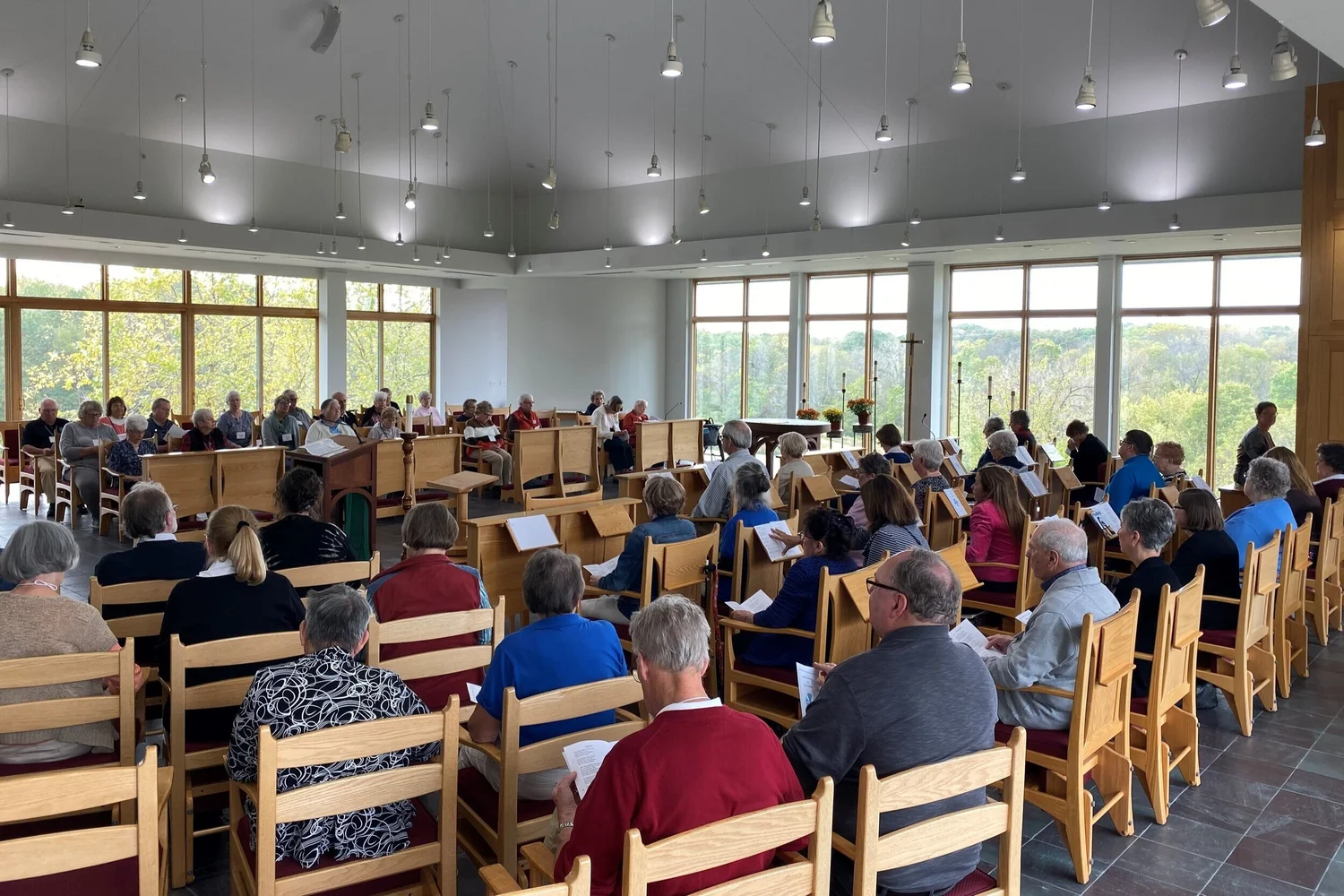
Martin Ott Opus 99 at St. Mary Monastery
Martin Ott Opus 99 was commissioned in 2000 for St. Mary Monastery in Rock Island, Illinois. The company entry describes a 15-stop, 17-rank instrument with tracker action. It was not presented as a free-standing concert-hall organ. Its place was the monastery chapel, where the organ stood to the right of the altar. That precise placement, together with the red oak case and attached keydesk, gives the commission a clear architectural identity.
Reading the sanctuary: the Benedictine move to Rock Island
The organ story sits inside a larger move by the Sisters of St. Mary. The company account says that the sisters had lived in Nauvoo before the Mormon church offered to buy their property. They accepted the offer and obtained a hilly site outside Rock Island for a new monastery. Architect J. Van Dyk of SSV Architecture in Minneapolis designed the complex. The sisters' official website now identifies the community as the Sisters of St. Benedict at St. Mary Monastery and says they have lived and served in the Quad-City area since 2001. That date supplies community context, not evidence about the organ's present condition.
Captions distinguish an organ photograph from a venue view or editorial reconstruction.
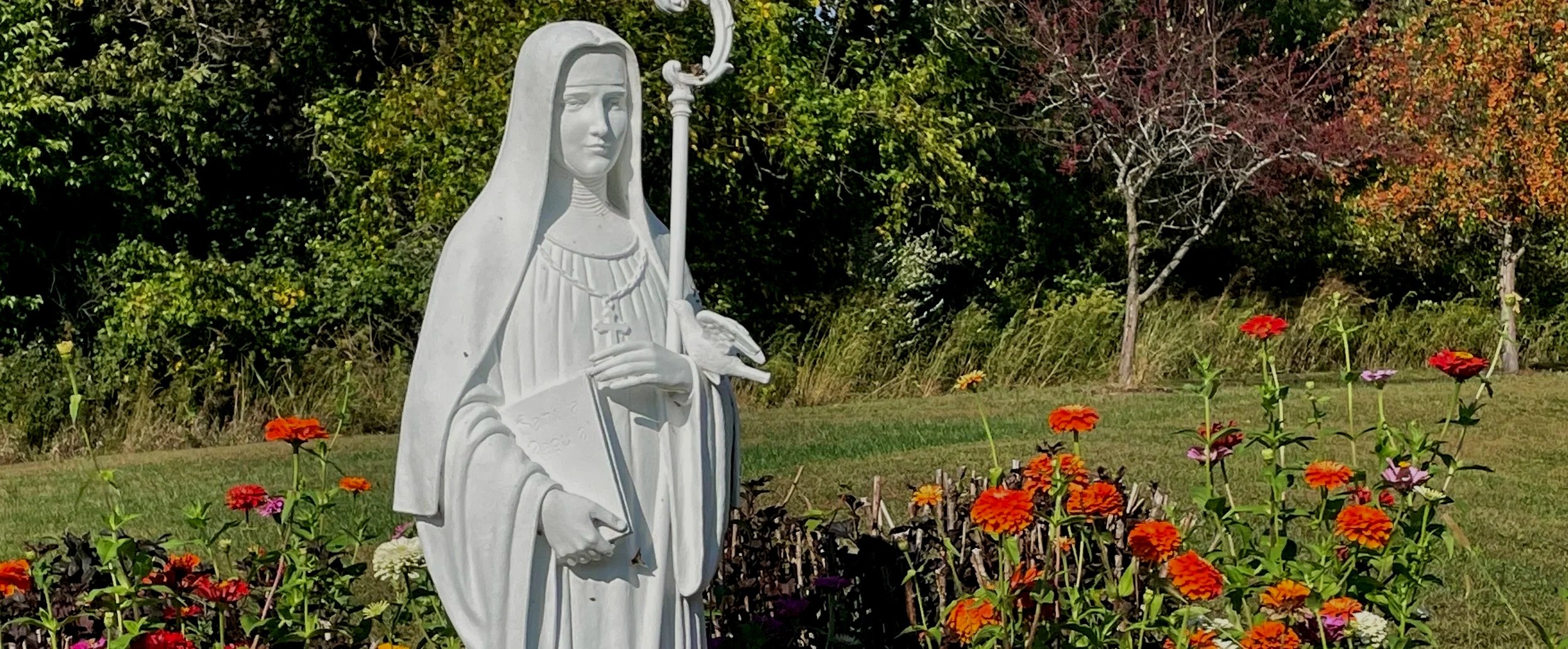
15 stops and 17 ranks: a compact two-manual design
The stop specification lists 15 stops and 17 ranks. A stop is the control the organist selects, while a rank is a set of pipes extending through the compass. The different totals show that the stop and rank figures are not a one-to-one inventory, but the outline does not say how every pipe family was allocated. Both manual divisions were placed under a common expression enclosure except for the Prinzipal 8-foot. That arrangement gave the player a means of changing the level of most of the manual resources while leaving the facade principal outside the enclosure. A full stoplist is still needed for a reliable account of the tonal design.
Tracker action and the red oak keydesk
The company description identifies tracker action. Pressing a key therefore operated a physical linkage to the relevant valve rather than sending an electronic key command. This says how the action was conceived, but it does not tell us whether the finished touch felt light or heavy. The red oak case incorporated the keydesk, keeping the player's position physically joined to the organ. Case dimensions, wind pressure, pipe scales and regulation notes are not included on the entry, so those details should not be reconstructed from the project image alone.
Musical life around the instrument: the Benedictine move to Rock Island
The organ project belonged to a monastic chapel, but the captured page does not name the organist, a dedicatory recital or the repertory used there. Its compact scale and common expression enclosure are relevant to registration, yet they do not prove a particular daily routine or style of performance. Programs, community chronicles or interviews with the sisters would be needed for that part of the story. Until such evidence is found, the safest account is specific about the organ project and honest about the missing record of performances.
The community nevertheless has a documented musical lineage. Official memorials describe Sister Teresa Harrington as a music and liturgy director who taught organ, and Sister Beatrice Flahaven as a trained musician who served as an organist at St. Mary Monastery. These biographies establish an organ culture at the monastery. They do not identify the instrument either sister played, so neither woman is assigned to Opus 99 without further evidence.
Images, source and open questions for Opus 99
The documentary base is the former Martin Ott Pipe Organ Company project entry dated February 6, 2020. It links 3 image files in the Opus 99 directory, including a file named 099_cad.jpg, but supplies no individual captions or photographer credits. Their connection with the project entry is clear; a more exact description of each view would require comparison with drawings or a credited institutional collection. The source does not verify the organ's present condition, ownership, accessibility or subsequent alterations. Those remain open questions rather than details to be guessed.