Drum guide: from impact to room
A drum turns a brief impact into a complex field of membrane modes, shell motion, air resonance, and room reflection. The family extends far beyond the modern kit. This drum guide connects those mechanics with touch, tuning, care boundaries, documented history, global musical contexts, and practical inspection.
Heads, shells, edges, and hardware
The mechanism begins with a stretched membrane and the way tension, diameter, depth, edge, air, and strike position distribute energy. A drum rarely offers one simple sine-like pitch. Attack, ringing modes, shell response, and decay arrive together.
Membrane modes. A circular head vibrates in overlapping patterns with nodes and antinodes rather than one string-like series. Tension raises modal frequencies and changes rebound. Diameter, material, thickness, and damping alter attack and decay. One pitch reading cannot describe the whole sound.
Shell and air. The shell contains air, supports edges, and reflects energy between heads. Depth and diameter influence resonant behavior and playing feel. Wood, metal, acrylic, and composite shells vary with construction and edges. Material labels alone do not guarantee a fixed tone.
Bearing edge. The edge defines head contact, seating, and part of the transfer into the shell. Roundness, profile, smoothness, and damage affect tuning range. A warped shell or uneven edge can make one lug seem permanently wrong. Cutting edges requires accurate specialist work.
Two-head interaction. Batter and resonant heads couple through enclosed air and shell. Their relative tension changes sustain, pitch impression, and response. Removing or damping one head creates another instrument behavior. Tune each head deliberately before judging the pair.
Snare system. Snare wires respond against the resonant head and add a bright noisy component. Strainer tension, bed geometry, alignment, and head tuning affect sensitivity. Too much tension can choke response instead of cleaning it. Buzz from nearby instruments may be sympathetic, not a fault.
| Drum component | Function in the drum | Tuning or inspection question |
|---|
| Head | Primary vibrating membrane | Tension, thickness, coating, damping |
| Shell | Supports and encloses air | Diameter, depth, construction |
| Bearing edge | Seats the head | Profile, roundness, condition |
| Hoop and lugs | Apply tension | Flatness, threads, even adjustment |
| Snare system | Adds wire response | Beds, alignment, strainer tension |
| Room and microphones | Shape captured result | Position, reflection, gain |
Playing and critical listening
Playing the drum kit treats rebound, stroke height, contact point, grip, timing, dynamics, damping, and ensemble balance as one system. Speed without even sound is not control. Listening to space between strikes matters as much as the impact.
Stroke and rebound. The stick or hand transfers energy, then the head returns part of it. Grip should guide rebound without squeezing every vibration away. Stroke height changes potential energy and dynamic range. Practise equal sound between hands before increasing speed.
Contact point. Center strokes emphasize different modes than edge strokes, rims, or cross-sticks. Moving a few centimeters can change color strongly. Consistent placement supports even rolls; varied placement creates orchestration. Technique should match the drum and musical style.
Timing and subdivision. Pulse, subdivision, accent, and phrase operate at different levels. A click can reveal drift but cannot choose groove feel. Practise entrances and rests, not only continuous patterns. Record with the ensemble to hear placement.
Tuning by relationship. Clear the head seating, bring lugs up gradually, and compare tension around the edge. Opposite-lug sequences help distribute load on common multi-lug drums. Final tuning depends on desired range, room, microphones, and ensemble. Do not chase exact frequencies while ignoring the drum's response.
Dynamics and balance. A drum's attack can mask voices even when its decay is short. Stick choice, touch, rimshot, damping, and room affect projection. Balance from the audience position differs from the throne. Play the arrangement, not every available volume.
- Practise equal strokes before speed.
- Use contact point as a deliberate color choice.
- Tune batter and resonant heads as a relationship.
- Record groove with the ensemble, including rests.
- Balance attack from the listener position.
Care, maintenance, and safe boundaries
Routine care includes wiping surfaces, checking tension and hardware, replacing worn heads, and storing instruments safely. Bearing-edge repair, shell correction, structural cracks, vintage finishes, and complex hardware restoration belong to experienced technicians.
Head and hoop. Inspect dents, coating wear, pulled collars, cracked film, bent hoops, and uneven seating. Replace heads when damage or exhausted response blocks the required sound. Loosen and tighten gradually rather than at one lug. Keep old heads only when they have a documented use.
Hardware. Check lugs, inserts, rods, washers, mounts, spurs, strainers, and pedal fasteners. Clean threads and use suitable lubricant sparingly where appropriate. Overtightening can strip parts or distort hoops. Match replacement dimensions and threads.
Storage and transport. Use cases or padding, secure loose hardware, and avoid uncontrolled damp or heat. Do not stack weight on heads or fragile mounts. Dry hand drums according to maker guidance after moisture exposure. Historic skins and finishes may need conservation advice.
Hearing and level. Drums can produce high peak levels close to the player. Use sensible rehearsal balance, distance, room treatment, and appropriate hearing protection. Protection choice should preserve enough cue for safe ensemble work. Ringing or discomfort means stop and reduce exposure.
- Change tension gradually and evenly.
- Keep threads and hardware clean without overtightening.
- Protect shells, heads, and mounts in transport.
- Use specialists for edges, shells, vintage finishes, and structural work.
- Manage peak level with balance, distance, and hearing protection.
History and evolution
The general drum overview establishes the family-level context. The Met's survey of Indian instruments adds a necessary warning: tabla, pakhavaj, mrdangam, and kanjira each have their own histories and techniques.
Ancient evidence. Drums appear in ancient material cultures across many regions, using skin, wood, pottery, and other structures. Surviving objects and images document varied social roles. Dates belong to specific finds, not a single invention moment. The family has multiple independent histories.
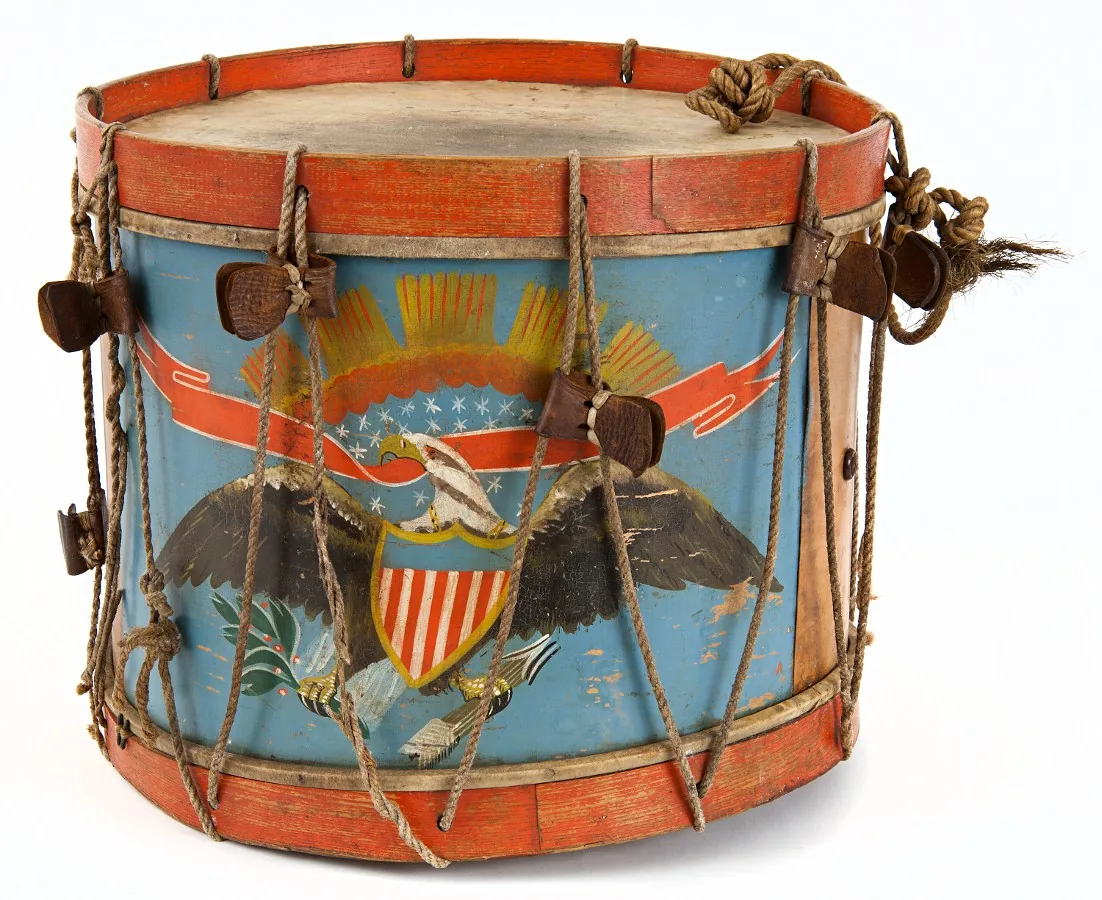
Military and ceremonial use. Drums carried signals, coordinated movement, marked authority, and supported public ritual. Rope tension and large shells served outdoor projection in several traditions. Signals depended on local codes and ensemble practice. Modern kit technique should not overwrite those functions.
Orchestral timpani. Kettledrums entered European court and orchestral practice, with tuning mechanisms developing over time. Composers increasingly treated them as pitched harmonic voices. Pedal systems later enabled rapid pitch change. Timpani maintenance and technique differ from toms.
Trap set formation. Late nineteenth- and early twentieth-century theatre and dance players combined multiple percussion tasks around one performer. Bass-drum pedals, stands, and low-boy or hi-hat systems helped form the drum set. Jazz musicians transformed coordination, time, and color. No single inventor created the complete kit at once.
Recording and electronic drums. Microphones changed tuning, damping, room choice, and balance; electronic pads added triggering and repeatable samples. Drum machines separated programmed events from physical membranes. Hybrid sets combine acoustic response with digital control. Each system needs its own inspection and latency questions.
Repertoire and musical context
Drums carry ceremony, dance, signals, theatre, military practice, orchestras, jazz, rock, popular production, and tuned-percussion traditions. The metronome separates pulse practice from tone, while the Instrument Atlas compares membranes with strings, air columns, and electronic sources.
Global drum traditions. Tabla, mrdangam, frame drums, taiko, talking drums, congas, batá, bodhrán, and many others carry specific techniques and meanings. Learn names and practice from informed tradition bearers. Do not treat every hand drum as interchangeable. Context includes language, dance, ceremony, and tuning.
Kit repertoire. Jazz, rock, funk, metal, pop, country, theatre, and studio work organize pulse and color differently. Ride pattern, backbeat, ghost notes, double bass, brushes, and electronics answer distinct needs. Copying setup does not copy feel. Listening history belongs beside rudiments.
Orchestra and ensemble. Snare, bass drum, toms, timpani, and auxiliary percussion shape gesture, climax, and atmosphere. Players manage rests, instrument changes, and precise entrances. Mallet and striking area belong to the score and room. A short part can carry major structural weight.
Buying, documentation, and inspection
Before considering a drum's finish or age, inspect its shell shape, edges, heads, hoops, tension hardware, mounts, and intended playing context. A complete kit also needs pedal, stand, cymbal, and throne checks, but those accessories should not hide the condition of each drum.
Shell and edge. Remove heads only with permission and inspect roundness, cracks, ply separation, edge damage, and extra holes. Measure rather than judging by eye alone. Vintage modifications affect value and function differently. Record all structural findings.
Lugs and hoops. Turn every rod, inspect threads and inserts, and check hoop flatness. A seized lug can prevent even tuning. Mixed replacement parts may work but change provenance. Price missing hardware accurately.
Heads and response. Tune through the usable range and listen for wrinkles, dead zones, rattles, and unstable pitch. Old heads can hide or exaggerate shell issues. Test batter and resonant sides separately. Use new heads in an estimate when needed.
Mounts and snare. Check tom mounts, spurs, floor legs, strainer, butt plate, snare bed, and wire alignment. Load hardware gently as it would be played. Movement at the shell needs attention. A functional throw-off should engage without forcing.
Kit fit. Confirm sizes, ergonomics, pedal compatibility, stands, cases, and transport needs. The best shell pack can fail the player's stage or body requirements. Inspect cymbals separately for cracks and keyholing. Include hearing and room needs in the plan.
| Area | Method | Concern |
|---|
| Shell | Roundness and structural check | Cracks, separation, extra holes |
| Bearing edge | Light and measured inspection | Flat spots, chips, poor recut |
| Hardware | Every rod, lug, mount, strainer | Seized or stripped parts |
| Heads | Tune through useful range | Damage, dead response, poor seating |
| Fit | Setup and transport trial | Unsafe stands or unsuitable sizes |
- Are shells round and edges intact?
- Do all rods, lugs, hoops, mounts, and strainers operate?
- Can each drum tune through the required range?
- Are modifications and replacement parts documented?
- Does the setup fit the player's music, body, room, and transport?
A final room trial should use the complete musical setup at a restrained level. Compare the throne position with the audience area, then remove microphones and damping one at a time. A tom or snare that seems balanced alone can occupy too much space beside voices, bass, or cymbals. Record head models, approximate tension, stick, contact point, damping, and listener position so the next tuning session begins from evidence rather than memory.
Building a drum note around sound, feel, and position
Start with one drum in the room where it will be used. Write the shell size, head models, damping, stick or beater, and microphone distance. Play at a moderate stroke height and listen from the throne. Then ask someone else to strike the same pattern while you move several metres away. The near position emphasizes attack and hardware; the audience position contains more shell, room, and low-frequency development.
Head tension should be changed in small, even steps. Before turning a key, tap near each lug with the drum supported normally and the opposite head damped only if the method calls for it. Record whether the goal is evenness, a pitch relationship, rebound, or a shorter decay. Tightening every lug to chase one ringing overtone can move the whole drum away from its musical range. Return to a known starting pattern if the result becomes less stable.
Top and bottom heads work together. The batter supplies contact and much of the playing feel; the resonant head shapes decay, pitch spread, and snare response. Test one head while keeping the other setting documented. On a snare drum, release and engage the wires gently and note buzz, choke, and response at low dynamic. Wire tension that is too high can remove body without solving uneven contact.
Bearing edges and shell roundness are structural matters. With heads removed during authorized maintenance, inspect the edge for dents, flat spots, separation, dirt, or impact damage. Do not sand, file, or level an edge casually. A new head that will not seat or tune evenly may reveal a head problem, hoop issue, hardware tension, or shell geometry. Photograph the condition and let a drum technician measure it.
Contact point changes sound quickly. Play the center, halfway to the edge, and near the rim with the same stroke height. On cymbals, compare bow, bell, and edge with suitable technique and volume. These are musical color choices, not defects. A problem is more likely when one area produces an unexpected rattle, dead response, crackle, or hardware movement that repeats under restrained playing.
Rebound belongs to the combined head, tension, stick, and stroke. Test single strokes slowly enough to let the stick return naturally. A squeezed grip can make a lively head feel unresponsive, while a high tension can disguise poor motion. Video from the side may help a teacher see stroke height and angle. It cannot reveal shell condition, so keep technique review separate from repair conclusions.
Frequently asked questions
Does every drum have a definite pitch?
Many drums have a perceived center, but membrane modes create a complex spectrum. Timpani and some hand drums support clearer pitch control; a snare or tom still cannot be reduced to one sine frequency.
How tight should a drum head be?
Tight enough for the desired response without wrinkles, choking, hardware strain, or exceeding the instrument's design. Tune gradually, listen across the range, and follow maker or tradition-specific guidance.
Can a drum guide teach every hand-drum technique?
A drum guide can explain shared mechanics, but hand position, strokes, tuning, language, and cultural role differ greatly. Learn a specific tradition from informed teachers and sources.
Why does the snare buzz when another instrument plays?
Nearby frequencies can excite the snare-side head and wires sympathetically. Adjust tuning, wire tension, damping, placement, or arrangement carefully rather than overtightening the wires.
When should drum heads be replaced?
Replace them when damage, pulled collars, deep dents, coating loss, or exhausted response prevents the needed sound. Age alone is less useful than condition and musical function.
Are vintage drums always better?
No. History, maker, originality, rarity, condition, restoration, sizes, and musical use all matter. A modified vintage shell may be wonderful to play but needs accurate description.
What belongs in a used-kit budget?
Include heads, missing hardware, stands, pedals, throne, cases, specialist edge or shell work, transport, and hearing protection. Inspect cymbals separately from the drums.
Conclusion
A drum responds as a system of membrane, shell, air, hardware, room, and player. Judge head seating, edge, shell, hardware, tuning range, rebound, room, and musical role together. Routine care preserves function, while structural and historic work deserves specialist judgment and clear documentation.