Trumpet guide: from lip vibration to bell
The trumpet begins with a player's lip vibration, which the mouthpiece, leadpipe, bore, valves, slides, and bell shape into a musical line. This trumpet guide follows that acoustic and mechanical path through practice, care, history, repertoire, and inspection.
Lips, valves, tubing, and bell
The mechanism follows energy from air and lips into the mouthpiece and resonating tube. The air column favors a harmonic series; valves add tubing to lower that series; the player selects and bends resonances through embouchure, airflow, and vocal-tract shape.
Lip reed. Airflow and lip tension create an opening and closing cycle that drives pressure waves in the instrument. The lips do not simply buzz at one fixed setting for every note. Embouchure, air, and resonance interact continuously. Pain or swelling is a signal to stop, not proof of productive effort.
Mouthpiece. Cup, rim, throat, and backbore influence comfort, resistance, response, and spectrum. A mouthpiece cannot create range without coordinated playing. Changing several dimensions at once makes comparison difficult. Use clean, undamaged examples and allow adaptation time.
Harmonic series. With no valves pressed, the tube supports a series of resonances above its fundamental. Higher partials lie closer together and demand accurate slot selection. Players adjust some notes because equal temperament and tube resonances do not coincide perfectly. Alternate fingerings can help in specific contexts.
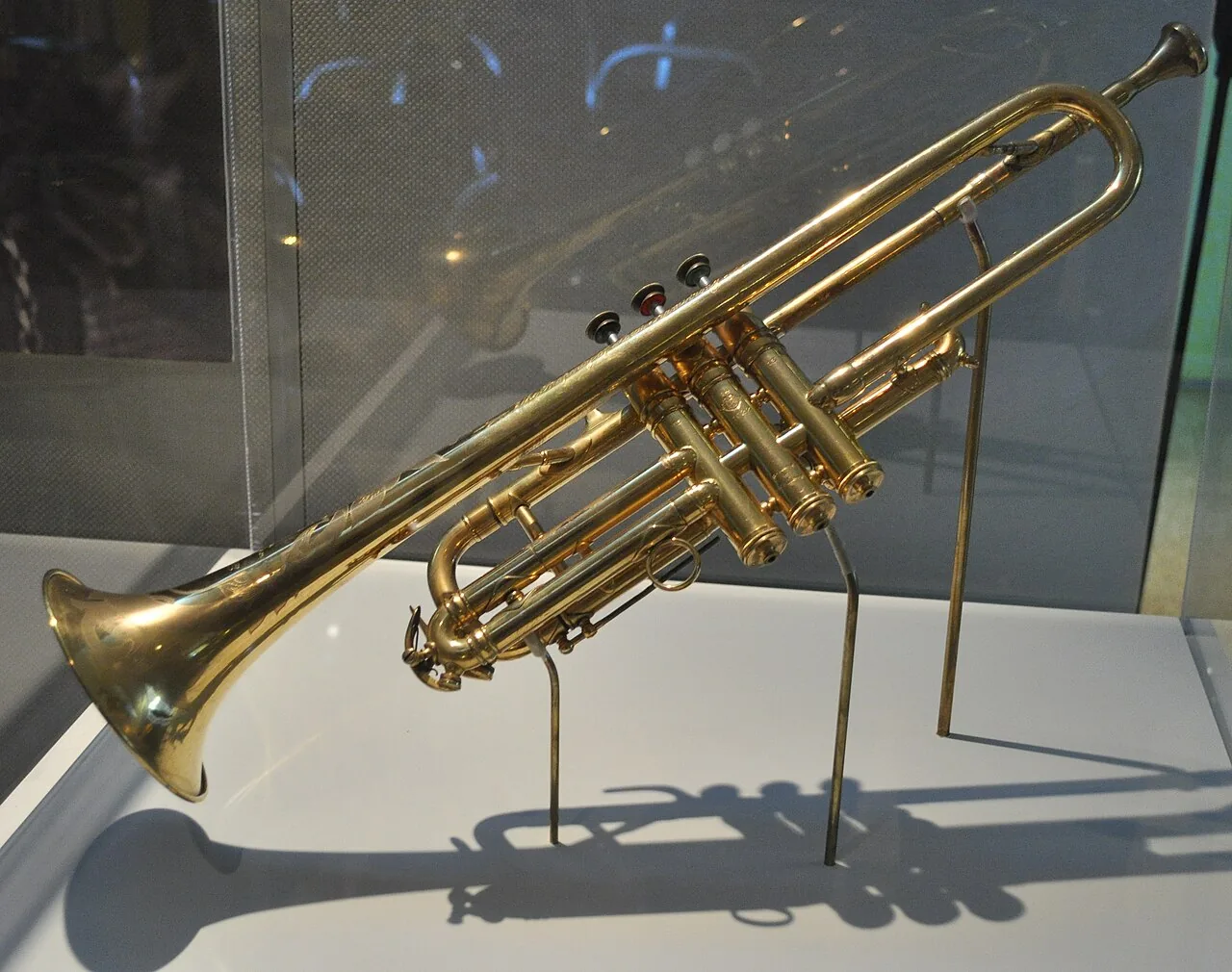
Valves and tubing. Pressing valves routes air through extra tubing and lowers the available harmonic series. First, second, and third valves add different lengths, while combinations compound them. Ports must align and valves must sit in correct casings and orientation. Forcing a valve can damage surfaces or guides.
Slides and intonation. The main slide sets general length, while valve slides refine notes and combinations. Third-valve combinations often need active slide use on B-flat trumpets. Temperature and playing level also move pitch. Tuner readings should support the ear rather than freeze expressive playing.
Bell and bore. Leadpipe taper, bore profile, braces, bends, and bell flare influence impedance and radiation. A dent in a sensitive area may affect response more than a cosmetic bell mark. Material and finish claims are often overstated without controlled comparison. Condition and geometry deserve attention before marketing labels.
| Trumpet element | Function in the air path | Response or inspection question |
|---|
| Player lips | Create oscillation | Embouchure, airflow, fatigue |
| Mouthpiece | Couples player to tube | Cup, rim, throat, backbore |
| Valve block | Adds tube length | Alignment, fit, lubrication |
| Slides | Set and adjust length | Main and valve-slide intonation |
| Bell and bore | Shape resonance and radiation | Geometry, dents, braces |
| Room and mute | Alter projection | Placement, material, distance |
Playing and critical listening
Playing the trumpet means coordinating breath, lip response, tongue, fingers, ear, and recovery. Loudness is not the same as support, and pressure is not a substitute for resonance. Practice should build reliable attacks, flexible slurs, centered pitch, and musical phrasing without forcing.
Breath and release. Efficient breath supports phrase length and resonance without constant maximal pressure. Inhalation should prepare timing as well as volume. Releases can be shaped by air, tongue, or both depending on style. Dizziness or strain calls for rest and review.
Attack and articulation. The tongue interrupts or releases airflow while lips are ready to vibrate. A clean attack coordinates air and embouchure rather than punching the mouthpiece. Single, double, and triple tonguing serve different tempos. Practise clarity softly before adding power.
Flexibility and partials. Lip slurs move between resonances without changing valves. Slow slurs reveal air continuity, aperture adjustment, and slot accuracy. Higher partials require smaller pitch movement and precise hearing. Range work should grow gradually with recovery.
Tone and dynamics. A centered sound can be quiet or loud, bright or dark, direct or veiled. Room, mute, mouthpiece, instrument, and player all shape spectrum. Long tones are useful when they include listening and release. Do not confuse maximum volume with a healthy core.
Ensemble pitch. Trumpet pitch changes with temperature, dynamics, register, and chord function. Listen to bass, unisons, and tendency tones rather than watching a tuner continuously. Match attack, vowel, and release with the section. A stable A or B-flat reference is only the beginning.
- Begin attacks with coordinated air and lips rather than force.
- Practise slurs slowly before extending range or speed.
- Listen to ensemble function instead of chasing the tuner needle.
- Use mutes and dynamics at appropriate resistance and recovery.
- Stop when pain, swelling, or dizziness replaces normal effort.
Care, maintenance, and safe boundaries
Routine care covers moisture removal, compatible valve oil, slide lubricant, gentle washing, and case habits. Dent removal, soldering, valve fitting, stuck mouthpieces, leadpipe corrosion, and chemical cleaning belong to repair specialists with proper tools.
Valve routine. Apply a suitable oil to clean valves and return each to its numbered casing and orientation. Guides should seat without force and ports should align. Sticky action may come from dirt, damage, guide wear, or casing distortion. A repairer should assess persistent problems.
Slides and moisture. Empty water through keys and slides without twisting unsupported tubing. Use compatible lubricant on movable tuning slides and keep them from seizing. Do not use valve oil as a universal slide product. Dry the exterior before returning the instrument to its case.
Washing boundaries. Routine lukewarm cleaning may be suitable when finishes, felts, corks, and manufacturer guidance permit. Remove components deliberately and protect valves from impact. Avoid harsh chemicals, abrasives, and very hot water. Corrosion, red rot, and stuck parts need professional assessment.
Case and handling. Store the trumpet dry with the mouthpiece removed and accessories secured. Do not leave heavy objects against the bell or valves. Extreme vehicle temperatures can affect lubricants and materials. Support the instrument rather than lifting by slides or valve stems.
- Oil clean valves with a compatible product and correct orientation.
- Keep slides movable with suitable lubricant.
- Remove moisture and store the trumpet dry.
- Avoid pliers, harsh chemicals, hot water, and forced parts.
- Use a repair specialist for dents, solder, valve fit, corrosion, and stuck mouthpieces.
History and evolution
The Met's record for an 1829 valve trumpet gives this outline a dated object, while the general trumpet history supplies wider context. The museum description discusses natural harmonics, crooks, keys in 1796, and valves as early as 1814.
Ancient signaling. Trumpet-like instruments of metal, shell, horn, clay, and wood served signaling, ritual, military, and ceremonial roles. Many produced a limited set of natural resonances. Cultural meanings varied widely and should not be reduced to one European lineage. Modern valve trumpet history is only one branch.
Natural trumpet era. European natural trumpets grew longer and were bent into loops during the Middle Ages. Skilled players used high partials for diatonic and melodic writing in Baroque music. Crooks changed tube length and key. The instrument's ceremonial associations shaped orchestral symbolism.
Keys and valves. The Met records keys in 1796 and valves as early as 1814 among attempts at chromatic playing. Early systems included several valve and keyed designs with different response. Chromatic access changed repertoire and tone ideals. Adoption was gradual, not instantaneous.
Nineteenth-century standardization. Valve layouts, manufacturing, military bands, orchestras, and conservatories shaped modern families. B-flat and C trumpets took prominent roles in different traditions. Cornets and trumpets influenced one another while retaining distinct histories. Surviving instruments may have been altered for pitch or use.
Jazz and recorded sound. Twentieth-century jazz placed trumpet at the center of improvisation, timbre, mute language, and personal attack. Recording captured subtle differences in articulation and vibrato. Amplification changed balance without removing acoustic technique. Players expanded vocabulary across popular and experimental music.
Repertoire and musical context
Trumpet playing extends from signaling and ceremony to orchestras, brass ensembles, jazz, popular music, marching, studio work, and experimental performance. Use the chromatic tuner for a separate pitch trend, then visit the Instrument Atlas to compare lip-reed acoustics with strings and pipes.
Orchestra and chamber. Trumpet parts range from natural-harmonic Baroque writing to modern chromatic, muted, and extended techniques. Instrument choice may include B-flat, C, piccolo, bass, or historical forms. Balance with strings and winds depends on articulation and seating. Repertoire study should identify the intended trumpet.
Jazz and popular music. Jazz trumpet joins melody, improvisation, section writing, mutes, growls, bends, and highly personal sound. Popular and studio work demands stylistic attacks and microphone awareness. Lead playing and intimate ballads require different efficiencies. Listening history is as important as equipment.
Ceremony and education. Trumpets continue in fanfares, marching, brass bands, worship, civic events, and teaching. Outdoor projection changes feedback to the player. Young players need instruments with reliable valves and sensible resistance. Repertoire and rest should match development.
Buying, documentation, and inspection
Inspect the whole trumpet first, then check dry valve movement, slide alignment, and moderate playing across registers. Finish through a known mouthpiece and compare response, compression, pitch tendencies, and mechanical noise before estimating work.
Body and solder. Inspect leadpipe, braces, bell, bends, and joints under good light. Look for cracks, loose braces, poor solder, deep dents, and corrosion. Finish wear may be cosmetic while structural movement is not. Ask which repairs and plating work are documented.
Valves and compression. Test smooth travel, spring return, guide noise, alignment, and casing wear. A repairer can measure leakage and fit when response raises concern. Oil can mask dryness but not restore worn geometry. Never mix valves between casings.
Slides and water keys. Confirm every intended slide moves and seats without severe looseness. Check crooks, tubes, braces, corks, springs, and water-key seal. Frozen slides can require controlled extraction. Pliers and twisting often create larger repairs.
Playing response. Use a familiar mouthpiece and moderate warm-up, then test attacks, slurs, register, dynamics, and pitch tendencies. Compare alternate instruments in the same room. A mouthpiece mismatch can distort the verdict. Record mechanical and acoustic observations separately.
Fit and use. Check hand position, valve reach, balance, mouthpiece receiver, case, and intended ensemble pitch. A professional lead instrument and a beginner trumpet answer different needs. Do not buy from finish color or bell size alone. Service access and parts availability belong in the decision.
| Area | Method | Concern |
|---|
| Valves | Travel, return, alignment, leakage | Sticking, noise, severe wear |
| Slides | Movement and fit | Frozen, loose, damaged tubes |
| Leadpipe and bell | Lighted corrosion and dent check | Red rot, cracks, deep damage |
| Solder and braces | Gentle movement and visual check | Loose or poor repairs |
| Playing test | Known mouthpiece and room | Uneven response or unstable slots |
- Do all valves return quickly and align in their own casings?
- Do all intended slides and water keys move and seal?
- Are dents, corrosion, solder repairs, and replacement parts documented?
- Does the trumpet respond evenly with a familiar mouthpiece?
- Does pitch, balance, and resistance suit the intended ensemble role?
A practical response check for player and instrument
Warm up before evaluating a trumpet. Cold lips, a cold instrument, and hurried breathing can make slots feel unfamiliar. Use a comfortable middle register at moderate volume, then rest. Record the mouthpiece, room temperature, and whether the instrument has recently been cleaned or serviced. An immediate high-register test says more about fatigue and temperature than about everyday response.
Begin with open notes and simple valve combinations. Play a soft attack, a centered sustained note, and a clean release on each. Listen for delay, hiss, instability, and mechanical noise. Keep the breath preparation consistent. If one valve combination repeatedly feels resistant while neighboring notes speak normally, write the fingering and register. Do not increase mouthpiece pressure or blast the note into place; that changes the player faster than it diagnoses the trumpet.
Mouthpiece comparisons require matched recovery. A different rim, cup, throat, or backbore changes how the player organizes air and embouchure. Play the same excerpt, rest for the same interval, and avoid switching every minute. Note pitch tendency, articulation, endurance, and sound at distance. A mouthpiece that feels easy for one loud note may be less stable over a rehearsal. Fit and playing goals matter more than a label promising extra range.
Use a tuner after the sound is established, not during every attack. Sustain a comfortable note, observe its center, and then compare the same pitch in a scale or phrase. Valve instruments have acoustic tendencies that players manage with air, embouchure, alternate fingering, and slides. One needle reading cannot explain musical intonation. Save the note, fingering, dynamic, and slide position so the result can be repeated.
Valve checks should be gentle. Depress each valve straight down, release it, and listen for consistent return and port alignment. Confirm that numbered valves are in the correct casings and guides are seated according to the maker's design. Never force a stuck valve or rotate it against resistance. Fresh suitable lubricant and correct assembly belong to routine care; dents, bent stems, damaged guides, or poor compression belong to a brass repairer.
Air leakage can imitate a playing problem. Check that water keys close, slides seat normally, and removable parts are present. A leak may soften attacks or make the low register unreliable, but home suction tests and improvised sealants can damage surfaces or mislead. Report which notes changed, whether the problem began suddenly, and what maintenance occurred beforehand. A repair shop can measure fit and compression safely.
Frequently asked questions
Why is the B-flat trumpet called B-flat?
A written C normally sounds concert B-flat, one whole step lower. Transposition lets players use consistent written fingerings across instruments while scores account for sounding pitch.
Can mouthpiece choice fix every trumpet problem?
No. Mouthpiece geometry changes response and comfort, but embouchure, air, practice, instrument condition, and musical demands remain. Change one variable and allow time for a fair comparison.
Why are some valve combinations sharp?
The ideal tubing lengths for combined valves are not simply additive in practical acoustics. Players use third- or first-slide adjustment, alternate fingerings, and ear-based correction depending on note and context.
How much valve oil should be used?
Enough compatible oil for smooth reliable movement without flooding the casing. Frequency depends on instrument, oil, playing, and cleanliness. Persistent sticking after cleaning needs repair assessment.
Can a trumpet guide replace a teacher?
A trumpet guide can explain mechanics and practice ideas, but posture, breathing, embouchure, sound, and fatigue are easier to assess in person. A skilled teacher can adapt work to the player.
Are dents only cosmetic?
Some small bell marks may have modest effect, while dents in leadpipe, tuning slide, or tight bends can alter response and airflow. A repairer should judge location, depth, and safe removal.
What should a used-trumpet test include?
Inspect structure and corrosion, test valves and slides, play with a familiar mouthpiece across registers and dynamics, check pitch tendencies, and obtain a repair estimate before deciding.
Conclusion
A trumpet is a partnership between player and resonating tube. Judge it through coordinated air, clean mechanism, stable slides, centered response, and the musical setting it must serve. Routine care is simple, but corrosion, valve fit, dents, solder, and stuck parts deserve specialist tools and evidence-based inspection.